Les mémoires de guerre de Ken West, le flight engineer de l’équipage d’Eddy Marcoux, avaient été retrouvées sur Internet il y a quelques années. Un collaborateur avait trouvé la première partie, et j’avais trouvé la deuxième. Je les remets de nouveau dans leur intégralité avec une petite touche personnelle.

Les souvenirs de guerre furent écrits en septembre 2007 et je les avais partagées avec Jacques Morin.
Kenneth West’s RAF Memoirs
February ’44 ‑ June ’47
Part I
I was born in Plymouth, Devon on 21st November, 1925.
I moved to London in 1932 and was attending Ponders End Technical College until October 1940 when my father, a Reserved Naval Officer, told us to move back to Launceston, Cornwall, where the bulk of my relatives lived. I had intended to continue at the Technical College in Plymouth, but unfortunately the Germans blitzed Plymouth just before we arrived.
I was apprenticed to the local paper, the Cornish and Devon Post, as a Compositor and Printer. Soon I became the senior apprentice as all the men were called up, becoming a Linotype Keyboard Compositor which was my career until I retired in 1990.
I was invited by my cousin’s friend to join the newly‑formed Launceston College A.T.C. (Air Training Cadets) and, as I was mechanically minded, I worked my way up to being a Leading Cadet and became quite knowledgeable on aero‑engines. We trained in the usual things: square bashing, rifle drill, fired rifles, aircraft identification, cross‑country running, and an occasional weekend of gliding.
Towards the end of 1943, a poster was displayed saying ‘Change your Overalls for a Flying Suit’ ‑ on the first day of joining the RAF I was issued with a pair of overalls! My Squadron Commander suggested I applied to become a Flight Engineer, recommended me, and I had an interview in London and was accepted. I was called up on February 29th, 1944.
I spent three weeks billeted in posh flats at St John’s Wood ‑ marble bathroom floors! Having our meals in the London Zoo restaurant and a pay parade in the Long Room at Lord’s Cricket Ground.
We were kitted out and all the items stamped or marked with indelible pens with our Service Number ‑ mine was 3032854. We had more square bashing, watched V.D. films and had one afternoon being jabbed, inoculated, blood tested ‑ about 20% of my intake collapsed out on the grass outside. Afterwards, we then had to scrub the floors in our billets in the evening ‘to make sure everything circulated’ around our bodies.
I was posted to Newquay and lived in a hotel on the cliff‑top just outside Newquay. We did more drill in the tennis courts, learnt Morse Code, aircraft recognition, Clay Pigeon shooting, how to dismantle and put back together a Browning machine gun. The weather was very warm and for our P.T. we played hockey on the beach ‑ in the team matches there were quite a few bruises through the ball losing itself in the disturbed sand. Posted to Locking, near Weston‑super‑Mare, I learnt basic use of tools and how aero engines worked, and basic fuel, electrical, hydraulic and pneumatic systems. I did cross‑country running and the P.T. Instructor tried to teach us how to play rugby. We also had to be able to swim 100 yards in the baths ‑ this was a bit of a struggle ‑ but the Instructor said it would be enough in case we had to ditch in the sea and get into our aircraft dinghy.
Posted to St. Athans where we got down to serious working knowledge on fuel systems, pneumatic, hydraulic, electrical systems and emergency back‑ups. Learnt how undercarriages, flaps, bomb‑bays and engine controls, fuel gauges, engine revs and boost all came together.
I concentrated on being a Flight Engineer for a Lancaster bomber ‑ you had to be over 5ft 8ins so that you could rest your feet on the sliding bay while you sat next to the pilot ‑ on the floor was the trap door you parachuted out of. On the way, we did pick up a lot of knowledge for Halifaxes and even the Sunderland flying boats. I passed out on 13th December 1944 ‑ had my end of course leave and, I think, was then sent to Yatesbury holding unit.
After a couple of weeks I was posted to the No. 1666 H.C.U. [Heavy Conversion Unit] where I was chosen by my French Canadian crew (who had been flying Wellingtons and had now converted to Lancaster [Halifax] bombers) to be their Flight Engineer. They always spoke in English when I was with them.
I got kitted up with a flying suit (which I never wore ‑ the cockpit had the hot air from the exhaust of the inner engine coming out beside me) helmet, gloves, long woollen underwear (also never worn), vests and a pair of leather, fur‑lined boots which I always wore when flying.
We did a lot of training ‑ circuits and landings, air to sea firing, night cross‑country, flying, dropping practice bombs, two and three engine landings, also Sweepstakes ‑ diversions for the main bomber force. Also I flew with other pilots as their F.E.
We practiced parachute landings. We also did a bit of dinghy drill ‑ my job as an F.E. was being the first out in a ditching situation, I had to right the big 10ft dinghy if it landed upside down in the water ‑ there was a special technique of pulling a line and kneeling on the rounded side and heaving it the right way up.
We did a final wet practice dinghy drill in the swimming bath. There were several other crews but no one wanted to be the first in the water! I suggested to my skipper that we took the first plunge ‑ we got into flying suits and Mae West’s ‑ I had to jump in first to right the dinghy and my crew followed climbing over the slippery rounded sides ‑ we passed! We climbed out of the bath ‑ took off our wet flying suits ‑ we did have a chuckle when the following crews had to climb into the wet and cold flying suits we had taken off!
On 8th March 1945 we were posted to Tholthorpe (a war‑time drome north of York) to the French Canadian 425 Alouette Squadron ‑ needless to say we were flying Halifax bombers!
This 425 Squadron crew was composed of:
Marcoux F/O J.E. ‑ [J/92848], Pilot,
Montigny F/S R.M.R. ‑ [R/184276], navigator
Roy F/S J.E.G. ‑ [R/219025], wireless air gunner
Ouellet F/O J.P. ‑ [J/42025], bomb aimer
Tremblay F/S L.G. ‑ [R/206597], rear air gunner (sic)
Morin Sgt. J.J. ‑ [R/177423], mid-upper air gunner (sic)
West Sgt. K.W. ‑ [RAF3032854], flight engineer
The first night there we were put in a hut until we got our own hut for our crew. I said ‘Hello’ to another F.E. who was off to do his first night op. When I woke next morning his bed space had been cleared of all his possessions. He had not come back. Only his shoes were left as they were half‑way between our beds. All aircrew wore shoes and these now became a spare pair for me. A few days later our air‑crew and another were Guard of Honour at the grave‑side of a crew who had crashed after being ‘shot‑up’.
A good introduction to squadron life on a bomber squadron. Next day our crew were taken up by the Flight Commander and Engineering Officer for familiarization of the Halifax bomber. The Engineering Officer showed me the different layout of the fuel cocks, petrol and engine gauges. When we landed my skipper and I were passed out as fully qualified to fly a Halifax bomber.
Over the next few days we went up with other crews and passed them out to fly a Halifax bomber.
A week later we flew cross‑country flights at night dropping practice bombs on a target ‑ we scored top marks! ‑ my Bomb Aimer was a Flying Officer [F/O Ouellet J.P.] and had done several ops on a Wellington bomber.
A F.E.’s duties were to assist the pilot in the take‑off ‑ my hand was behind the four throttle handles helping to increase the engine revs as the Halifax gathered speed. We needed to reach an airspeed of 120mph before we could lift our loaded bomber off the runway. When we were airborne, I lifted the undercarriage and gradually reduced the flaps until shut. We then climbed to our operational height and I adjusted the engine revs and boost controls to maintain our speed but using the minimum amount of fuel. I had a simple calculator which I used to maintain those conditions. I adjusted the pattern of the propellers to become the same on either side to stop the throbbing noise even if the engine rev counter was the same. I then sat next to the skipper admiring the skies in case other aircraft were flying near‑by.
I filled in a log‑sheet every 15 minutes or whenever we changed height. I wrote down engine revs, boost pressure, oil pressures and temperature. I calculated the amount of fuel in the petrol tank in the wings. I then altered the fuel cocks to even the amount of fuel in each tank in case we had a leak ‑ or, on ops, were hit by flak. On return to land, I lowered the flaps fully and, when appropriate, lowered the undercarriage, gradually eased back the throttle to give the pilot both hands to control the landing approach ‑ or, if in an emergency, ram the throttle levers through the gate to give maximum power to over‑shoot the runway. Ten days later after qualifying as a Halifax F.E, our crew was given our own personal bomber, KW-T, with our own dedicated French Canadian ground crew.
Each morning we went out to Dispersal and every member of our crew checked his own position. I had to run the engines to make sure all gauges were functioning; the skipper and I then inspected the ground around the engines to see if there was oil leaking. If OK, he then signed Form 700 (I think!) if he was satisfied.
Twelve days after we arrived at the Squadron [March 21st 1945] we went on our first operation and this was to Rheine. We were woken at about 5.30am, went to our Mess and had a full English breakfast ‑fried egg and ‑ a luxury! ‑ bacon and fried potatoes, toast with real butter on it. We then went to the briefing room. A curtain was pulled back and a large map showing where we were going ‑ this brought some gasps from the crews who had flown before over Germany. The Group Captain then explained the strategic importance of the target. The Operations Officer showed us the route to take avoiding the main towns which had a very large concentration of flak guns to defend them. The Met. Officer told us what the weather would be, cloud base, etc.
We were flying in daylight over the advancing Allied troops, bombing rail and road centres in Germany in front of them. We were to fly at 10,000 feet at two levels of 100 bombers on each level about 100 feet apart in what was called a ‘gaggle’ formation ‑ like a flight of ducks ‑ so as to saturate the target in the shortest time. We then went to our various sections in the briefing room, the F.E. told us how much fuel we had and the bomb load ‑ usually about 11,000 lbs, a mixture of high explosives and incendiaries. We then collected our own chest parachute, tool box, log sheets, escape maps and money, food, sweets, chewing gum. As my crew were French Canadians and Catholic we got blessed by the Roman Catholic Chaplain.
We were taken by the crew bus to our dispersal site ready for a dawn take‑off. My pre‑flight checks: look over the undercarriage, tyres, remove the ground locking bar on the undercarriage, make sure the cover of the air‑speed pitot head was removed, also the H‑Iocking tabs on the tailplane. We then started up the engines and taxied around the perimeter track and awaited our turn for the green light from the Ground Controller for take‑off.
We shared our drome with another Canadian Squadron ‑ No. 420; as we could normally assemble 40 planes between us, it took quite a while. Once the previous plane had cleared the end of the runway, another was signalled off. We then formed up over Whitby Head and flew off.
Each plane had its own Navigator and arrived over the Dutch coast at our operational height of 10,000 feet. I sat next to the skipper keeping a sharp look‑out for any enemy fighters. When we were over Germany I opened the chute beside me and chucked out ‘window’ ‑bundles of silver foil to help confuse the enemy radar. Approaching the target you could see the puffs of black smoke from the flak shells up ahead. A few minutes from the target our bomb‑aimer took over guiding the plane towards the aiming point ‑ those five minutes were the worst part as you were flying at a fixed air speed and height in a straight line and ideal to be picked up by the flak guns.
Once clear of the target you took a set course to avoid the planes above and behind you and headed for home. I then went back to open the trapdoors in the bomb bay with the screwdriver tucked into the back of my flying boots to check for any ‘hungup’ bombs left. We crossed the Dutch coast with about 110 miles of the North Sea to cross. When we arrived back over our drome, we had to circle around and wait for our turn to land.
At the dispersal bay our ground crew welcomed us back and asked if anything needed to be done before our next operation. We were then de‑briefed by our various section leaders and handed our logs in. We then went to our Mess for a late meal. Later in the afternoon my Section Leader said I had used a lot of fuel and must be more careful. One gallon of petrol was used by the four engines to average one mile of flight. I replied that when the fuel gauges read ’empty’ I changed to another tank as in a Lancaster bomber. He told me that an ’empty’ reading on a Halifax meant there was still 15 gallons for an emergency left. He said he would have the tanks dip‑sticked and confirmed there was still over 15 gallons left in each of the eight tanks so he said my fuel log was good!
We went next day [22 March 1945] on our second op to Dorsten but, this time, when we were returning over the Dutch coast I asked my skipper if he would reduce speed to the minimum and drop the nose of our plane about 5 degrees ‑ in other words, we were flying ‘downhill’ and reducing our 10,000ft altitude to about 5,000ft when we reached the English coast and going slower. We arrived over our drome and were able to land almost straightaway. Also, I told my crew that I would run one engine on one tank until it spluttered and would then immediately switch to another tank. I had a superb fuel consumption and was congratulated by my Section Leader.
Two days later we went on our third op to Gladbeck [24 March 1945]. We were over the North Sea at 10,000ft when the rear gunner said he was beginning to feel the cold and his heated flying suit was not working and could I come and help him immediately before he got frost bite. I grabbed my tool kit and moved quickly to the rear ‑ it was very cold as I was only wearing my battle dress. I arrived and discovered his flying suit plug had got jammed. Luckily, I was able to fix it, and gladly returned to my warm place next to the hot air over our engines. We were over the target and had just released our bombs when a shell exploded in our tail plane which threw our Halifax on its side. Luckily, our skipper managed to right the plane and pushed open the throttles, dived, and got away smartly.
My French Canadian crew started getting very excited and gabbled in their native French tongue. My skipper apologised for the crew reverting to French when they were scared. He explained that the bomber 100ft above us in the ‘gaggle’ had dropped his bombs down on either side of our fuselage and had been so close he had removed all our radio aerials and navigation aids! We returned back to our drome through ‘dead reckoning’ by our navigator, and by our bomb aimer lying on the floor in the nose of the plane and doing superb map‑reading‑ good job it was a daylight op!
When we arrived over England the whole of Yorkshire was covered in thick fog. The other planes had been diverted by radio to other dromes further south. We had been in the air for nearly six hours and were getting low on fuel and our pilot saw a hole in the fog with a bit of runway showing. He put our plane into a steep dive while we could both see it but, instead of approaching to land at the beginning of the runway, we had to touch down halfway along the runway and zigzag and brake hard until we reached the end of the runway and then swung off at fair speed onto the perimeter track.
When we inspected the damage to the tailplane the hole was big enough for a couple of men to get through ‑ we were lucky that it hadn’t damaged any vital controls. It was nearly a month later when we flew KW-T again. We were given KW-R. Our skipper was promoted to a Flying Officer ‑ he deserved it. About a week later our crew was each presented with a ‘Target Token’, an A4 printed card with an outline of a Lancaster and Halifax on a background of the Canadian maple leaf signed by the Air Vice Marshal commanding No. 6 (RCAF) Group. There was also a copy of the photo taken when we released our bombs over the target and the arrows showed the aiming point ‑ the target of Gladbeck and the date of 24:3:45, and the names of the crew.
It was given to the crew of the plane hitting the target spot‑on for each operation out of all the planes in the Group. Of course, we were helped by our lucky mascot ‑ a knitted black and white cat which we hung in the middle of our windscreen. While on leave I went to visit my sister at her office and met her senior, Barbara, whom I married later ‑ she said our crew should have a mascot and knitted the cat which we received the next week. On the 25th March we went to Munster for our fourth op. We had a few days respite then went to Hamburg on March 31st.
When we got near to the target we had a recall signal telling us not to drop our bombs as the Allied forces were on the outskirts and they didn’t want us to kill them by mistake! We still had our bombs fused and could not release them over friendly land and had to carry them back and release them in the North Sea. Unfortunately, when they calculated the fuel ratio with bomb load they presumed you would be returning without your bombs so wouldn’t be using so much fuel. Having to use the extra fuel to carry the bombs back caused two bombers from our Group to ditch in the North sea as they had run out of fuel. That is why they trained the F.E. to be careful and economical in using his fuel.
It was a long trip ‑ over six hours. While waiting for the next op we flew on exercise practice on the bombing range, air to air firing, and air to sea firing. We normally flew out over Flamborough Head but, on one of the exercises, we saw a lovely camouflaged ship not far away and turned to avoid it but they started firing at us! A bit alarming! We did our sixth op on April 18th to Heligoland and over Germany, in the near distance, we saw an American Flying Fortress box formation. Then, out of nowhere, the new German rocket‑propelled fighter picked off a bomber in the rear, hopped over and shot down a bomber in the centre of the formation, and then fired at one of the Section Leaders and then he was gone. I think they only had a flying time in the air of 10 minutes. I think we only ever once had to take fighter avoidance.
Four days later on April 22nd we did our 7th op. This was to Bremen and quite uneventful and was followed three days later by our 8th op to Wangeroog. As the war was nearly over we just stood down and relaxed ‑ thanking our lucky stars we were the lucky ones who had survived. As you know, the average life of a bomber crew was eight ops.
On May 3rd we did our last flight on our Halifax III a bomber ‑ fighter affiliation when we were attacked by our own planes. On May 6th we had a brand new Canadian Lancaster bomber ‑ a Mark Xa ‑ waiting for us at dispersal. Of course, we were in our element doing circuits and bumps and doing a cross‑country flight. The Canadian Lancasters had different, more up‑to‑date instruments ‑ electrical cutouts instead of fuses; instead of lights for up and down of the undercarriage and flaps there were visual undercarriage wheels and flaps moving up and down.I went on leave and, when I returned a week later, my crew had been sent home as the war was over for them. I was disappointed as we hadn’t said our goodbyes but later I had a letter from my skipper saying they were sorry for the sudden departure and we did keep up a sparse correspondence for a little while afterwards.
***

Ken West était le frère de cette jeune femme. Elle avait écrit ce beau poème à Jacques Morin.

Ken West n’a plus revu son équipage à la fin de la guerre.

Voici la suite de ses mémoires de guerre…
Ken West’s RAF Memoirs – Part II
A few days later I was posted to Leeming, the HQ of the Canadian Bomber 6 Group, a peacetime drome.
As soon as I arrived I was picked to be the F.E. for a newly-converted crew from Wellingtons -F. Officer Hughes was the Skipper and a few days later took a few ground crew on a ‘Cook’s Tour’ along the French coastline. On June 5th, we spent an afternoon picking up bombs and dumping them in the North Sea and went to another Canadian drome and picked up 14 containers of incendiaries and dropped them in the Irish Sea.
A few days later my Skipper returned to Canada and, on June 26th, another F. Engineerless crew, F.O. Marshall as Skipper, grabbed me. We spent the next week picking up and dumping bombs in the North Sea and even went back to my old drome -Tholthorpe -and managed to pick up and drop another thirty-six containers of incendiaries in the Irish Sea. As the Canadians were waiting to go home and be de-mobbed our ground crew became a bit slack in maintenance and we had several things found where they shouldn’t have been on various other planes. We solved this by picking a ground crew every time we went on another trip -careful maintenance improved quickly.
Peacetime was very different from war time at a permanent drome. I shared a room in married quarters with another English F.E. and, in theory, we only worked a five day week. At the weekend you could get a leave pass from your Section Leader -or your Skipper providing he was a Flying Officer in rank -and you could go home after we finished on Friday afternoon. I knew the times of all the trains to London and spent my weekends with Barbara -the young lady I later married. She saw me off to York from Kings Cross at 11pm on a Sunday and I slept in our local train on the bay platform which later delivered us at the station near Leeming, and an RAF coach took us back to Leeming ready to start work again.
On one trip (across country) over France we took our Chief Technical Officer with us as a passenger. We were all set to cross the Channel when the starboard outer engine ran away the propeller went faster and faster and I was unable -in theory -to feather it (turn the propeller blades sideways on so they just stopped). The Chief Technical Officer tried, we gave up and I helped my Skipper to try and keep the plane flying straight but to no avail as we were going round in ever smaller circles. We spotted an aerodrome -Stubby -and attempted to land on the runway -no second go would be possible. I went through the process for a landing. Suddenly they fired a red flare at us and I suddenly remembered I had not lowered the undercarriage, being so busy helping the Skipper keep the Lancaster on a straight and level flight. The undercarriage was hydraulically operated -it went down and locked just as we touched down and the wheels hit the runway. It was a close thing. Having the Chief Technical Officer as a passenger I didn’t have to make a report and walked to the Sergeant’s Mess and had my first half a pint of beer!
Each morning, we reported to our Section and our Skipper told us if we were flying that day. If we were, the whole crew went out to Dispersal to do their check ready for our flying. When we had no flying to do, we played Pontoon for threepenny bits -if you lost it amounted to a lot of money by the end of the week. I came home one weekend and was glancing through the local paper and saw a Meccano set for sale. Dressed in ‘civvies’ I went to see the gentleman selling the set and bought it. I asked him why he was selling it and he replied that he had been called-up for National Service. I failed to tell him that I was in the RAF and was taking the Meccano set back with me! I used it until my flying finished at the end of 1945 and it then kept me occupied until I was sent to Whitton, near Blackpool, at the end of February 1946. At the beginning of September we did a pre-Italy cross-country flight across France which took over five and a half hours to get ready to fly ‘Dodge’, a trip to Pomigliana -to bring home 24 ‘Desert Rats’ (sitting during the flight on the top of the bomb bay) for early de-mob in October. On October 6th , we flew in a ‘gaggle’ formation over York and Leeds to open their ‘Thanksgiving Week’.
After several more French cross country runs, we finally made our ‘Dodge’ trip -6h 40m -via the Alps on October 20th . In theory, we flew out to Pomigliana one day, had a day’s rest and, in theory, flew home the next day. In practice, as the year was getting late we either had bad weather over the Alps or over England and stayed in Italy until November 3rd . We lived off the plentiful supply of cigarettes provided by the Canadian Red Cross -I think each Canadian got a 200 pack every week. As you may or may not know, cigarettes were the currency after the war in the countries we took over after the Germans surrendered. The Italians paid you 1200 lira for a packet of 20 and, when you made the transaction, you passed over the cigarettes into their hand at the same time as you grabbed the 1200 lira. The Italians were very good at palming the 1000 lira note and running away. Once the trick back fired on them -our Skipper had an empty packet but got paid for it.
During our stay we of course lived in the Sergeant’s Mess so we lived a tourist’s life. One day we went to the Isle of Capri and visited Pompeii and saw the bodies, etc. when the disaster struck -most impressive. On November 3rd, we were told we had to fly home regardless of the weather as the backlog of ‘Desert Rats’ was piling up. We did a miniature Cook’s Tour over Mount Vesuvius and the Isles of Capri and Ispuir, and the Bay of Naples. As we had 24 troops in our plane, we were unable to fly above 10,000 feet through lack of oxygen. We were also told not to leave our parachutes lying around in case it gave the troops the idea we might bale out and leave them. As we had to fly over the Alps and 10,000 feet didn’t leave us that much room, we had to take the shortest route between Italy and England. Needless to say, we got caught in cumminis clouds and a lot of air pockets. One of these made the outer wings of the Lancaster go up and down like a large bird -scary. Also, we started having ice form on our wings and we had no de-icer units to remove it. When we finally got near England the weather was so foggy we got diverted to St Mawgan, an emergency landing drome in Cornwall. The flight took us seven and a quarter hours and were we glad when we landed safely! We inspected the outer wings of our Lancaster and found that several rivets had popped out of the joint where it joined the inner wing. We flew home three days later and the plane was put in the ‘US’ dispersal never to fly again. That was the last of my flying as aircrew. I clocked up 235 hours 37 minutes plus 31 hours 54 minutes night flying. It was an interesting part of my life.
At the beginning of March 1946 I was posted to Weston near Blackpool on a DMT (Driver Motor Transport) course. It was only a three-week course -the shortest way to acquire a ‘trade’ in the RAF. Aircrew were not ‘trade’ in the post-war RAF. As there were so many aircrew not doing anything ‘useful’ and we had very low de-mob numbers, it was a quick wayto acquire a ‘trade’. We were posted overseas to bring back the ‘regulars’ for de-mob. We were taught by the BSM -three in a car for half a day, every day for two weeks. The other half of the day was spent learning about maintenance and how brakes and engines worked. We were passed out by BSM and then the Board of Trade Instructors took us out in the three-ton lorries (Dodge, Bedford and Thornycrofts) with crash gear boxes which needed a double de-clutch gear change. The worst part of driving was meeting the Blackpool trams coming the other way when you were trying to overtake the tram in front of you. We always stopped for our ‘elevenses’ at a well-known lorry cafe on the outskirts of Blackpool where we had ‘toast with marg’. It was something to remember -especially the mugs of tea. When the Board of Trade examiners passed us out, the final test was to drive a high-level Bedford down a slope into a pond. The water came up through the floorboards to just below the pedals -a bit scary. We were given a green form (a full licence) which we could use when we acquired a car of our own without having to take a civilian driving test. I redeemed mine in 1964 when I got my first car. I was posted to Yatesbury in Worcestershire where I shared a room with my future Best Man, ‘Titch’ Gurney -so named because he was shorter than me. He had a wind-up gramophone and several good records that we enjoyed listening to together in the evenings. We were posted to go to the Far East (Japan) and took the train to Newhaven and then a boat to Dieppe. A train took us across France to Toulon where we boarded a ‘Liberty’ ship converted to a troop ship. We tried to sleep in the hammocks. Titch and I were in charge of the dish-washing machine while on board. We anchored at Malta on one beautiful summer Mediterranean day and then proceeded to Alexandria in Egypt.
We travelled the length of the Suez Canal by train to a transit camp at El’ Aiyat. It was a tented camp with brick walls around the outside of the tents to keep out the sand and creepycrawlies. It was very hot during the day but the nights were quite chilly. While we were there we visited the Dead Sea and ‘tried’ to swim in it! Outside our camp was a large Bedouin tent where we were allowed to peep in and watch the ‘Dance of the Seven Veils’. I was called into the Adjutant’s office and asked whether I would like to go back to Naples instead of going to the Far East as my ten day stay on the ‘Dodge’ trip had already counted as ‘overseas’ service. He was ex-aircrew and I asked whether Titch Gurney could come with me. He said ‘yes’ as he had noted that we went around together. We went up the Suez Canal by boat to Alexandria and took a passenger ferry to Naples. The base was a little way out of Naples and had a lovely view over the Bay of Naples. After a couple of days I was asked if I would drive about twelve airmen to the railway station in Naples. I started off driving on the continental (right) side of the road but, when I got to the square in Naples, I got confused and went round the wrong way. You should have heard the blowing of horns from all the little Fiats!
We then went by train to the peace-time Italian aerodrome at Treviso where we were billeted in some fabulous rooms in the Sergeant’s mess -marble floors and big windows which overlooked a river. I reported to the DMT Section and Titch and I were given a 15cwt Chevy, a truck for taking Spitfire pilots from the mess to Dispersal. We became great friends with the regular Flight Sergeant of the Motor Transport Section. We maintained our vehicle according to the daily schedule so, if any Officer wanted to get into Treviso, he could be sure of getting there and back safely.
One of my regular runs was to collect a dozen large blocks of ice from the ice factory in Treviso every day. Not knowing any Italian, I went into the town but couldn’t find the factory. I asked some locals where it was. I acted ‘shivering’ and, pointing to the nearby stream, saying ‘giachio, giachio’ (ice-cream). They laughed and pointed down a small street and there was the factory! Of course, in those days, fridges weren’t around so the ice was broken to keep things cool. Another of my jobs was to take the Officers’ wives into town to shop so we kept our vehicle clean -even the floor. I also had to go to RAF Headquarters at Undine once a fortnight to collect a sack of Lira to pay the wages of the personnel on the drome. The first time the Accounts Officer asked me if I would take a rifle to protect the cash we were carrying. I said that I hadn’t handled a rifle for over two years and didn’t intend handling one now as I might have killed myself firing it in the small cab of my 15cwt Chevy. So the Officer and I travelled with the sack of lira between us. One night on duty I got a phone call from an Officer in Venice who had got an attack of malaria. He wanted me to pick him up and bring him back to the Sick Bay. I was a Flight Sergeant by then, so I used my rank and drove to Venice and brought him back. The next day the Duty Officer said I should have got authorisation from him first. I replied that I knew how desperate the Officer was for help and had no time to find him in the Officers’ Mess. Each day we started work at 5.30am and finished at 1pm. It was very hot in the summer and, in the afternoons, we paddled a Spitfire drop-feed tank up and down the river.
One evening the Group Captain phoned and asked me to bring his car down to Treviso so that he could drive his wife and friends back to base. The car had a lorry engine under the bonnet and a gear change on the steering column and I’d never driven it before. I started off in bottom gear and then a violent storm erupted. A flash of lightning blinded me and I drove the car off the side of the road into a ditch. I abandoned the car and went back to the Sergeants’ Mess and told my friend the Flight Sergeant in charge of the workshops what had happened. He said not to worry as he would pull the car out of the ditch and leave it outside the Group Captain’s home. I then drove down to Treviso in my 15cwt and told the Group Captain what had happened. He was not very pleased as he and his guests had to sit on the bare boards of my Chevy. It all ended happily. His car was standing outside his home when he got back. My Flight Sergeant had turned up trumps!
I drove my lorry to Cortina twice for a long weekend with twelve of the RAF Ski Team. Titch Gurney was the co-driver. The 3 ton Dodge had a long gear lever and, as we were climbing up a very steep zigzag road, the gear lever wobbled into neutral and we started going backwards -a bit scary! I also had a short spell as driver of the station fire-engine. When I wanted to try out the pumps, the crew and the German POWs said ‘no’ as it meant unwinding the hose reels then drying them out. I thought ‘what a shame!’ During the autumn of 1946, the whole station moved up to Judenburg in the mountains of Austria. The Spitfire Squadron were to be used in the Trieste war (between the Italians and the Yugoslavians). Titch and I were left behind to load up the Group Captain’s possessions. We drove them to Kalenfurt and were told to stay with the lorry. We slept in the cab (the first and only time I didn’t sleep in a bed). The next morning the Group Captain swept into the Car Park and we were told to follow him. By the time we had reversed out he had vanished up the road. We came to a T junction where there was no signpost. We took the wrong turning and, after an hour, finished up on the side of a narrow mountain road. Realising we’d made a mistake we found a bit of a ledge and started doing three point turns -about thirty in all! It was a near thing as the lorry tailboard hung over the edge several times! When we eventually arrived at the Judenburg drome the Station warrant Officer said he was about to send out a search party and he was very pleased to see us safe and sound.
There was an ex-aircrew Officer in charge of the Section and he said it was time we were promoted in our own ‘trade’. He asked us a few easy questions and said we would now get confirmation that we were LACs (Leading Aircraft Men). This meant that we had an unusual title in our pay-books -Flight Sergeant, Flight Engineer, Leading Aircraftman, DMT. A few days later I was told to report to the Adjutant and was asked if I would like to run the Station’s Print Workshop. I said ‘Yes!’. Titch and I were also asked if we would like to drive the Allis Chalmer snow plough as we had the LAC rank in the ‘trade’. Most of the other drivers were National Service personnel with no ‘trade’ rank behind them. We checked oil and anti-freeze in the radiator and only ever topped up with almost pure anti-freeze as the winter can be very cold in the middle of the mountains. I printed local telephone directories for all the RAF Stations in the area. I printed forms and the Cinema posters. The only snag was that the different countries had brought in different cases of type and the type heights weren’t the same. To make up some print jobs, I had to put a couple of layers of paper under each line. The printing machine was an automatic Eidelburgh. Where I had worked previously I used a foot pedal cropper but I soon got the hang of this machine and produced some good work.
As we were in the mountains we could see the snowfall line moving down every day until it snowed solidly for a few days. We then had to drive the snowplough up and down the run way and the Dispersal to allow our Spitfires to do their missions. The best part of the job was the cup of tea with a dash of rum in it that we were given every time we’d gone up and down the runway. By the time we’d finished the job the lines weren’t quite as parallel. Several times we were called out to go on the road and attach the front of our snowplough to the nearest tree and to use the wire winch to haul lorries back on to the road.
The job of the six-wheel crane driver came up and, with my LAC Trade rank, I applied for it as it was one of my ambitions to drive a crane. I had to go for an interview and they said they would like to accept me but, unfortunately, my rank and pay as a Flight Sergeant prevented me from being given the job! It was a post for an ordinary airman to be promoted to a Corporal. I was disappointed. I was billeted in a room in a wooden hut with a round iron fire to heat the room. The windows were double windows. When I awoke the first day an ex-Austrian soldier gave me a wake-up call and, when I asked him what he wanted, he said he was the hut’s batman and did I want my shoes cleaned! I was astounded and said ‘no, thank you’. He then said he would light the stove and bring the coal in every day, clicked his heels together and disappeared.
Christmas 1946 was the first peace-time and coincided with a 4 day Christmas break. There was nothing to do so everyone had a merry drinking time. As I was not a drinking man I retired to my hut and finished collating a Group Telephone Directory. Boxing Day afternoon, I smelt smoke and, turning around, I noticed smoke creeping out from under the door. I dressed, collected all my personal belongings and opened the double windows and dumped my kit and all the Telephone Directories outside on the road and waited for the fire engine to arrive. It arrived fairly soon but the crew were slightly ‘happy’ and, when they tried to connect the inlet hose to the hydrant, the fittings were not compatible so they just stood there and laughed. We had other spectators with their girlfriends coming out of other huts. All of a sudden, a voice boomed out telling everyone to return to their huts, etc. -a new Regular Group Captain had arrived on Christmas Day and things started to tighten up -parades, saluting Officers, etc. Early in the New Year, the Trieste affair was settled and the Spitfires were sent elsewhere and the drome was given back to the Austrians.
I was asked where I would like to be posted when I returned to England in a few days. I thought, why not return to the York area as I know all the train times? As is normal RAF procedure, I was sent in the opposite direction to Kidbrook in South London. I didn’t do any more driving but was escorting NCOs on a mail service from RAF Headquarters Kingsway to various other mailing sections in the London area. I remember we used to do a regular hourly service to Oxford St. and Victoria. When we finished at 5pm I would go down the steps of the tram subway and catch the tram to the Angel, Islington and walk down to Northampton Square to meet Barbara, my fiancée. We would then walk to her home and have a super tea with her family. About 10pm, I would walk back to the Angel Tube Station and catch my train to Kidbrook. It was a nice ending to my three and a half years in the RAF. I was de-mobbed in June 1947.
L’histoire se continuera bientôt avec ce que la nièce d’Eddy Marcoux vient de partager.

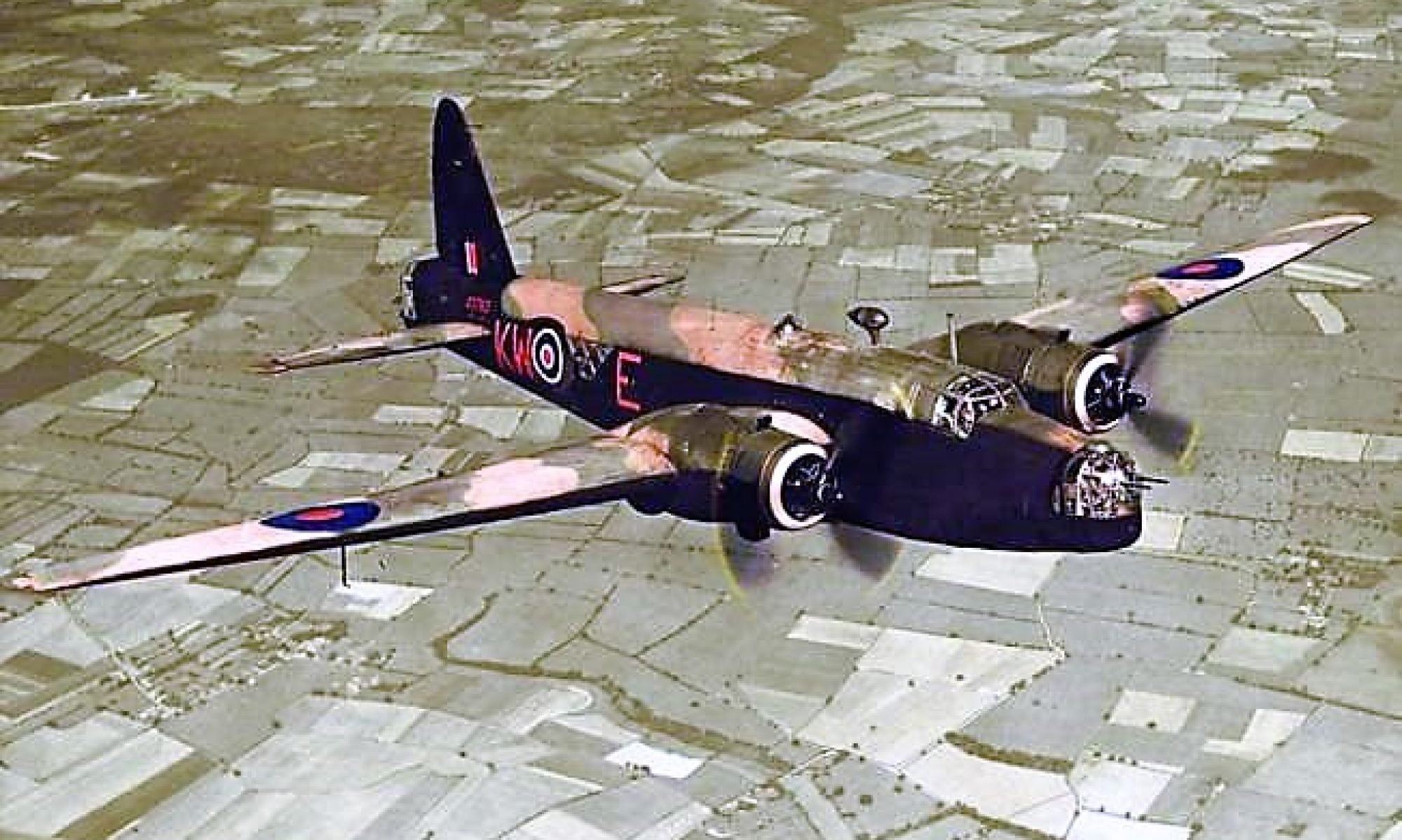


 RCAF 425 Alouettes III