I have been contacted by Lloyd W McPhee’s daughter who has shared an article about her father, also a navigator like Group Captain Gabriel Taschereau, and some of her father’s log book pages.


Log books are so precious…
Now for the article.
Editor’s Note: The year 2020 marks the 75th anniversary of the end of the Second World War. We are honoured to feature a story from the Standard Freeholder of one of the many local men and women who fought courageously for our freedom in that war.
Lloyd W. McPhee was born in Cornwall in 1920 and attended Cornwall Public School and CCVS. After leaving school he was employed by Howard Smith Paper Mill until he enlisted in the R.C.A.F in January 1941. He trained at Brandon Man. and Regina Sk. graduating as an air navigator in August 1942. He arrived in England in October 1942. He had a distinguished career as an air navigator until the war’s end.
After the war his career with the Ontario Ministry of Transportation took him to Ajax Ont. where he and his first wife Monica (née Purcell) raised a family of eight. Later in life, then a widower, he returned to Cornwall to attend a CCVS school reunion. There, he rekindled a relationship with an old classmate and friend, Audrey Young (née Grant), herself a widow. In 1992 the two were married and eventually settled in a house in the Riverdale area. In their later years both Lloyd and Audrey continued to be active CTHS members working to preserve local heritage. Lloyd died in 2003, Audrey in 2009.
Ed. note: Audrey is the mother of CTHS members Gay Young and Sharon McCullough.
The following article was published in the Standard Freeholder on February 2, 1945. It is an interview with Lloyd who was home in Cornwall on a 30 day leave from the R.C.A.F.
Narrow Escape All In Day’s Work For Stocky Cornwall Navigator Home On Leave.
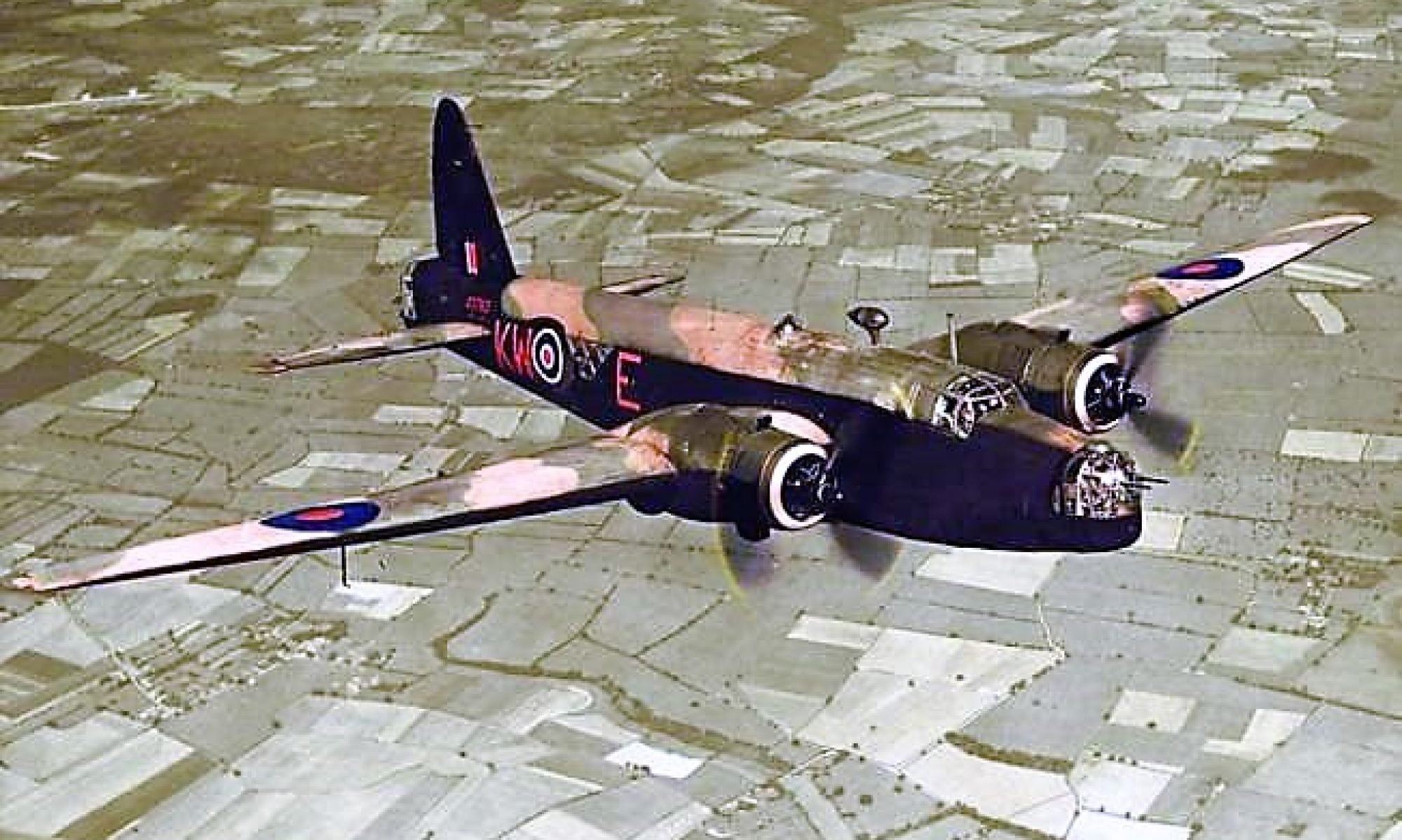
Narrow escapes were common occurrences for Flight Lieutenant Lloyd McPhee, home after two and a half years of overseas service which include 38 trips over enemy territory and one non-operational tour as a navigation instructor. The chunky clean cut airman related some of the highlights of his experiences in an interview with a Standard Freeholder shortly after his arrival in the city yesterday. Flt. Lt. McPhee was with the famous Alouette squadron in North Africa and took part in operations in aid of the invasions of Sicily and Italy. All of the tour was flown in Wellington bombers—Wimpys as he affectionately called them. “They are the workhorses of the R.A.F.” said the repatriate. “They are the oldest bomber in bomber command and one of the most reliable”
McPhee got quite a kick out of describing his plane’s distinguishing insignia. The plane was called “Y” for Yorker and the insignia painted on the side was a large ice cream cone. After each operational mission an extra drop oozed from the cone.
Slightly odd looking, perhaps although none the worse for his many experiences, the expat told of his close calls without the least sign of nerves.
He related a harrowing experience which the crew went through at Catania during the invasion of Sicily.
“As our Wellington, alone and at low level, came in over the target area, the darkness below was suddenly lit by flares. The Wehrmacht’s anti-aircraft batteries were firing at us. Nevertheless, the crew and captain kept right on in the straight bombing run. Our Wimpy went right on through the gauntlet of flack bursts and just as the bomb aimer shouted—bombs away— a great explosion damaged the bomb bay. A shell had struck us. A few seconds earlier and we and the Wellington would have disintegrated into dust in the blast of that 4,000 pounder”.
McPhee recalled with evident relish that one of the air gunners was making his first trip on that eventful night. After the flight started he also informed us that he was celebrating his birthday. “He got quite a party”, said McPhee with a wry grin. “At least he said afterwards that he was so scared he couldn’t think.”
The bomb aimer on that trip had experienced a bit of good fortune. He had remained behind in the body of the plane after giving the bombs away signal. Had he returned to the front gun turret as was his usual custom, he would have been blown to pieces since succeeding flak bursts had blown four holes from top to bottom of the turret.
“We just about had it in Naples too.” The Jerries coned us with searchlights and brought us down to 1,000 feet before we could shake them. From 5,000 feet down we were susceptible to light flak and they really poured it on. We collected 21 holes in the plane that night.” A further trip had seen them blast German concentrations at Bartia, on the island of Corsica. The Free French had driven the Germans to Napoleon’s birthplace and their aircraft had got a direct hit on a warehouse from which smoke was seen pouring.
“Rome is a beautiful sight on a bright moonlit night”, said McPhee. “The moon is much brighter than in Canada and a full moon lasts 11 nights. In one night, against a beautiful setting of white snow we saw Rome, Florence, Pisa and Leghorn”.
Climate conditions in North Africa were described as exceedingly warm with temperatures averaging around 125 degrees in the summer season. The two hottest days experienced by the airman showed temperatures of 150 degrees in the sun and very little less than that in the shade—if such could be found.
“There wasn’t a tree within miles of the station”, said the stocky navigator “and our tents were so hot you couldn’t even touch the canvas. Wet clothes dried in less than 20 minutes in a wind coming from the desert which felt as if it were coming from a furnace. The food consisted of hard tack, bully beef, grapes and dehydrated potatoes with bread and margarine as infrequent delicacies. However, I couldn’t lose weight on it.”
Flt. Lt. McPhee said people in Canada would find it hard to believe the conditions under which the Arab people exist. There is practically no sanitation in the country and the natives themselves are backward. “Believe it or not”, said McPhee, “You can smell an Arab town from 1,000 feet in an aircraft. Take it from me that Arab cities are not the beauty spots that Technicolor paints them. From my own experience the European settlement of Algiers is the most advanced and cleanest of African cities.”
The repat had high praise for his comrades in the Alouette squadron. The crew was all French Canadian with the exception of himself. Good fellowship and a high standard of maintenance with correspondingly low losses were features of the unit. The unit had maintained a high standard of bombing efficiency in spite of the fact planes went to their destinations guided by astral-navigation, their courses plotted by the stars. This is an entirely different technique from that now employed on the modern bombers which use radar to a great extent.
As evidence of the bomber-aimers of the squadron, McPhee related the story of a bombing run over the Salerno beachhead in which the squadron had to bomb within three miles of advancing American troops and had succeeded in doing so without injuring any of the advance elements.
In addition to his operational tour Flt. Lt. McPhee has to his credit 13 months of navigation instruction at a conversion unit. He is on a thirty day leave and has not made up his mind whether he will ask to be posted to the Far East or take an administrative position in Canada.
Photos of the Vickers Wellington taken from Gabriel Taschereau’s photo album courtesy Richard Girouard.


 RCAF 425 Alouettes III