Il y a trois ans, le 13 novembre 2019, j’écrivais ceci, mais je ne l’avais jamais publié.
L’histoire d’Albert Cormier est en train de s’écrire.
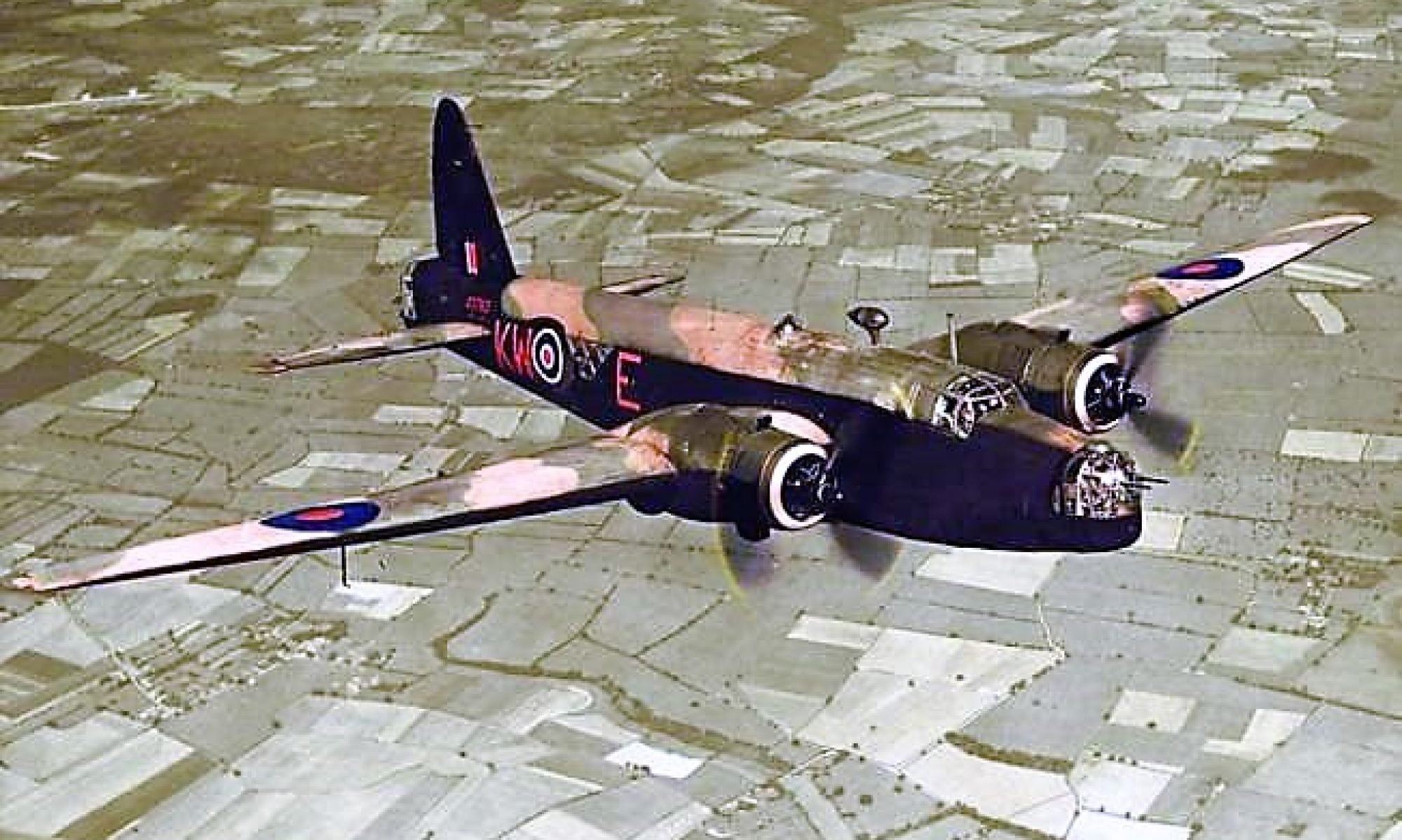
Albert Alexandre Cormier faisait partie de l’équipage de Larry White. Le bombardier Halifax LK934 a été abattu dans la nuit du 8 au 9 mai 1944 au-dessus de Courtrai en Belgique.
Albert a survécu et son histoire se poursuivra sous peu.

Trois ans plus tard…
FLIGHT LK789 STORY OF ALBERT CORMIER
Introduction
This historical document started with a desire to know the young man who joined the RCAF in 1941 and with little chance of survival returned to Canada only to perish early in his life. He married and departed leaving a wife and five preschool children. After his death, his story was put to rest for a number of years. What started as a father’s story would soon progress to a story about a crew of eight men on a bombing mission in 1944.
There was a natural curiosity about Albert, my husband’s father, but out of respect for a new husband who had raised her children as his own, talk of the children’s father was left in the past by their mother. Years later, after she was widowed for the second time, she wrote a family history book for her children and the “Story of Albert” was born.
Every year my husband and I insisted that our family would stay in touch and visit Grandma Edna Cormier, Albert’s mother. We never asked her about her son and we will always regret it. Before she passed, she had asked her family to make sure Paul received her picture of Albert in his Air Force uniform. In 1998, we had a Cormier cousin for dinner and we heard of a set of pictures honoring Albert in a parade in Belgium. We were enlightened about his heroism and after that evening my curiosity was piqued. It is from these pictures that my research took roots. We visited Albert’s sister, Rose, and she spent the evening telling us stories of her brother and his role in the Belgium underground. Rose had the original photo; when she passed, her children gave them to Paul.
There was a stamp on the back of the photographs and I contacted the Belgium Consulate in Washington DC and through their contacts came a definite confirmation; the pictures were taken at the market place in Mouscron/Moeskroen (Dutch). Albert was presented with an engraved cigarette case from Rekkem.
In 2013 my husband filed the application with Library and Archives Canada in Ottawa for his military records. In 2014, we took a trip to Moeskroen and Rekkem and walked part of the parade route that Albert took. Alas there were no records of the parade in either town. Reading of the escape routes and the underground network one appreciates that secrecy was paramount.
I would search for hours on the internet looking for information and one night Kindle brought up an ad for the book The Long Road by Oliver Clutton-Brock and Raymond Crompton. Included in the book is the interview of F/Sgt. J. McConnell of the crew of LK 798 on the night of May 8/9 including the names of the crew. This led me to Sgt. Roy Brown’s story on The Memory project, a website for members to share their stories of military service. The story would take on a new trajectory for me as eight men were on that fated flight; two died, and six survived the crash.
Over the course of a few years I would spend months looking for new information and then I would give up. I kept reading about an award from the Irvin Caterpillar Club and in 2016 my husband requested membership for his father from Airborne Systems. Overnight I had emails arriving from researchers that the Caterpillar Club used to verify his worthiness and within days they sent the pin and membership. Cynrik De Decker forwarded a copy of the first page of a Military Intelligence 9 (M.I.9) document and his handwritten second page obtained from the National Archives. I would learn later on how important this document was. I was able to get a corrected copy from the WWII Escape and Evasion Exchange after I emailed them notifying them the last name had a spelling error.
March 11, 2017, I wrote to the library@bombercommandmuseum.ca looking for information on Albert. Karl Kjarsgaard, curator of the museum, called as he had wanted this story of the LK798 for two reasons, being it involved Albert from Alberta, and an American pilot, Larry White. Karl is very helpful in this project and with his numerous contacts continues to contribute.
Karl directed me to a group on Facebook “A White Rose & Maple Leaf, Airfield Yorkshire WWII,” and from here I was fortunate enough to see the work of Dave Donaghy and Pierre Lagacé. With Pierre’s research, editing abilities, and knowledge, we are putting together this historical document.
Kalyn and Chuck Bryan deserve a special mention for their interest and writing skills as I tell the story of the LK798.
One of the road blocks I face in doing the research is finding the full names of the crew. Making numerous phone calls asking for information can be disheartening and then when least expected someone is there to encourage and help. Last year I had contacted a childhood neighbor from rural Saskatchewan, Historian Ed Novecosky, and when I told him the story I was working on he was immediately on board with research assistance. Sgt. J McConnell, crew member, came from the same area in Saskatchewan where I grew up.
In the last few years before my mother-in-law passed she told me she was so delighted I was doing this project and encouraged me. More information was found in her private papers and I feel she knew me better than I knew myself. Having to work at this story made me uncover information and find sources that I wouldn’t have found if it had been made easy.
After the war my father-in-law had lamented to his sister “In Europe a Hero, in Canada a Zero”. That was the moment I knew that I had to make it right for this airman.
As Karl Kjarsgaard so eloquently wrote in 2017:
“All the fuss over Albert, parade and ceremony, seems logical now as he was helping the Resistance and then he was an interpreter for the locals when the Canadian Army came through the Belgian town and district.
Then the joyous Belgians want to have a Liberation party they must have a Liberator and Poster Boy and Albert was it!
I wonder what Albert would have said if, before he left Canada, you had said to him it’s OK Albert, even though you get shot down in combat you will survive and then live to Liberate Belgium!”
My hope is that more information will keep coming forward from the writing of this story and that it will continue to evolve.


 RCAF 425 Alouettes III