Paquette, Bernier et Lamontagne – trois sans-filistes

Photo C.A.R.C. PL-44196 UK21735 Tholthorpe Escadrille 425 Alouette 15 mai 1945 collection Réal Saint-Amour

Voici des aviateurs de la fameuse escadrille canadienne-française des Alouettes, au Groupe de bombardement canadien en Grande-Bretagne. Ce sont trois inséparables qui sont arrivés ensemble en Angleterre, ont subi leur entraînement de vol de guerre ensemble et qui maintenant non seulement volent ensemble, mais habitent la même hutte qu’ils essaient de tenir propre autant que possible. Ce sont de gauche à droite: le sergent de section Jean Paquette, sans-filiste-mitrailleur de Montréal (6643 rue Drolet); le sous-officior breveté de première classe Charles Bernier, de Montréal (4554 des Érables), sans-filiste-mitrailleur de son métier et le sous-officier breveté de première classe Jacques Lamontagne, sans-filiste-mitrailleur de Montréal (8842 rue Lajeunesse), le bout-en-train du trio!

Sergent de Section (F/S) Jean Paquette, sans-filiste (WAG) de l’équipage Pierre Lavoie. Arrivé à Tholthorpe le 8 mars 1945, il était à bord d’un Halifax qui fut sérieusement endommagé lors d’un atterrissage à RAF Riccall le 25 mars.

Il en est sorti indemne.

WO1 Charles Bernier, R/164704, sans-filiste (WAG) de l’équipage Maurice Violette. Arrivé à Tholthorpe le 22 janvier 1945, il reviendra au Canada en juin 1945 à bord d’un Lancaster avec son équipage.

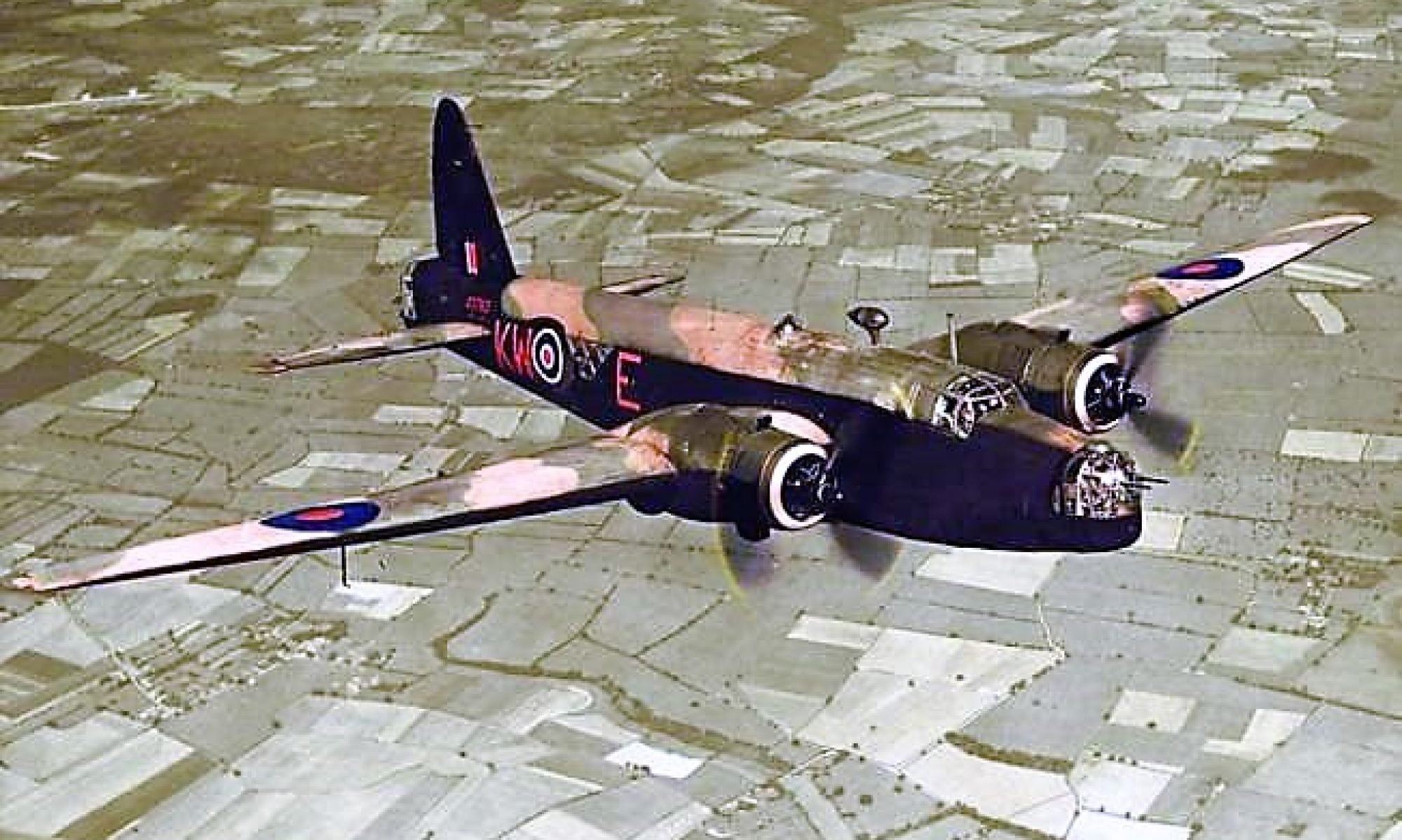
WO1 Jacques Lamontagne, R/1647S9, sans-filiste mifraillour (WAG) de l’équipage Roland Laporte. Lui aussi traversera l’Atlantique à bord d’un Lancaster, le KW-R, « Rabbit’s Stew ».

Photo de l’équipage de Maurice Violette….

Je me souviens de Bourg Léopold

Un de mes collaborateurs m’aide à mettre des noms sur les photos de la collection de Réal St-Amour qui était l’adjudant des Alouettes.

Cette photo me rappelle des souvenirs.

RCAF photo PL-26925 UK879I Réal Saint-Amour collection. 18-19 February1944

Two brothers re-united at Tholthorpe, discuss with Mr. Joseph Barnard, chief editor of the Quebec newspaper « le Soleil » ; on his right with a paper, FIt/Sgt. Charles-Edward Elsliger, P.T. instructor, and on his left, Sgt. Jean-Henri Elsliger, air gunner with the Kalle crew, 420 Snowy Owl squadron. The Elsiger brothers are from Shelter Bay, Quebec on the north shore of the St. Lawrence. (today Port Cartier, Qc near Sept-iles)

Mr. Barnard was with a group of 8 newspaper editors visiting Canadian military bases in the U.K. during January March 1944.

At 0211 on May 28th 1944, the Kalle crew were approaching Bourg-Leopold on a bombing run when they were attacked by an FW190. The enemy fighter set No. 3 engine on fire, destroyed the electrical system including the intercom and part of the hydraulic system. The FW190 was then shot down by the tail gunner. Pilot Officer Bob Kalle dove and corkscrewed to evade the attacker. Forced out of his turret by the heat and believing the Halifax was going down, the intercom being u/s, the MUAG, Jean-Henri Elsliger picked up his parachute and baled out. But Sgt. Elsliger survived and spent the next year in a P.0.W. camp. Kalle managed to pull out of the dive after the fire went out and he flew his badly damaged Halifax back to an emergency base in England on three engines. After landing, a 4 X 6 foot hole was discovered in the wing as well as Sgt. Elsliger’s helmet and mask with traces of blood on it.

Le souvenir…?

La deuxième opération de Jean-Paul Corbeil et la première de son équipage. Ils furent attaqués 10 fois par les chasseurs allemands lors de leur opération également le 28 mai 1944 au-dessus de Bourg Léopold.

Pour plus de lectures…

https://mpierrela.wordpress.com/category/bourg-leopold/

Handley Page Halifax NP957 KW-Q « Ville de Québec »

Photos from the collection of Réal St-Amour courtesy Chantal St-Amour

KW-Q                     

Handley Page Halifax NP957                  

The nose art survives today in the War Museum in Ottawa. Handley Page Halifax NP957 first served with No. 427 Squadron 13 September 1944, to 429 Squadron  on 1 March 1945, then to 425 Squadron on 16 March 45, flying ten operations and received nose art « Ville de Quebec » from crew of P/O Kolisnek, who flew her eight operations.

Disposal 6 May 1945, scrapped 14 May 1945.

KW-Q Ville de Québec


Joe Lecomte

Handley Page Halifax Ville de Québec


Halifax Ville de Québec


KW-P « Pistol Packing Peggy »

Pistol Packing Peggy

KW-P

Collection Réal St-Amour courtesy Chantal St-Amour

No. 425 (Alouette) Squadron returned from North Africa (No. 331 RCAF Group) between 26 October and 5 November 1943. The squadron returned to England leaving all Wellington Mk X aircraft in Tunisia. Arriving at No. 62 Base at Tholthorpe, Yorkshire, on 10 December 1943, the unit began to receive new Handley Page Halifax Mk. III aircraft.

Halifax serial LW375 was from a batch of 37 Mk. III’s built between 27 October and 23 November 1943. Assigned to No. 425 Squadron in mid-December 1943, the bomber was flown by different crews in squadron training. In early February 1944, LW375 was assigned to the crew of pilot Tom Rance.

Pilot Tom Rance
Bomb/Aim. Jack Stokes
Wireless/Op. Bob Whyte
Mid/Upper Gun Len McDonald
Nav. Norman Marshall (American)
Flight/Eng. Bim Wall (British)
Tail/Gun Bill Osborne

The squadron assigned code letters KW-P to the aircraft and the crew decided to call their bomber “Pistol Packing Peggy”. The squadron Nose Artist picked a lady that first appeared as the October 1942 Varga pin-up in the magazine Esquire.

Bomb aimer Jack Stokes completed a total of fifteen operations in “Peggy” and received a very close call at the end of March 1944. The 30/31 March raid on Nuremberg cost Bomber Command 96 bombers. 118 RCAF bombers were dispatched and 13 were shot down. Halifax “Peggy” was approaching the target area with Jack on his belly looking through the bomb sight when the aircraft was hit by 20 mm fire from a German night fighter. The hole in the Halifax was 3 inches in diameter, with the projectile travelling upwards between Jack Stokes right hand and the right side of his face. Part of his leather glove and skin was missing from his right thumb, and he received a scratch along the right side of his face.

On 31 May/1 June 1944, “Peggy” was one of 125 Canadian bombers that attacked Au Fevre, a German radar site in France. Approaching France, the Halifax ran into a huge thunder storm and, after attempting to go around the storm, they were too late arriving over the target. The crew were ordered not to jettison their bomb load over the English Channel, possibly due to the upcoming D-Day landings. Upon landing at base the Halifax under carriage collapsed and the bomber was damaged. That was the last Jack saw of his Halifax “Peggy”.

The Halifax was later repaired and flew with No. 296 Squadron R.A.F., then went to No. 1355 Heavy conversion Squadron. LW375 was struck off charge by the R.A.F. on 19 August 1946 and scrapped.


Source: http://dunrobincastle.com/Nose_Art/pistol_packin_peggy.htm

16 mai 1944 – La visite du Premier Ministre

Je me souviens de ce que Jean-Paul Corbeil m’avait raconté au sujet du Premier Ministre. Ce message d’un collaborateur me rappelle ce que Jean-Paul Corbeil m’avait dit de son voyage en train dans le nord de l’Angleterre pour aller ramasser les cadavres d’aviateurs.

Il venait tout juste d’arriver à Tholthorpe.

Salut Pierre,
Tholthorpe, 16 mai 1944, visite du P.M. Mackenzie King.
Sur la photo UK10923, quelqu’un avait écrit « Massey », sans doute pour le civil à l’arrière du Premier Ministre. C’est plutôt Walter James Turnbull, qui était en mai 1944 le secrétaire privé de MacKenzie King. À droite de Breadner c’est le G/C J.L. Hurley qui était le commandant de Tholthorpe à la même date.


Concevoir un site comme celui-ci avec WordPress.com
Commencer