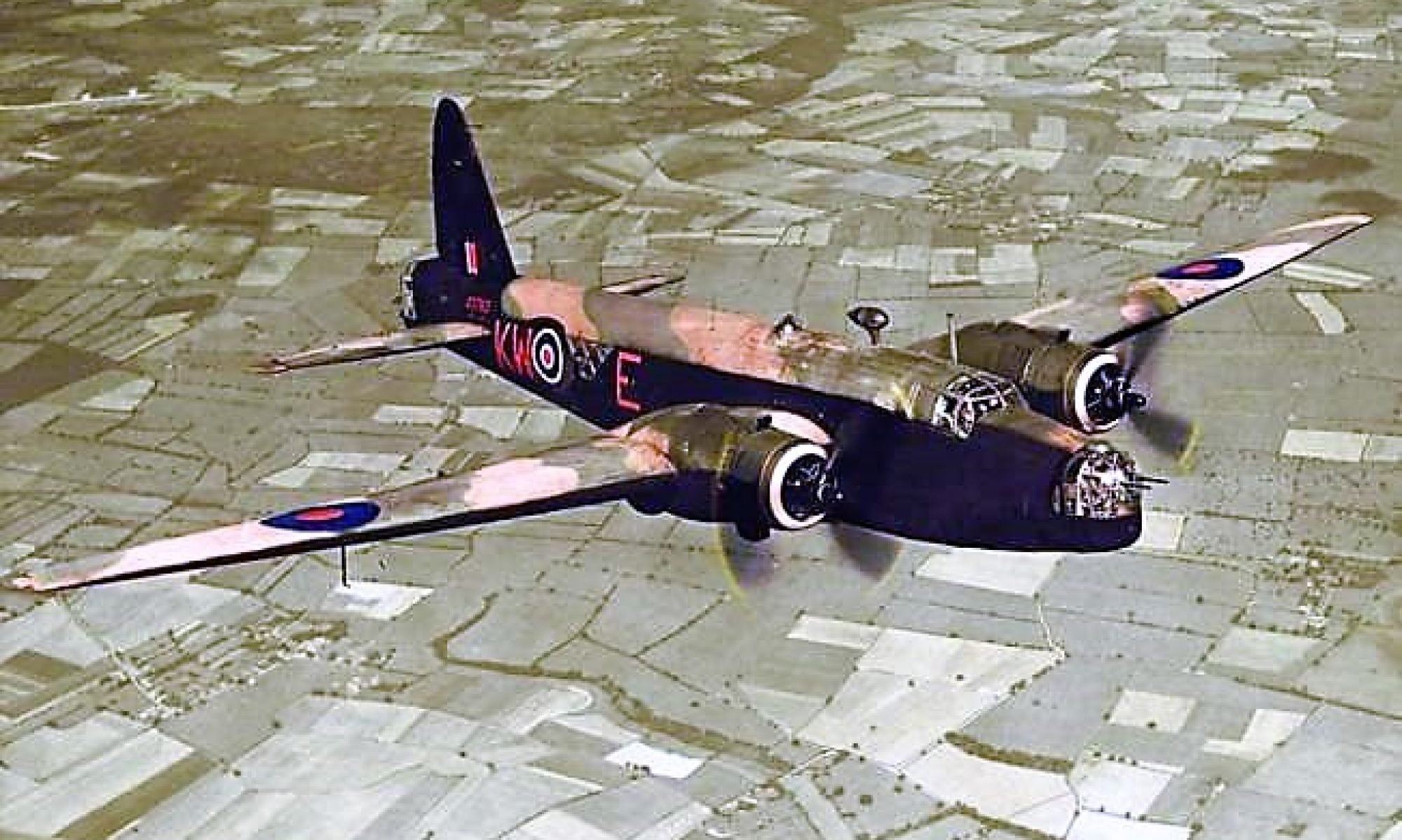
The Last Requiem

With the collaboration of Jean Clouthier

Jean Clouthier’s father was an air gunner on Lancaster KW-G.  Jean shared Bernard Marcoux’s story. Bernard Marcoux was also on board the Lancaster KW-G which struck the Lancaster KW-I. Bernard Marcoux was a wireless air gunner.

The following is an article published in the Spring 1995 issue of Airforce magazine. I had translated it in French last month.

Vol 19 Number 1 1 jpeg

With the kind permission of Airforce magazine

The Last Requiem

By Bernard Marcoux

Fifty years ago on Tuesday, 1 May 1945, under a delightful sunny sky, a number of new Lancaster Mark 10 heavy bombers were delivered to 425 Alouette Squadron stationed at Tholthorpe in Yorkshire. England. Manufactured by Victory Aircraft of Malton, Ontario, these planes were destined to replace the Halifaxes which by then were considered obsolete. Powered by four Rolls-Royce Merlin engines, the Lancaster was then the most formidable heavy bomber in the world. It alone could carry the deep penetration bombs weighing 12,000 lbs. It bettered the payload capacity of the American B-17 Flying Fortress by more than 5,000 lbs, and with special fittings could even handle a giant 22,000 lb « Grand Slam » bomb.

After two full days of tedious classroom instructions, the flying phase of our conversion programme to the new aircraft began. It all started with manoeuvres popularly known as « circuits and bumps. » We non-pilots had to suffer through this ordeal as passengers, crouched bravely for landings in the prescribed crash position, sometimes silently offering alms to the Almighty.
During the training sessions, the crews worked at improving skills, quickly becoming more familiar with the equipment, controls, and instruments of the Lancaster. After some 30 hours of flying time accumulated in a dozen night and day cross-country flights, S/L R. Laporte, officer commanding « B » Flight, confirmed our competence to fly the Lancaster.

Germany surrendered on 8 May 1945. Following two days of celebrations befitting this grand event, the Alouettes were invited to join 661 Wing, called « Tiger Force, » a very long-range heavy bomber force consisting of eight Canadian Lancaster squadrons, 405 « Vancouver, » 408 « Goose, » 419 « Moose. » 420 « Snowy Owl, » 428 « Ghost, » 431 « Iroquois, » 434 « Bluenose, » and 425 « Alouette » Squadrons. This bomber force was to join the Americans in the Far East to finish the war with the Japanese. But first a bonus: we were to fly home with our Lancasters, enjoy a « furlough » at home, then regroup on bases in New Brunswick and Nova Scotia.

My crew was allocated Lancaster « KW-G, » serial number KB-936, which we successfully air-tested on Saturday, 9 Jun 1945, in preparation for our flight to Canada. The following Wednesday morning, along with the rest of the squadron, we took off for the very last time from Tholthorpe, the base we had shared with 420 Squadron since December 1943. The first leg of our journey took us down to the Midlands, across the Bristol Channel that separates Wales from Cornwall, then along the picturesque Cornish coast to St Mawgan, our springboard to Canada.

The navigational aid called « Gee, » used extensively over continental Europe by crews of Bomber Command, could not be exploited west of the British Isles. For this reason, our navigator, F/L George Leroux who was skilled in astro-navigation, was appointed chief navigator for the entire wing.

The next morning, 10 days into the 20th year of my life, the sky of Cornwall was covered with thick grey clouds. Furthermore, the meteorological forecast for the Azores, our stepping-stone to Gander, was not at all favourable.
After some reflection it was observed that the bulk of the unpleasant weather system could be avoided if we left before 1100 hrs that morning. A « go » decision was taken and soon we said goodbye to England.

Shortly afterwards we kept our rendezvous with the rest of the squadron at 8,000 feet, and led by Leroux headed toward the Scilly Islands off Land’s End, the last bit of land we were to see before reaching the Azores. The H2S radar screen showed clearly the profile of the Scilly Islands, giving George a superb opportunity to get a final solid land « fix » with which to confirm our position. The weather forecast was accurate. Throughout our south-westerly flight to the Azores, a solid cloud layer at 5,000 feet kept the ocean from our view. This we thought was boring as hell, but when we were flying home in a brand new Lancaster doing 230 miles per hour under a sunny sky that hid no enemy fighters and with no flak to boot, things could hardly have been better! Leroux kept busy taking hourly sextant sights on the sun, with which he obtained single position lines that produced what he called our « most probable » position! Later, our position over the ocean was more accurately determined when a cone-like mass was sighted rising out of the cloud over our starboard wing. This was readily identified as Pico, a volcanic island in the Azores Archipelago that reaches a height of 8,000 feet. Eventually we came within radio range of Lagens Airport (now named Lajes) and the additional data I received helped to confirm our position relative to our destination.

Since the island of Terceira, on which the airport is located, was completely obscured by cloud, we used our radar to navigate a safe descent. After flying for six-and-a-half hours, our skipper, F/O Gérald Hallé, deposited KW-G gently on the longest runway we had ever seen. This « highway », we learned later, stretched no less than 10,000 feet. With little or no braking, we managed to use up almost one third of its surface. WOW!

As we rolled along to our dispersal site we realized how busy Lagens really was. This beehive of activity conveniently located in mid-Atlantic, 1,000 miles from the eastern seaboard of North America, was the master platform from which supplies were routed to and from the European war theatre. Built by Britain on land leased from Portugal, the base was the focal point for sea and air cargo movements to both continents.

Unaware of the tragedy that Fate reserved for us, we took KW-G to its assigned parking spot, shut down the engines and with shaving kits in hand, left the kite in the care of the local ground crews. As it was intended that the squadron would continue on to Gander later the same evening, we hurried to the mess hall for a snack, then made our way to sleeping quarters where we had a short rest. Later that night at briefing we were given the usual menu of flight instructions, weather maps, wind data, radio frequencies, local take-off protocol and finally, the landing procedure for Gander.

The bus drivers who ushered our Alouettes to their planes never had a more spirited bunch of passengers. We sang our songs, made merry, laughed at our jokes and tried hard to let the whole world know that the Alouette were on Terceira land. We hoarded KW-G and made her ready for our flight home. One after another, each Merlin was started, warmed up and fine-tuned by F/O Hallé and Sgt R.J. Laroche, our flight engineer. While I synchronized the radio receiver, loaded the transmitter finals, checked the antenna system and my oxygen supply, F/L Leroux completed the calculations necessary for our first compass setting. Meanwhile, F/S Ray Sabourin and Sgt P.J. Clouthier, respectively rear and mid-upper air gunner, checked their turrets and oxygen supply. Up front, F/O Routhier the bomb aimer verified that the H2S set functioned correctly, and that the oxygen supply was adequate.

We got the « OK » to move off, and soon KW-G was moving ahead on its way out of the dispersal area. As if they too were anxious to get going, the chorus of I00 Merlin engines roared loudly in the night. Outside, the conditions were not good. With heavy clouds, the night sky revealed very little light, providing visibility that ran erratically from poor to zero.

Carefully, Hallé squeezed KW-G into the forming queue directly behind KW-I, another Alouette kite skippered by F/L H.C. Chappell. Without headlights, following a jeep sporting a « Follow Me » sign, like a caterpillar attracted by some invisible lure, the string of Lancaster laboriously inched its way toward the runway.

The manoeuvre was normal and we had done it many times before. Good night vision, after all, is an endowment that all pilots proudly claim.

As we neared the edge of the runway, conditions worsened and visibility became even more sporadic, a condition probably caused by the dust and sand raised by our own prop-wash.

The progress we made was annoyingly slow. After all we were on our way home and the excitement was high. We were done with Hitler. May his dead body rot in Hell, screw Germany, and all Europe… our next beer will be a good old Black Horse, not this hot piss the Brits call bitter. In a few hours the coming-home parties… Look out Montreal! The Alouettes are coming!
But destiny intervened, and in the next instant our exhilaration turned to stark terror.

Seeing the sign move forward once more, Hallé released the brakes allowing KW-G to lunge freely forward. In a moment, immediately under the right side of our nose, the black and immobile mass of KW-I’s tail section suddenly appeared, the jeep having gone past the port fin of KW-I’s tail section, with its « Follow Me » sign still on. In haste Hallé squeezed the brakes, but the momentum of our 63,000 lb Lancaster was implacable and allowed it to travel a few more tragic feet; enough for our starboard inner airscrew to crash into the fuselage of the other ship, tearing, crushing and smashing everything in its path, sparing nothing, especially KW-I’s rear turret where F/S Bill Holowaty had just settled in preparation for take-off.

For what seemed an eternity, the merciless propeller, driven by its powerful 1620 HP Merlin, kept whirling in its inexorable, uncontrolled, destructive journey. In fact, however, Hallé’s reaction was swift and professional. The moment he realized that a « prang » was unavoidable, he immediately throttled back and switched off all engines. In less than two minutes actual time, all became quiet. Fearing a possible fire, the skipper ordered the crew out of the plane. As we disembarked and blindly searched the darkness, F/S Tommy Sinclair, KW-I’s WAG, wisely fired a Very flare. It exploded high over our heads and for a time the sky of Lagens became luminescent with an intense red glow, a visual « mayday » call for help.

The red flare stopped all airport traffic and immediately alerted the emergency ground personnel. Soon we were joined by KW-I’s crew and the emergency response personnel who rushed to the scene in jeeps, trucks and fire wagons. Holowaty, we were shocked to learn, had been grievously injured and was now receiving first aid.

In the eerie light of headlamps and with great difficulty, his broken body was extricated from the crushed turret and rushed to sick-bay.

Confused and shaken we watched as they towed our damaged Lancaster to the side, making way for the other planes to proceed on to the runway.
This time however, they were thankfully escorted by ground vehicles, headlamps shining brilliantly until the last Lancaster had safely reached the runway. Meanwhile air traffic resumed and sweepers picked up the debris and cleaned up. The bus trip back to base was made in silence and with heavy hearts as we heard our Lancasters humming away up there on their happy journey home.

During the following two days, a formal military inquiry was conducted by a Royal Air Force officers’ court. The presiding judge allowed that the court could find no fault and consequently ruled that no blame would be attributed.
F/S Bill Holowaty died of his injuries during the early hours of Monday, I5 June 1945. The next day, under a sunny and friendlier sky, he was buried in a small cemetery not far from the great runway we had so much wanted to reach. A touching funeral service conducted by the resident chaplain was attended by the members of both crews and other Canadians on duty in Lagens.

The tragic death of F/S Holowaty was manifestly sad. It came, the result of a minor accident, at a time when he, a young veteran, vibrant and full of life, was travelling home to reunite with his family in Rochester, a small community north of Edmonton. It was doubly unfortunate because the record of this fatality was to be the very last entry in the log of casualties suffered by 425 Alouette Squadron and by 6 Group, Bomber Command during World War II.

(Ed note: Bernard Marcoux of Alliston, Ontario. was a wireless air gunner during WWII.)

image 1

F/O Gerry Hallé inspects engine repairs done on Lancaster KW-G by LAC Parson (left) and LAC Harris (not in picture) after its fateful ground collision with Lancaster KW-1 in the Azores.

image 2

The crew of Lancaster KW-G during repairs to their aircraft following the accident in the Azores. From top are: F/O J.R. Routhier, bomb aimer, Sgt Ray Sabourin, rear gunner, F/O Gerry Hallé, skipper, F/L George Leroux, navigator and author WO Bernard Marcoux, wireless air gunner. Partially seen on scaffold is Sgt R.J. Laroche, flight engineer. Missing from photo is Sgt P.J. Clouthier, mid upper gunner.

Note

Information from Jean Clouthier

Sergeant P.J. Clouthier, mid-upper gunner, is not in the picture because his father was the one who took the picture.

Images taken from William Holowaty’s military file

Lest We Forget…

grave

Source

Holowaty

Collection Réal St-Amour


William Holowaty – No. 3 AGTS Trois-Rivières

After only a one week leave those of us who were posted overseas reported to #3 AGTS (Advanced Ground Training School) at Trois-Rivieres, Quebec where for a few weeks we played soldier while Army Commando officers proceeded to get us in shape. I managed to sprain an ankle quite badly but again limped around so I could stay with my friends. From AGTS we went to #1 Y Depot in Lachine Quebec and after indoctrination and inoculations we soon boarded a train of old colonist railway cars to Halifax where the Empress of Scotland waited. We filed on to the ship with our back packs and kit bags and the next morning at dawn, with about 5600 ship’s crew and service men and women on board, moved quietly down the harbour and out into the grey Atlantic heading for Britain.

Source:

http://www.hillmanweb.com/150/3bcatp.html


William Holowaty was stationed there on April 8, 1944. I have no pictures to show you of William Holowaty being in Trois-Rivières, but I have written something in French about Jacques Morin, another rear gunner who had commando training there…

I will translate some parts of it later.

ORIGINAL POST

You won’t find much on the Internet related to No. 3 Aircrew Graduate Training School where our 425 Alouette squadron rear gunner Coco Morin who liked to pull pranks trained.

école de commando 1

Collection Jacques Coco Morin

The truth will now come out and veterans who were at this commandos school in 1944 will finally discover the author of one of the pranks he pulled.

70 years is a long time to finally know the truth…

DSC02353

Coco Morin had a big smile on his face in 2011 when he told me this anecdote. He had not trained to pull pranks at No. 3 Aircrew Graduate Training school, he had already become a master long before.

Before I tell you about it, I will put all the photos I scanned with Jacques Gagnon in 2011. They are new as the anecdote will be.

Before posting the pictures, just to make you languish even more, here is what little I can glean from the Internet when I research this commando school. This information is important to understand what was being done at this commando school.

The following was on a forum that was on the official RAF website and is no longer accessible. I found this archived exchange….

3AGTS

Hello All,

Could someone please tell me where 3AGTS was based in Canada in June 1944 and what type of aircraft it operated?

Also, did the acronym AGTS stand for Air Gunners Training School – or was this possibly just an abbreviated version of AGGTS (Air Gunners Ground Training School – in which case no aircraft involved?).

TIA,

Errol

RE: 3AGTS

G’day Errol

It could be No. 3 Aircrew Graduate Training School at Three Rivers, (Trois Rivieres) Quebec. It operated from January to December 1944.

Cheers…Chris

RE: 3AGTS

Hi Errol

A.G.G.T.S. – Air Gunners Ground Training School

Cheers…Chris

RE: 3AGTS

Kia Ora Chris,

Aircrew Graduate Training School is a new one on me. It would tie in with my query, however, as the chap concerned had just graduated as a pilot on 21 Apr 44 at 9SFTS, Centralia, Ontario. Any idea as to what type of training took place at the AGTS? My man was there from 5 Jun 44 until posted to 1 Y Depot 23 Aug 44 preliminary to crossing the pond for the UK.

Cheers,

Errol

RE: 3AGTS

G’day Errol

The R.C.A.F. organized four Aircrew Graduate Training Schools in 1944. They taught a commando style course that was supposed to toughen the chaps up before they headed overseas. The course lasted three weeks. Various subjects were taught with a strong emphasis on physical training. Of all the exercises conducted at No. 3 A.G.T.S. Three Rivers, Quebec, perhaps the most realistic was the one known as the ‘Dutch Exercise’. This required the students to crawl along while live weapons fire whizzed by above them. Additional physical workouts were carried out at the docks which involved loading ships with grain destined for England.

Cheers…Chris

RE: 3AGTS

Thanks for that, Chris.

One way to take all the fun out of flying!

Cheers,

Errol

Copyright © 2013 RAFCommands. All Rights Reserved. Magazine Basic created by c.bavota.

Well, I hope you have now understood what was going on at 3AGTS.

Now the pictures of Coco Morin at that commando school.

école de commando 1école de commando 2école de commando 3école de commando 4école de commando 5école de commando 6école de commando 9école de commando 7école de commando 10école de commando 11école de commando 12école de commando 15sécole de commando 17école de commando 8école de commando 14école de commando 20

L’anecdote n’était pas si drôle que ça finalement, en tout cas pas pour les gars qui montaient en tenant la câble que tenait en haut notre Coco national.

DSC02353

Il l’avait lâché pendant que les gars grimpaient.

Mal lui en prit, car les gars ne l’avaient pas trouvé drôle et lui avaient servi une paire de claques sur la gueule… (une paire de baffes pour mes amis Français qui lisent mon blogue).

Coco m’a-t-il raconté des sornettes (conter une pipe pour mes amis Québécois)?

Aucune chance, je l’aurais facilement démasqué.

Vous avez des anecdotes à partager?

Pour m’écrire, laissez-moi un commentaire ou, si vous préférez, utilisez ce formulaire pour prendre contact personnellement.

← Retour

Merci pour votre réponse. ✨


William Holowaty – No. 3 AGTS Trois-Rivières

After only a one week leave those of us who were posted overseas reported to #3 AGTS (Advanced Ground Training School) at Trois-Rivieres, Quebec where for a few weeks we played soldier while Army Commando officers proceeded to get us in shape. I managed to sprain an ankle quite badly but again limped around so I could stay with my friends. From AGTS we went to #1 Y Depot in Lachine Quebec and after indoctrination and inoculations we soon boarded a train of old colonist railway cars to Halifax where the Empress of Scotland waited. We filed on to the ship with our back packs and kit bags and the next morning at dawn, with about 5600 ship’s crew and service men and women on board, moved quietly down the harbour and out into the grey Atlantic heading for Britain.

Source:

http://www.hillmanweb.com/150/3bcatp.html


William Holowaty was stationed there on April 8, 1944. I have no pictures to show you of William Holowaty being in Trois-Rivières, but I have written something in French about Jacques Morin, another rear gunner who had commando training there…

I will translate some parts of it later.

ORIGINAL POST

Vous ne trouverez pas grand chose sur Internet en rapport avec le No. 3 Aircrew Graduate Training School où s’était entraîné Coco Morin, notre joueur de tours de l’escadrille 425 Alouette.

école de commando 1

Collection Jacques Coco Morin

La vérité va maintenant sortir au grand jour et des vétérans qui se trouvaient à cette école de commandos en 1944 vont finalement découvrir l’auteur d’un des tours pendables qu’on leur avait joué.

70 ans, c’est long en titi pour connaître enfin la vérité…

DSC02353

Coco Morin arborait un grand sourire en 2011 quand il m’avait raconté cette anecdote. Il ne s’était pas entraîné à jouer des tours au No. 3 Aircrew Graduate Training school, il était déjà passé maître bien avant.

Avant de vous en parler, je vais vous mettre toutes les photos que j’avais numérisées avec Jacques Gagnon en 2011. Elles sont inédites comme le sera l’anecdote.

Avant de vous mettre les photos, question de vous faire languir encore plus, voici le peu de choses glaner sur Internet lors de mes recherches sur cette école de commandos. Ces informations sont importantes pour comprendre ce qu’on faisait à cette école de commandos.

Ce qui suit était sur un forum qui se trouvait sur le site officiel de la RAF et qui n’est même plus accessible. J’ai trouvé cet échange archivé…

3AGTS

Hello All,

Could someone please tell me where 3AGTS was based in Canada in June 1944 and what type of aircraft it operated?

Also, did the acronym AGTS stand for Air Gunners Training School – or was this possibly just an abbreviated version of AGGTS (Air Gunners Ground Training School – in which case no aircraft involved?).

TIA,

Errol

RE: 3AGTS

G’day Errol

It could be No. 3 Aircrew Graduate Training School at Three Rivers, (Trois Rivieres) Quebec. It operated from January to December 1944.

Cheers…Chris

RE: 3AGTS

Hi Errol

A.G.G.T.S. – Air Gunners Ground Training School

Cheers…Chris

RE: 3AGTS

Kia Ora Chris,

Aircrew Graduate Training School is a new one on me. It would tie in with my query, however, as the chap concerned had just graduated as a pilot on 21 Apr 44 at 9SFTS, Centralia, Ontario. Any idea as to what type of training took place at the AGTS? My man was there from 5 Jun 44 until posted to 1 Y Depot 23 Aug 44 preliminary to crossing the pond for the UK.

Cheers,

Errol

RE: 3AGTS

G’day Errol

The R.C.A.F. organized four Aircrew Graduate Training Schools in 1944. They taught a commando style course that was supposed to toughen the chaps up before they headed overseas. The course lasted three weeks. Various subjects were taught with a strong emphasis on physical training. Of all the exercises conducted at No. 3 A.G.T.S. Three Rivers, Quebec, perhaps the most realistic was the one known as the ‘Dutch Exercise’. This required the students to crawl along while live weapons fire whizzed by above them. Additional physical workouts were carried out at the docks which involved loading ships with grain destined for England.

Cheers…Chris

RE: 3AGTS

Thanks for that, Chris.

One way to take all the fun out of flying!

Cheers,

Errol

Copyright © 2013 RAFCommands. All Rights Reserved. Magazine Basic created by c.bavota.

Bon, j’espère vous avez compris maintenant ce qu’on faisait au 3AGTS.

Maintenant les photos de Coco Morin à cette école de commandos.

école de commando 1école de commando 2école de commando 3école de commando 4école de commando 5école de commando 6école de commando 9école de commando 7école de commando 10école de commando 11école de commando 12école de commando 15sécole de commando 17école de commando 8école de commando 14école de commando 20

L’anecdote n’était pas si drôle que ça finalement, en tout cas pas pour les gars qui montaient en tenant la câble que tenait en haut notre Coco national.

DSC02353

Il l’avait lâché pendant que les gars grimpaient.

Mal lui en prit, car les gars ne l’avaient pas trouvé drôle et lui avaient servi une paire de claques sur la gueule… (une paire de baffes pour mes amis Français qui lisent mon blogue).

Coco m’a-t-il raconté des sornettes (conter une pipe pour mes amis Québécois)?

Aucune chance, je l’aurais facilement démasqué.

Vous avez des anecdotes à partager?

Pour m’écrire, laissez-moi un commentaire ou, si vous préférez, utilisez ce formulaire pour prendre contact personnellement.


← Retour

Merci pour votre réponse. ✨


Le voyage dans le temps des Alouettes – Le mid-upper gunner Philippe Clouthier

L’histoire des Alouettes je vous la raconte depuis 2010. Elle se poursuit maintenant ici sur la troisième version grâce à ceux et à celles qui partagent les souvenirs de guerre de leur père, de leur frère, de leur oncle, de leur grand-père…

Ce fut le cas de Jean Clouthier qui m’avait écrit en janvier dernier. J’avais alors publié ce qui suit.

retour de mission

Joseph Philippe Clouthier

Clouthier
J. P.
R/268577
Flight Sergeant
Mid-Upper Gunner
équipage J.T.G. Hallé

Un message…

Dans une de vos publications antérieures (deux ou trois semaines), il y avait une photo d’un équipage de Tholthorpe dans lequel paraissait un rear-gunner appelé Holowaty.

Mon père, Philippe Clouthier, était originaire de Rawdon, mais demeurait à Saint-Sauveur-des-Monts au moment de son engagement. Du 6 Group, il a été affecté à Tholthorpe comme mitrailleur (upper mid-gunner) au printemps de 1945, puis formé, comme bien d’autres, pour ramener les Lancaster au Canada.

Le numéro du périodique Air Force intitulé ‘The Last Requiem’ raconte la triste histoire de ce Holowaty qui est mort accidentellement aux Îles Açores, alors que les gars étaient sur le chemin du retour à la maison. Mon père se trouvait dans l’avion qui a percuté Holowaty dans son habitacle.

Je joins aussi une photo de mon père sans doute au retour d’une mission sur un Halifax, ainsi que celle d’un Halifax portant le nom de Shoo Shoo Baby que mon père avait conservée. J’ignore si c’était son avion ou un autre qu’il aurait pu trouver intéressant en raison de la chanson populaire à l’époque.

Mon père est décédé en 2010 à la Maison Paul-Triquet à Ste-Foy.

Cordialement,

Jean Clouthier

2017-03-14-14-58-11

Jean a rendu hommage à son père en partageant les souvenirs de guerre de son père. Éventuellement Jean partagera ce qu’il découvrira comme il l’a fait avec le récit de Bernard Marcoux.

Le dernier requiem

Avec la collaboration de Jean Clouthier

Le père de Jean Clouthier était mitrailleur sur le Lancaster KW-G.  Jean a partagé le récit de Bernard Marcoux. Bernard Marcoux était aussi à bord du Lancaster KW-G qui heurta le Lancaster KW-I. Bernard Marcoux était un sans-filiste mitrailleur.

Le texte suivant est ma traduction libre d’un article paru en langue anglaise dans la revue Airforce du printemps 1995. Je suis en attente de la permission pour utiliser l’original en langue anglaise.

Vol 19 Number 1 1 jpeg

Le dernier requiem

Par Bernard Marcoux

Il y a cinquante ans, le mardi 1er mai 1945, sous un ciel ensoleillé, un certain nombre de nouveaux bombardiers lourds Lancaster Mark 10 furent livrés au 425e Escadron Alouette basé à Tholthorpe dans le Yorkshire en Angleterre. Fabriqués par Victory Aircraft de Malton, en Ontario, ces avions étaient destinés à remplacer les Halifax qui étaient alors considérés comme désuets. Propulsé par quatre moteurs Rolls-Royce Merlin, le Lancaster était alors le bombardier lourd le plus redoutable au monde. Lui seul pouvait porter les bombes à pénétration profonde pesant 12 000 livres. Il surpassait la capacité de charge utile du B-17 Flying Fortress américain de plus de 5 000 lb, et avec des équipements spéciaux, il pouvait même porter une bombe géante de 22 000 lb « Grand Slam ».

Après deux journées entières d’instructions fastidieuses en classe, la phase de vol de notre programme de conversion vers le nouvel avion a commencé. Tout a commencé par des manœuvres communément appelées circuits and bumps. Nous, les non-pilotes, avons dû endurer cette épreuve en tant que passagers, accroupis courageusement lors de l’atterrissage dans la position prescrite lors d’un écrasement, parfois en priant en silence le Tout-Puissant. Pendant les séances de formation, les équipages ont travaillé à l’amélioration de leurs compétences, se familiarisant rapidement avec l’équipement, les commandes et les instruments du Lancaster. Après une trentaine d’heures de vol accumulées au cours d’une douzaine de vols de nuit et de jour, le Squadron Leader R. Laporte, commandant du B Flight, a confirmé notre compétence à piloter le Lancaster.

L’Allemagne se rendit le 8 mai 1945. Après deux jours de célébrations dignes de ce grand événement, les Alouettes ont été invitées à se joindre à la 661e Escadre, appelée  » Tiger Force « , une force de bombardiers lourds à très longue portée composée de huit escadrons canadiens Lancaster, les 405  » Vancouver « , 408  » Goose « , 419  » Moose « . 420 « Snowy Owl », 428 « Ghost », 431 « Iroquois », 434 « Bluenose » et 425 « Alouette ». Cette force de bombardiers devait se joindre aux Américains en Extrême-Orient pour terminer la guerre avec les Japonais. Mais d’abord un bonus : nous devions rentrer chez nous avec nos Lancaster, profiter d’un « congé » à la maison, puis nous regrouper sur des bases au Nouveau-Brunswick et en Nouvelle-Écosse.

Mon équipage s’est vu attribuer le Lancaster « KW-G », numéro de série KB936, que nous avons testé avec succès le samedi 9 juin 1945, en vue de notre vol vers le Canada. Le mercredi matin suivant, avec le reste de l’escadron, nous avons décollé pour la toute dernière fois de Tholthorpe, la base que nous avions partagée avec le 420e Escadron depuis décembre 1943. La première étape de notre voyage nous a menés aux Midlands, à travers le canal de Bristol qui sépare le Pays de Galles de Cornwall, puis le long de la pittoresque côte cornouaillaise jusqu’à St Mawgan, notre tremplin pour le Canada. L’aide à la navigation appelée « Gee », largement utilisée en Europe continentale par les équipages du Bomber Command, ne pouvait être utilisée à l’ouest des îles britanniques. Pour cette raison, notre navigateur, le capitaine d’aviation George Leroux, qui était compétent en astro-navigation, a été nommé navigateur en chef pour tout le Wing.

Le lendemain matin, 10 jours après mon 20e anniversaire de naissance, le ciel de Cornwall était couvert d’épais nuages gris. De plus, les prévisions météorologiques pour les Açores, notre tremplin vers Gander, n’étaient pas du tout favorables.

Après mûre réflexion, il a été observé que l’essentiel du système météorologique désagréable pourrait être évité si nous partions avant 11 heures ce matin-là. Une décision de « go » a été prise et bientôt nous avons dit au revoir à l’Angleterre.

Peu de temps après, nous avons rejoint le reste de l’escadron à 8 000 pieds d’altitude, et sous la conduite de Leroux, nous nous sommes dirigés vers les îles Scilly au large de Land’s End, la dernière portion de terre que nous devions voir avant de rejoindre les Açores. L’écran radar H2S montrait clairement le profil des îles Scilly, donnant à George une superbe occasion d’obtenir un dernier « repère » solide pour confirmer notre position. Les prévisions météorologiques étaient exactes. Tout au long de notre vol vers le sud-ouest en direction des Açores, une couche nuageuse solide à 5 000 pieds nous a empêchés de voir l’océan. Nous pensions que c’était ennuyeux comme l’enfer, mais quand nous rentrions chez nous dans un Lancaster flambant neuf faisant 230 milles à l’heure sous un ciel ensoleillé qui ne cachait aucun chasseur ennemi et sans flak en plus, les choses n’auraient pu être meilleures ! Leroux s’occupait à prendre des vues horaires de sextant sur le soleil, avec lesquelles il obtenait des lignes de position simples qui produisaient ce qu’il appelait notre position  » la plus probable  » ! Plus tard, notre position au-dessus de l’océan a été déterminée avec plus de précision lorsqu’on a vu une masse conique s’élever des nuages au-dessus de notre aile tribord. Il s’agit de Pico, une île volcanique de l’archipel des Açores qui culmine à 8 000 pieds d’altitude. Finalement, nous sommes arrivés à portée radio de l’aéroport de Lagens (maintenant appelé Lajes) et les données supplémentaires que j’ai reçues ont aidé à confirmer notre position par rapport à notre destination.

Comme l’île de Terceira, sur laquelle se trouve l’aéroport, était complètement obscurcie par les nuages, nous avons utilisé notre radar pour effectuer une descente en toute sécurité. Après six heures et demie de vol, notre skipper, le lieutenant d’aviation Gérald Hallé, a posé le KW-G en douceur sur la plus longue piste que nous ayons jamais vue. Cette « autoroute », nous l’avons appris plus tard, s’étendait à pas moins de 10 000 pieds. Avec peu ou pas de freinage, nous avons réussi à utiliser seulement un tiers de la piste. WOW !

Alors que nous nous rendions à notre site de dispersion, nous avons réalisé à quel point Lagens était vraiment occupé. Cette ruche d’activité idéalement située au milieu de l’Atlantique, à 1 000 milles de la côte est de l’Amérique du Nord, était la plate-forme principale à partir de laquelle les approvisionnements étaient acheminés vers et depuis le théâtre de guerre européen. Construite par la Grande-Bretagne sur des terrains loués au Portugal, la base était le point central des mouvements de fret maritime et aérien vers les deux continents.

Inconscients de la tragédie que le destin nous a réservée, nous avons emmené KW-G à sa place de parking assignée, coupé les moteurs et, avec les kits de rasage à la main, laissé l’avion aux soins des équipes au sol locales. Comme il était prévu que l’escadron continuerait à se rendre à Gander plus tard dans la soirée, nous nous sommes précipités au mess pour prendre une collation, puis nous nous sommes dirigés vers les dortoirs où nous avons pris un court repos. Plus tard dans la soirée, au cours de la séance d’information, on nous a donné le menu habituel des instructions de vol, des cartes météorologiques, des données sur les vents, les fréquences radio, le protocole de décollage local et enfin, la procédure d’atterrissage pour Gander.

Les chauffeurs d’autobus qui ont conduit nos Alouettes à leurs avions n’ont jamais eu un groupe de passagers plus fougueux. Nous avons chanté nos chansons, fait la fête, ri de nos blagues et essayé de faire savoir au monde entier que les Alouette étaient sur la terre de Terceira. Nous avons sauté dans le KW-G et l’avons préparée pour notre vol de retour. L’un après l’autre, chaque Merlin a été mis en marche, réchauffé et mis au point par le lieutenant d’aviation Hallé et le Sgt R.J. Laroche, notre mécanicien navigant. Pendant que je synchronisais le récepteur radio, chargeais l’émetteur final, vérifiais le système d’antenne et mon alimentation en oxygène, le capitaine d’aviation Leroux effectuait les calculs nécessaires à notre premier réglage du compas. Pendant ce temps, le capitaine d’aviation Ray Sabourin et le sergent P.J. Clouthier, respectivement mitrailleur arrière et mitrailleur de la tourelle dorsale, vérifiaient leurs tourelles et leur alimentation en oxygène. À l’avant, le lieutenant Routhier, le bomb aimer, vérifiait que le dispositif H2S fonctionnait correctement et que l’alimentation en oxygène était adéquate.

Nous avons obtenu le « OK » pour partir, et bientôt le KW-G s’est mis en route en sortant de la zone de dispersion. Comme si eux aussi avaient hâte d’y aller, le chœur des moteurs I00 Merlin rugit fort dans la nuit. Dehors, les conditions n’étaient pas bonnes. Avec de gros nuages, le ciel nocturne a révélé très peu de lumière, ce qui a donné une visibilité qui est passée de mauvaise à nulle de façon erratique.

Hallé a soigneusement placé le KW-G dans la file d’attente de formation directement derrière le KW-I, un autre avion des Alouettes piloté par le capitaine d’aviation H.C. Chappell. Sans phares, suivant une jeep arborant un panneau « Follow Me », comme une chenille attirée par un leurre invisible, la chaîne de Lancaster s’avance laborieusement vers la piste.

La manœuvre était normale et nous l’avions déjà fait plusieurs fois auparavant. Après tout, une bonne vision nocturne est une qualité que tous les pilotes revendiquent fièrement.

À mesure que nous approchions du bord de la piste, les conditions se sont détériorées et la visibilité est devenue encore plus sporadique, probablement à cause de la poussière et du sable soulevés par les hélices de notre propre Lancaster.

Les bombardiers avançaient avec une lenteur agaçante. Après tout, nous étions sur le chemin du retour et l’excitation était grande. On en avait fini avec Hitler. Que son cadavre pourrisse en enfer, que l’Allemagne et toute l’Europe aillent se faire foutre… notre prochaine bière sera une bonne vieille Black Horse, pas cette pisse chaude que les Anglais appellent bitter. Dans quelques heures, les fêtes de retour à la maison…. Attention Montréal ! Les Alouettes arrivent !

Mais le destin est intervenu, et l’instant d’après, notre exaltation s’est transformée en terreur.

Voyant le panneau avancer une fois de plus, Hallé a desserré les freins, ce qui a permis au KW-G de s’élancer librement vers l’avant. En un instant, juste sous le côté droit de notre nez, la masse noire et immobile de l’empennage de KW-I est soudain apparue, la jeep ayant dépassé la dérive bâbord de l’empennage de KW-I, avec son panneau « Follow Me » toujours allumé. En hâte, Hallé serra les freins, mais l’élan de notre Lancaster de 63 000 livres était implacable et lui a permis de parcourir quelques pieds plus tragiques ; assez pour que notre hélice intérieure tribord s’écrase sur le fuselage de l’autre avion, déchirant, écrasant tout sur son passage, sans ménagement, surtout la tourelle arrière du KW-I où le F/S Bill Holowaty venait de se préparer au décollage.

Pendant ce qui semblait être une éternité, impitoyablement, l’hélice entraînée par son puissant moteur Merlin de 1620 CV, a continué à tourbillonner dans son voyage inexorable, incontrôlé et destructeur. En fait, la réaction de Hallé a été rapide et professionnelle. Dès qu’il s’est rendu compte qu’un « prang » était inévitable, il a immédiatement réduit les gaz et coupé tous les moteurs. En moins de deux minutes, tout est devenu silencieux. Craignant un éventuel incendie, le capitaine ordonne à l’équipage de sortir de l’avion. Alors que nous débarquions et cherchions aveuglément dans l’obscurité, le Flight Sergeant Tommy Sinclair, le wireless air gunner du KW-I, a judicieusement tiré une fusée éclairante Very. Elle a explosé au-dessus de nos têtes et pendant un temps, le ciel de Lagens est devenu luminescent avec une lueur rouge intense, un appel visuel à l’aide.

La fusée Very rouge a stoppé toute la circulation dans l’aéroport et a immédiatement alerté le personnel d’urgence au sol. Bientôt, nous avons été rejoints par l’équipage du KW-I et le personnel d’intervention d’urgence qui s’est précipité sur les lieux dans des jeeps, des camions et des voitures de pompiers. Sous le choc, nous avons appris que Holowaty avait été grièvement blessé et qu’il recevait maintenant les premiers soins.

Dans la lumière étrange des phares son corps brisé a été dégagé avec beaucoup de difficulté de la tourelle écrasée et amené à l’infirmerie.

Confus et sous le choc, nous les avons vus remorquer notre Lancaster endommagé sur le côté, laissant la place aux autres avions qui se dirigeaient vers la piste d’atterrissage.
Mais cette fois-ci, les bombardiers ont heureusement été escortés par des véhicules terrestres, les phares tout allumés jusqu’à ce que le dernier Lancaster ait atteint la piste en toute sécurité. Entre-temps, le trafic aérien a repris et les balayeuses ont ramassé les débris et tout nettoyé. Le voyage de retour à la base s’est fait en silence et avec le cœur lourd lorsque nous avons entendu le vrombissement de nos Lancaster là-haut pendant leur heureux voyage de retour.

Au cours des deux jours suivants, une enquête militaire officielle a été menée par un tribunal d’officiers de la Royal Air Force. Le juge qui présidait l’audience a admis que le tribunal ne pouvait conclure à une faute et a donc décidé qu’il n’y avait pas lieu d’attribuer de blâme.

Le Flight Sergeant Bill Holowaty mourut des suites de ses blessures au cours des premières heures du lundi 15 juin 1945. Le lendemain, sous un ciel ensoleillé et plus amical, il fut enterré dans un petit cimetière non loin de la grande piste que nous avions tant voulu atteindre. Un service funèbre émouvant dirigé par l’aumônier a réuni les membres des deux équipages et d’autres Canadiens en service à Lagens.

La mort tragique du F/S Holowaty a été manifestement triste. Elle est survenue à la suite d’un banal accident, à un moment où lui, un jeune ancien combattant, dynamique et plein de vie, rentrait chez lui pour retrouver sa famille à Rochester, une petite communauté au nord d’Edmonton. C’est d’autant plus regrettable que ce décès sera la toute dernière inscription dans le registre des pertes subies par le 425e Escadron Alouette et par le 6e Groupe, du Bomber Command pendant la Seconde Guerre mondiale.
(Note de l’éditeur: Bernard Marcoux d’Alliston, en Ontario, est un sans-filiste mitrailleur durant la Seconde Guerre mondiale.)

image 1

Le capitaine d’aviation Gerry Hallé inspecte les réparations du moteur du Lancaster KW-G effectuées par LAC Parson (à gauche) et LAC Harris (pas sur la photo) après sa collision au sol avec le Lancaster KW-1 aux Açores.

image 2

L’équipage du Lancaster KW-G lors de la réparation de leur avion à la suite de l’accident survenu aux Açores. De haut en bas : le capitaine d’aviation J.R. Routhier, bomb aimer, le Sgt Ray Sabourin, mitrailleur arrière, le capitaine d’aviation Gerry Hallé, le capitaine d’aviation George Leroux, navigateur et l’auteur le Warrant Officer Bernard Marcoux, wireless air gunner. Le sergent R.J. Laroche, mécanicien de bord, se trouve en partie sur l’échafaudage. Le sergent P.J. Clouthier, mitrailleur de la tourelle dorsale, n’est pas sur la photo.

Note

Information de Jean Clouthier

Le sergent P.J. Clouthier, mitrailleur de la tourelle dorsale, n’est pas sur la photo parce que son père est celui qui a pris cette photo.

Images prises dans le dossier militaire de William Holowaty

Je me souviens…

grave

Source

Holowaty

Collection Réal St-Amour


Flight Sergeant William Holowaty’s Last Words

I’d like to talk to you once again about Flight Sergeant Holowaty on this third blog about RCAF 425 Alouettes.

Azores, June 16, 1945. Lancaster KW-I is preparing to return to Canada. In front of the Lancaster is a Liberator bomber. Flight Sergeant William Holowaty is in his rear turret.

Suddenly the pilot heard his rear gunner screaming….

Pull up, pull up…

These words were repeated by Flight Lieutenant Chappel in the accident report. These two photos of Flight Sergeant Holowaty are from Archives Canada.

This one comes from the collection of Adjutant Réal St-Amour. Note that the caption is wrong, Holowaty is in the first row on the right.

My friend Clarence Simonsen pointed out to me last week that Flight Sergeant Holowaty was the last airman of No. 6 [RCAF] Group to die in the Second World War.

He became the very last casuality of No. 6 [RCAF] Group, and forgotten by time.

He had commented when I sent him the link to a text on 425 Alouette written by Rénald Fortier, Ottawa Aviation Museum’s curator.

https://ingeniumcanada.org/channel/articles/a-somewhat-forgotten-aspect-of-the-history-of-no-425-squadron-alouette-part-1

Clarence had been impressed by the curator’s research.

Just amazing research, and the first I have seen to mention the incident on 15 June 45 at the airfield at Terceira Island, Azores. That was Lancaster KW-I, [KB934] which had the tail cut off by KB936 code KW-G and took the life of F/Sgt. William Holowaty, from Rochester, Alberta. He was buried Monday 18 June 45, in a small cemetery beside the airfield. He became the very last casuality of No. 6 [RCAF] Group, and forgotten by time.

Now that would make a good memorial nose art panel. Must do some research. Can’t recall if it had art?

Really enjoyed that history, thanks.

Clarence

Clarence is passionate about history, aviation and nose art. I created two blogs for him so that he could publish the results of his research and nose art reproductions.

50 years of research!

https://clarencesimonsen.wordpress.com/

https://clarencesimonsen745590793.wordpress.com/

His latest research is on the last remaining Lancasters currently in Canadian museums. Nearly 200 pages. Click on the link below.

The Death of Daisy

Death of Daisy

His outspokenness is evident in this short excerpt.

Aircraft restoration refers to the treatment procedures which will return an aircraft into a known or assumed original state, often using non-original material as replacement for damaged or missing parts. I am happy to report Canadian Lancaster restoration has today reached its highest peak, after sixty-five years of neglect and improper care of our eight surviving Canadian built Mk, X bombers. The second and clearly most important part of aircraft restoration is conservation, the profession devoted to the preservation of our “Canadian” cultural property for all future Canadians to see and become educated in our RCAF past.

Conservation also includes stabilization, examination, and treatment intended to maintain the integrity of an original aircraft and prevent deterioration of the airframe body. Canada’s most famous surviving veteran WWII Lancaster Mk. X, “DAISY” KB839, remains out in the rain and snow at CFB Greenwood, Nova Scotia, a military operated RCAF museum, where she was painted replica as a British RAF Lancaster Mk. III. How can these members wear a poppy on 11 November?

You would think [expect] one or two Senior RCAF Officers in Ottawa would want to save, and correctly paint this rare part of ‘their’ own roots, heritage, and veteran combat Lancaster which flew 26 combat operations in World War Two. No, silence of the lambs. While the RCAF in Nova Scotia have done an excellent job in destroying our last rare RCAF WWII Lancaster “Daisy” and not preserved Canadian culture history, the exact opposite is taking place on the west coast of Canada.

The history of Lancaster FM104 can be found on many websites and need not be repeated, most of all the City of Toronto rejection of their Lancaster Mk. X bomber. Thanks to the City of Toronto, a rare RCAF cultural gem has been saved and will be restored to flying condition by the B.C. Aviation Museum at North Saanich, British Columbia. Please go online and enjoy what is being preserved for all Canadians, and a very first for Canada. FM104 is the oldest surviving Canadian built Lancaster from the “FM” series, but much more important is the fact FM104 will become the only “ORIGINAL” flying Lancaster Mk. 10MR in the world, when restoration is completed. The B.C. Aviation Museum [volunteer civilians again] are restoring, preserving, and saving an RCAF cultural aircraft, which flew from CFB Comox, B.C., for twenty years. If you want to make a wise donation to save CANADIAN CULTURE, send a cheque to North Saanich, B.C., they know what they are doing.

At present time [2019] not one of our surviving other seven Canadian Lancaster aircraft are preserved and painted correctly in their ‘original’ RCAF markings, in fact the other seven bombers are all replica aircraft. I have no problem with painting replica aircraft provided they are painted correctly, and preserve “Canadian” culture. At present Canadians have four Lancaster Mk. X aircraft on display in Canada, and not one is correctly painted as a true replica aircraft. The Smithsonian Institution is the world’s largest museum, education, and research complex. Their National Air and Space Museum maintains the largest collection of historic air and spacecraft in the world and each one is painted in 100% correct markings. If our Canadian Museums want to become the best, you must please attempt to meet the standards set by the American Smithsonian Institution. Canadian museums still have a long, long, way to go in learning and painting their Lancaster aircraft correctly.

Flight Sergeant Holowaty’s 90-page military file is available on the Ancestry website.

Ancestry Holowaty

There are photos of the accident and also the report.

Holowaty 1

We now know everything that happened on June 16, 1945 at 1:15 in the morning.

Les dernières paroles du Flight Sergeant William Holowaty

J’aimerais vous reparler du Flight Sergeant Holowaty sur le troisième blogue dédié aux Alouettes.

Nous sommes aux Açores le 16 juin 1945. Le Lancaster KW-I se prépare à revenir au Canada. Devant le Lancaster se trouve un bombardier Liberator. Le Flight Sergeant William Holowaty est dans sa tourelle arrière.

Tout à coup le pilote entend son mitrailleur arrière crier…

Pull up, pull up…

Ces paroles, le Flight Lieutenant Chappel les a répétées dans le rapport d’accident. Ces deux photos du Flight Sergeant Holowaty proviennent d’Archives Canada.

Celle-ci vient de la collection de l’adjudant Réal St-Amour. Notez que Holowaty est à droite dans le première rangée et non au centre.

Mon ami Clarence Simonsen m’avait fait remarquer la semaine dernière que le Flight Sergeant Holowaty fut le dernier aviateur du No. 6 [RCAF] Group a trouvé la mort durant la Deuxième Guerre mondiale.

He became the very last casuality of No. 6 [RCAF] Group, and forgotten by time.

Il avait réagi quand je lui avais envoyé le lien vers un texte sur le 425 Alouette écrit par Rénald Fortier, le conservateur du musée de l’aviation à Ottawa.

https://ingeniumcanada.org/fr/le-reseau/articles/un-aspect-quelque-peu-oublie-de-lhistoire-de-la-425e-escadrille-alouette-partie

Clarence avait été impressionné par la recherche du conservateur.

Just amazing research, and the first I have seen to mention the incident on 15 June 45 at the airfield at Terceira Island, Azores. That was Lancaster KW-I, [KB934] which had the tail cut off by KB936 code KW-G and took the life of F/Sgt. William Holowaty, from Rochester, Alberta. He was buried Monday 18 June 45, in a small cemetery beside the airfield. He became the very last casuality of No. 6 [RCAF] Group, and forgotten by time.

Now that would make a good memorial nose art panel. Must do some research. Can’t recall if it had art?

Really enjoyed that history, thanks.

Clarence

Clarence est un passionné d’histoire, d’aviation et de nose art. Je lui ai créé deux blogues pour qu’il puisse publier le fruit de ses recherches et ses reproductions de nose art.

50 ans de recherche!

https://clarencesimonsen.wordpress.com/

https://clarencesimonsen745590793.wordpress.com/

Sa toute dernière recherche est sur les derniers Lancaster qui se trouvent présentement dans les musées canadiens.

Un petit texte de près de 200 pages. Cliquez sur le lien ci-dessous.

The Death of Daisy

Death of Daisy

Son franc-parler est évident dans ce court extrait.

Aircraft restoration refers to the treatment procedures which will return an aircraft into a known or assumed original state, often using non-original material as replacement for damaged or missing parts. I am happy to report Canadian Lancaster restoration has today reached its highest peak, after sixty-five years of neglect and improper care of our eight surviving Canadian built Mk, X bombers. The second and clearly most important part of aircraft restoration is conservation, the profession devoted to the preservation of our “Canadian” cultural property for all future Canadians to see and become educated in our RCAF past.

Conservation also includes stabilization, examination, and treatment intended to maintain the integrity of an original aircraft and prevent deterioration of the airframe body. Canada’s most famous surviving veteran WWII Lancaster Mk. X, “DAISY” KB839, remains out in the rain and snow at CFB Greenwood, Nova Scotia, a military operated RCAF museum, where she was painted replica as a British RAF Lancaster Mk. III. How can these members wear a poppy on 11 November?

You would think [expect] one or two Senior RCAF Officers in Ottawa would want to save, and correctly paint this rare part of ‘their’ own roots, heritage, and veteran combat Lancaster which flew 26 combat operations in World War Two. No, silence of the lambs. While the RCAF in Nova Scotia have done an excellent job in destroying our last rare RCAF WWII Lancaster “Daisy” and not preserved Canadian culture history, the exact opposite is taking place on the west coast of Canada.

The history of Lancaster FM104 can be found on many websites and need not be repeated, most of all the City of Toronto rejection of their Lancaster Mk. X bomber. Thanks to the City of Toronto, a rare RCAF cultural gem has been saved and will be restored to flying condition by the B.C. Aviation Museum at North Saanich, British Columbia. Please go online and enjoy what is being preserved for all Canadians, and a very first for Canada. FM104 is the oldest surviving Canadian built Lancaster from the “FM” series, but much more important is the fact FM104 will become the only “ORIGINAL” flying Lancaster Mk. 10MR in the world, when restoration is completed. The B.C. Aviation Museum [volunteer civilians again] are restoring, preserving, and saving an RCAF cultural aircraft, which flew from CFB Comox, B.C., for twenty years. If you want to make a wise donation to save CANADIAN CULTURE, send a cheque to North Saanich, B.C., they know what they are doing.

At present time [2019] not one of our surviving other seven Canadian Lancaster aircraft are preserved and painted correctly in their ‘original’ RCAF markings, in fact the other seven bombers are all replica aircraft. I have no problem with painting replica aircraft provided they are painted correctly, and preserve “Canadian” culture. At present Canadians have four Lancaster Mk. X aircraft on display in Canada, and not one is correctly painted as a true replica aircraft. The Smithsonian Institution is the world’s largest museum, education, and research complex. Their National Air and Space Museum maintains the largest collection of historic air and spacecraft in the world and each one is painted in 100% correct markings. If our Canadian Museums want to become the best, you must please attempt to meet the standards set by the American Smithsonian Institution. Canadian museums still have a long, long, way to go in learning and painting their Lancaster aircraft correctly.

Le dossier militaire de 90 pages du Flight Sergeant Holowaty est disponible sur le site Ancestry.

Ancestry Holowaty

On y retrouve des photos de l’accident et aussi le rapport.

Holowaty 1

On sait maintenant tout ce qui s’est passé le 16 juin 1945 à 1h15 sur matin.

Je me souviens – Flight Sergeant William Holowaty

Le Flight Sergeant est plutôt à droite dans la première rangée et non au centre.

Je n’aurais probablement jamais écrit sur le Flight Sergeant Holowaty de l’escadrille 425 Alouette. Je n’aurais probablement jamais écrit Souvenirs de guerre si l’oncle de ma femme avait amené dans sa tombe le secret qu’il avait caché à sa famille depuis le 29 avril 1944.

Je ne fais plus d’effort pour arrêter d’écrire sur Souvenirs de guerre. Le devoir de mémoire reste un devoir impérieux.

J’ignorais l’existence même de l’escadrille Alouette en 2010 avant une rencontre avec un vétéran mitrailleur arrière comme le Flight Sergeant Holowaty. Cette rencontre fut le départ d’un autre blogue que j’avais dédié essentiellement aux Alouettes. Petit à petit, histoires et images se sont bousculées. Faute de place, un deuxième blogue fut créé surtout avec les photos de l’adjudant Réal St-Amour.

L’adjudant St-Amour s’est battu longtemps pour que le musée de l’aviation à Ottawa fasse repeindre le Lancaster aux couleurs originales du KW-K.

Le tout avait commencé en 1991!

On lui a fait le fameux coup du go around… Puis en 2012, le musée a finalement décidé de faire construire une maquette à l’échelle 1/24 au coût de 300$, puis de mettre des panneaux d’interprétation.

On mentionnait les noms des aviateurs du KW-K. Les panneaux furent enlevés en 2015, puis d’autres furent placés sur l’insistance de la fille de Réal St-Amour l’an dernier.

On ne fait plus aucune mention du caractère canadien-français de l’escadrille. Quant au Lancaster, il est toujours aux couleurs de l’escadron 428.

On pourra chercher longtemps les raisons de cette lenteur administrative à rendre hommage à la seule escadrille canadienne-française de l’Aviation royale canadienne. J’ai bien ma petite idée, mais je vais la garder pour moi…

Il faudrait peut-être qu’un politicien s’en mêle et s’en fasse du capital politique ou bien qu’on fasse une levée de fonds pour le remettre dans son état original…

C’est Roland Beaudoin qui pilota le Roi des airs lors de son retour au Canada. William Holowaty lui n’est jamais revenu au Canada. La mort était au rendez-vous dans sa tourelle de mitrailleur arrière aux Açores la nuit du 16 juin 1945.

Je me souviens…

À suivre sur ce 3e blogue dédié au 425 Alouette.

Le voyage dans le temps des Alouettes – Le mid-upper gunner Philippe Clouthier

L’histoire des Alouettes que je raconte depuis 2010 se poursuit maintenant ici grâce à ceux et à celles qui partageront les souvenirs de guerre de leur père, de leur frère, de leur oncle, de leur grand-père…

retour de mission

Clouthier
J. P.
R/268577
Flight Sergeant
Mid-Upper Gunner
équipage J.T.G. Hallé

Un message…

Dans une de vos publications antérieures (deux ou trois semaines), il y avait une photo d’un équipage de Tholthorpe dans lequel paraissait un rear-gunner appelé Holowaty.

Mon père, Philippe Clouthier, était originaire de Rawdon, mais demeurait à Saint-Sauveur-des-Monts au moment de son engagement. Du 6 Group, il a été affecté à Tholthorpe comme mitrailleur (upper mid-gunner) au printemps de 1945, puis formé, comme bien d’autres, pour ramener les Lancaster au Canada.

Le numéro du périodique Air Force intitulé ‘The Last Requiem’ raconte la triste histoire de ce Holowaty qui est mort accidentellement aux Îles Açores, alors que les gars étaient sur le chemin du retour à la maison. Mon père se trouvait dans l’avion qui a percuté Holowaty dans son habitacle.

Je joins aussi une photo de mon père sans doute au retour d’une mission sur un Halifax, ainsi que celle d’un Halifax portant le nom de Shoo Shoo Baby que mon père avait conservée. J’ignore si c’était son avion ou un autre qu’il aurait pu trouver intéressant en raison de la chanson populaire à l’époque.

Mon père est décédé en 2010 à la Maison Paul-Triquet à Ste-Foy.

Cordialement,

Jean Clouthier

2017-03-14-14-58-11

Concevoir un site comme celui-ci avec WordPress.com
Commencer