Updated 28 October 2023
Crew photos shared by Ted Smith’s grandson.


Nick had posted a request three months ago about his grandfather who was a flight engineer with 425 Alouette Squadon. Most engineers posted with 425 came from the RAF.
Nick had posted this photo and he wanted to know more.

On 14 August 1944, Halifax Mk. III, serial MZ672 became the aircraft of the Pilot/Officer Angus Hutcheon.
[top row L-R] Doug Phelps, rear gunner, Ted Smith RAF, Flt/Engineer, Angus Hutcheon, pilot, [ground crew ?] Bromberg, Navigator, [front row] Cassels, Wireless, D.O. Bromovitch, Bomb Aimer, spare Mid-Upper gunner ?, and Don Doucette, Mid-Under gunner.
This is where a flight engineer sat beside the pilot.

Halifax B Mk II Series 1 : flight engineer on the fold-down seat next to the pilot, ready to assist with the throttles for takeoff; with front gunner and navigator seen below (IWM)
These are now the images of Flying Officer E.S. Smith’s Log Book shared by his grandson. Before, this was the only information I had on Flying Officer E.S. Smith in my database.
J/27902 F/O E.S. Smith
RAF1868440
Sergeant
Flight Engineer
Pilot A. Hutcheon
With his log book we can document his service with 425 Squadron.
This page shows the units at which he served. He joined 425 Squadron on 13 July 1944 and left the squadron on 27 February 1945 after he had completed 30 operations.

These are the planes he flew on.

Halifax II
New variant with increased takeoff weight, fuel and weapons carriage. (Wikipedia)

Halifax V
Four-engined long-range heavy-bomber, powered by four Rolls-Royce Merlin XX engines with square empennage and wingtips. Armament as B.III. (Wikipedia)
Halifax III
Halifax B.III Main production variant, fitted with Bristol Hercules engines. B.III bombers were fitted with transparent nose dome with single machine gun, Boulton Paul dorsal turret with four guns and tail turret with four guns. All but first few had longer wing with rounded wingtips that increased wingspan to 104 ft 2 in (31.75 m). (Wikipedia)

Airspeed Oxford

The Airspeed AS.10 Oxford was a twin-engine monoplane aircraft developed and manufactured by Airspeed. It saw widespread use for training British Commonwealth aircrews in navigation, radio-operating, bombing and gunnery roles throughout the Second World War. (Wikipedia)
Each crew member had to follow Air and Sea Rescue training.

This page is showing his posting to 1659 HCU Topcliffe (Heavy Conversion Unit) before being posted to 425 Alouette Squadron on July 13, 1944.

More training… first as a second engineer, then as an engineer with the crew of Pilot Officer Hutcheon.

His first operation is at night in the Caen area on August 7, 1944 with Pilot Officer Hutcheon flying Halifax Mk III code KW-V.
Source of the information below taken on Bomber Group 6 Website (Richard Koval)
August 7/8, 1944
182 Halifaxes from 408, 415, 420, 424, 425, 426, 427, 429, 431, 432, 433, and 434 squadrons were joined by 40 Lancasters from 408, 419, and 428 squadrons on an attack of German positions around Caen. The crews were over the target at between 8,000 and 10,000 feet, releasing 1,457,000 lbs of high explosives. According to reports, roads and the strong points were well cratered.
F/O H. Minhinnick and crew from 408 Squadron, flying Lancaster II LL-722 coded EQ-N, was attacked by a JU-88, there was no claim or damage. They returned early with an electrical problem. They landed at Castle Donnington.
F/Lt H. Chekaluck and crew, flying Lancaster II DS-838 coded EQ-A, was attacked 8 times by a unidentified single engine aircraft and a JU-88, there was no claim or damage.
F/O W. Shields and crew, flying Lancaster II DS-841 coded EQ-Q, was attacked by an ME-109, there was no claim or damage. They landed at Castle Donnington on return.
F/O H. Jones RCAF and crew, flying Halifax VII NP-713 coded EQ-X, returned without bombing on the master bomber’s orders. On landing at East Moor loaded, they ran off the runway and tore off the landing gear, writing off the Halifax.
Sgt W. Wilkins RAF
F/O E. Oldershaw RCAF
W/O2 J. Brochu RCAF
F/Sgt D. Howard RCAF
Sgt R. Sharpe RCAF
Sgt H. Syer RCAF
The crew was not injured.
W/Cdr H. Ledoux, P/O V. Gilson, P/O G. Harpwood, and P/O T. Barber returned without bombing on the master bomber’s orders. They landed at Mepal on return.
P/O E. Vaughan, W/O2 R. Harlow, and W/O2 W. Cooke landed at Wymeswold on return.
W/Cdr R. McLernon landed at Oakley on return.
P/O J. Faulder and P/O C. Reid landed at Castle Donnington on return.
Only 2 crews bombed from 415 squadron, all others returned on master bomber’s orders.
F/Lt H. Barnes RCAF and crew, flying Halifax III LW-686 coded 6U-H, over shot the runway at East Moor loaded and wrote off their Halifax, the crew was not injured.
F/O B. Walker RCAF and crew from 419 squadron, flying Lancaster X KB-755 coded VR-F, failed to return from this operation.
Sgt B. Jones RAF
P/O J. Durrant RCAF
F/O P. Merrick RCAF
W/O1 J. Schryer RCAF
F/Sgt W. Longmore RCAF
F/Lt M. Wilson RCAF
All were killed.
All crews from 420 Squadron did not bomb on the master bombers orders.
P/O E. Johnson, P/O G. Pritchard, F/Sgt J. Tease, P/O J. Ward, F/O K. Kidd, F/O R. Gallen, F/Lt H. Damgaard, P/O J. Sled, F/O C. Bennett, P/O F. Beairsto, P/O A. Caine, P/O W. Campbell, P/O H. Foy, F/O G. Heron, F/O W. English, S/Ldr F. Kruger, F/Lt J. Walker, and F/Lt V. Motherwell landed at Tilstock on return. P/O W. Fenton landed at Wellesbourne Mountford on return. W/O2 W. McAdam RCAF and crew, flying Halifax III NA-580 coded PT-K, overshot the landing at Tangmere severely damaging their Halifax. The crew was unhurt. 7 crews from 424 squadron did not bomb on the master bomber’s orders.
F/O H. Gregson from 425 squadron returned early as the stbd inner was u/s. They landed safely at base on 3 engines. All other crews did not bomb on the master bomber’s orders.
10 crews from 426 squadron returned without bombing on the master bomber’s orders.
All crews from 427 squadron landed away on return due to poor weather at base.
P/O K. Hawthorn and crew from 428 Squadron, flying Lancaster X KB-751 coded NA-Q, was attacked by an ME-110, there was no claim but the H2S perspex was shattered. F/O J. McGregor and crew, flying Lancaster X KB-758 coded NA-Z, was attacked by an ME-109 and an ME-110, there was no claim but they collected an few cannon holes. F/O W. Janney and crew, flying Lancaster X KB-780 coded NA-T, was attacked by a FW-190 and a JU-88. The FW-190 was shot down in flames into the sea.
P/O J. Barlow and P/O J. Wood from 429 squadron returned without bombing on the master bomber’s orders. All crews landed away due to poor weather at base.
P/O J. Gault from 432 Squadron returned early as the rear turret was u/s. P/O R. Anthony, P/O J. Patterson, F/O A. Craig, S/Ldr A. Lowe, F/O F. Jeffery, F/Sgt N. Franko, P/O H. Britton, P/O D. Frost, F/O D. Best, F/Sgt R. Campbell, F/O R. Lawrenson, P/O R. Diamond, F/O V. Smith, F/O G. Stunden, F/O V. Johnston, and P/O J. Gallagher returned without bombing on the master bombers orders. They all landed at High Ercall on return.
F/O P. Holmes, P/O H. Solomos, P/O R. Forbes, and W/O2 W. Parker from 433 Squadron returned without bombing on the master bombers orders. They landed at Colerne on return. W/Cdr A. Lewington returned without bombing and landed at Peplow. F/O D. McGrath landed at Taten Hill on return. P/O H. McVeigh landed at Downham Market on return. F/O J. Howes, F/O J. Beveridge, Sgt J. Savard, and F/O W. Pierce landed at Colerne on return.
F/O K. McGrath from 434 squadron returned early as the port outer was u/s. They landed safely at base on 3 engines. While most crews went to the Caen area, 6 Halifaxes from 433 squadron were ordered on a mining operation to Lorient and St. Nazaire. The crews were over the garden at 15,000 feet, sowing 18@1500 lb mines. F/O W. Novick, F/O G. O’Grady, F/O J. Hartley, F/O T. Kelly, F/O J. Burch, and F/O J. Nixon landed at Colerne on return.
Twenty-nine more operations will follow.
# 2 Forêt de Chantilly, a day operation on Halifax Mk III KW-V
Source Bomber Group 6 Website (Richard Koval)
August 8, 1944
43 Lancasters from 408, 419, and 428 Squadrons were joined by 148 Halifaxes from 408, 415, 420, 425, 426, 427, 429, 431, 432, 433, and 434 Squadrons on an attack of a fuel and oil storage site at Foret De Chantilly. The crews were over the target at between 15,000 and 17,000 feet, releasing 1,616,000 lbs of high explosives. According to reports, bombing was accurate and it was left burning.
P/O J. Harpwood from 408 Squadron returned early as the bombsight was u/s.
F/Lt H. Barnes from 415 Squadron was hit by flak, there were holes in the nose and stbd wing.
P/O T. Fredrickson from 426 Squadron was hit by flak, not serious. P/O S. Simmons was hit by flak, the fuselage and port outer was damaged. The port outer seized up and a safe landing was made at base on 3 engines.
W/O2 W. Tynan from 428 Squadron was hit by flak, both wings were holed, stbd fuel tanks leaking and plane was damaged. P/O W. Hall was hit by flak, there were holes in both wings and fuselage. F/O W. Fairgrieve was hit by flak, there were holes in the stbd wing and fuselage. W/Cdr A. Hull was hit by flak, there were holes in the fuselage and bomb bay doors. W/O2 A. Jakeman was ill on the return trip. The bomb aimer, F/O D. Brown RCAF, flew the Lancaster back from the French coast and then W/O2 A. Jakeman landed at base.
F/Lt D. Hall RCAF and crew from 429 Squadron, flying Halifax III LW-132 coded AL-H, was seen to catch fire outbound. It was seen to descend to about 5,000 feet and explode.
P/O H. Glass RCAF
F/Sgt R. Harrod RCAF
F/O T. Jackman RCAF
P/O D. Murray RCAF
P/O L. Syme RCAF
P/O W. Phillips RCAF
Only the navigator survived.
P/O M. McMillan from 431 Squadron was hit by flak, one engine was u/s and the fuel tanks were holed. They landed safely at Honeybourne on 3 engines.
P/O R. Anthony from 432 Squadron landed at Ludlow on return.
# 3 Forêt de Nieppe, a night operation on Halifax Mk III KW-V
Source Bomber Group 6 Website (Richard Koval)
August 9/10, 1944
104 Halifaxes from 408, 415, 420, 425, 426, and 432 squadrons were joined by 9 Lancasters from 408 squadron, on an attack of a V-1 launching and storage site at Foret de Nieppe in the Pas de Calais area. The crews were over the targets at between 11,000 and 17,000 feet, releasing 1,092,000 lbs of high explosives. According to reports, the weather was good and all sites were accurately bombed.
W/O2 J. Ryan from 425 Squadron returned early, one engine was u/s after take off. They proceeded on to the target and the second engine threw the propellor. They landed safely at Manston on 2 engines. F/O N. Streight and crew, flying Halifax III LW-381 coded KW-B, was attacked by an ME-109, there was no claim or damage.
# 4 La Pallice, a night operation on Halifax Mk III KW-V
Source Bomber Group 6 Website (Richard Koval)
August 10/11, 1944
37 Lancasters 408, 419, and 428 squadrons were joined by 101 Halifaxes from 408, 415, 420, 425, 426, 431, 432, and 434 squadrons on an attack at an oil depot at La Pallice. The crews were over the target at between 9,000 and 11,000 feet, releasing 1,053,000 lbs of high explosives. According to reports, and judging by the lower photo, the attack was successful.
P/O G. McKean and F/O B. Roberts from 415 Squadron returned early as they didn’t see any T.I’s. P/O J. Little returned without bombing as the load hung up.
F/O C. Gue returned early as the port outer caught fire. This was put out and they landed safely at Exeter on 3 engines. P/O O. Lindquist and crew, flying Halifax III MZ-632 coded 6U-W, was attacked by an FW-190, there was no claim or damage.
F/O J. Bell from 419 Squadron returned early as the compasses and stbd outer was u/s. They landed safely at base on 3 engines. F/Sgt L. McDonald returned without bombing as they did not see any TIs. F/O A. Rokeby and crew, flying Lancaster X KB-745 coded VR-V, was attacked by a JU-88, there was no claim or damage.
P/O E. Johnston from 420 squadron returned early as one engine was u/s. They landed safely at base on 3 engines.
P/O L. Terroux from 425 squadron was hit by flak, there were holes in the port fin and rudder.
F/Lt G. Gonyou from 428 Squadron had one engine u/s outbound. They bombed and returned safely to base on 3 engines. P/O C. Corbet and crew, flying Lancaster X KB-777 coded NA-V, was attacked by a unidentified single engine aircraft, there was no claim or damage.
F/O L. Browning from 434 squadron returned early as they were late taking off and could not catch the gaggle.

This is a picture graciously supplied by Walter Poynter, showing the aftermath of the attack on the oil storage site at La Pallice.

# 5 Brest, a night operation on Halifax Mk III KW-J
Source Bomber Group 6 Website (Richard Koval)
August 25/26, 1944
182 Halifaxes from 408, 415, 420, 424, 425, 426, 427, 429, 431, 432, 433 and 434 Squadrons were ordered to attack a number of coastal gun batteries at Brest. The crews were over the aiming points at between 9,000 and 13,000 feet, releasing 1,470,000 lbs of high explosives. According to reports, bombing was accurate.
F/O J. Faulder, P/O D. Snider, F/O A. Quinlan, F/Lt H. Reeves, P/O R. Harlow, W/Cdr R. McLernon, F/O H. Minhinnick, P/O J. Harpwood, F/O W. Shields, F/O H. Jones, P/O R. Smith, F/O R. Johnson, F/O T. Barber, F/O J. Brown, and F/Lt H. Chekaluck from 408 Squadron landed at Westcott on return due to poor weather at base.
P/O R. Stevens, F/Sgt W. Lane, P/O R. Gingrich, and F/O C. Gue from 415 Squadron returned without bombing on the master bombers orders.
F/Lt E. Heimpel from 420 Squadron was hit by flak, not serious. They landed at Boscombe Down on return due to poor weather at base. F/O W. English landed at Hurn on return due to poor weather at base. F/Lt T. Ainslie, F/O W. Fenton, F/O G. Jones, F/O A. Caine, F/Lt A. Plummer, F/O W. Campbell, W/Cdr G. McKenna, F/O G. Heron, F/O R. Gallen, F/Lt H. Damgaard, W/O2 W. McAdam, F/O F. Beairsto, F/O E. Aldred, and F/O F. Bird landed at Boscombe Down due to poor weather at base
F/O J. Dundas from 424 Squadron returned early as the stbd outer was u/s. They landed safely at Stanton Harcourt on 3 engines. F/Lt A. Fentiman returned early as the stbd outer was u/s. They landed safely at base on 3 engines. F/O D. Brown, P/O D. Chance, P/O F. Pearson, F/O G. Craig, and P/O R. Burns landed at Stanton Harcourt on return due to poor weather at base. F/O J. Partridge, F/O M. Tidy, and F/O R. Earl landed at Welford on return due to poor weather at base. F/O W. Bonar did not bomb as the load hung up, they landed at Stanton Harcourt on return due to poor weather at base. F/O E. Debow landed at Enstone on return due to poor weather at base. F/Lt N. Loudoun returned without bombing on the master bomber’s orders. While in the circuit at Stanton Harcourt, the port inner caught fire. They overshot the runway and the Halifax was severely damaged. The crew was unhurt.
P/O J. Y. Cote from 425 Squadron blew a tire on landing at Colerne.
P/O T. Fredrickson from 426 Squadron had the stbd inner u/s outbound at the English coast. They bombed and returned safely to Downham Market on 3 engines. P/O C. McKinstry, P/O A. Bainard, P/O C. Hamilton, P/O H. Thompson, F/O J. Lowe, F/Lt R. Cowans, P/O W. Webster, F/O H. Hicken, F/O H. Elder, F/O J. Sheridan, W/Cdr C. Burgess, F/O P. Labelle, and F/O R. Stone landed at Wittering on return due to poor weather at base. P/O L. Matton landed at Colerne on return due to poor weather at base. F/O S. Seaman landed at East Kirkby on return due to poor weather at base.
F/Lt A. Sherlock and F/O H. Ruffell from 427 Squadron returned without bombing on the master bomber’s orders.
F/O M. Sloski from 429 Squadron had the stbd inner u/s outbound. They bombed and landed safely on 3 engines at Market Harborough. F/O C. Gray, F/O J. Prentice, and F/Lt G. Bennett landed at Husbands Bosworth on return due to poor weather at base. F/O R. Kingsland, S/Ldr R. Bolduc, F/O J. Wade, F/Lt A. Childs, P/O G. Clarke, F/Lt L. Van Kleeck, S/Ldr G. Arbuckle, F/Sgt G. Hay, F/O M. Lanin, F/O J. Barlow, F/O J. Wood, and F/Lt H. Brawn landed at Market Harborough on return due to poor weather at base.
F/O B. Mawhinney from 431 Squadron did not bomb as the bomb sight was u/s. They landed at Membury on return. F/O T. Shore, F/O J. Lightbown, P/O H. McVicar, F/Lt H. Smith, F/O T. Rhodes, F/O R. Harrison, S/Ldr W. Vanexan, F/Lt D. Borland, F/Sgt G. Quinlan, F/O A. Huchala, F/O M. Chisholm, F/O J. Morton, F/Lt F. Badgery, F/O R. Haw, F/Lt M. MacLeod, and F/Sgt A. Pitzek landed at Membury on return due to poor weather at base. F/O R. W. Harrison RCAF and crew, flying Halifax III MZ0658 coded SE-E, returned to base, the weather was poor and they tried to go to Silloth where they ran out of fuel.
P/O G. Little RAF
F/O A. Phillips RCAF
F/O J. Kwaitknowski RCAF
P/O R. Hooker RCAF
Sgt G. Ward RCAF
F/Sgt J. Content RCAF
Sgt K. Taylor RCAF
All the crew bailed out safely.
P/O J. Patterson, F/Sgt R. Campbell, and F/Lt G. Vann from 432 Squadron returned without bombing on the master bombers orders. F/Lt W. Tobias had the stbd outer u/s on return. They landed safely at base on 3 engines.
P/O J. Major, F/Lt E. Van Slyck, F/O T. Prescott, and F/O J. Nixon from 433 squadron landed at Market Harborough on return due to poor weather at base. F/O J. Moffatt from 434 Squadron landed at Membury on return due to poor weather at base. P/O A. Spence, F/Lt W. Wright, F/Lt D. Boyle, P/O A. Gibb, P/O B. Peterson, S/Ldr B. Imrie, F/O M. Harvie, P/O J. Lees, P/O J. Stinson, W/Cdr F. Watkins, F/Lt G. McKay, F/Lt R. McCullough, P/O A. Gardner, F/O K. McGrath, and F/O G. Moore landed at Thorney Island on return due to poor weather at base.
34 Lancasters from 419 and 428 squadrons were ordered on an attack of the Opel factory at Russelsheim. The crews were over the target at between 17,000 and 19,000 feet, releasing 132,000 lbs of high explosives and 153,000 lbs of incendiaries. According to reports, the target was hit and serious damage was caused.
All crews from 419 Squadron landed at Boscombe Down, Desborough, Middle Wallop, Great Orton or Dunkeswell on return. F/O W. Milner RCAF and crew, flying Lancaster X KB-708 coded VR-E, tried to land at Boscombe down on return. They crash landed after all the engines quit due to the lack of fuel on the overshoot.
Sgt J. Trotman RAF
F/O P. Gariepy RCAF
F/O I. Kirschner RCAF
P/O H. Anderson RCAF
Sgt L. Weston RCAF
Sgt P. Wiens RCAF
4 crew members were killed.
F/O W. Witwer RCAF–POW and crew, flying Lancaster X KB-775 coded VR-Y, failed to return from this operation.
Sgt R. Boorman RAF
P/O H. McKay RCAF
F/O A. Larsen RCAF
P/O D. Barnard RCAF
P/O V. Stear RCAF
P/O A. Jackson RCAF
6 crew were killed and 1 POW after a possible mid-air collision.
F/O W. Janney and crew from 428 Squadron, flying Lancaster X KB-786 coded NA-T, was attacked by an ME-109, it was claimed damaged. P/O H. Walker was hit by flak, there were holes in the port wing and elevator. F/O A. Gilbert landed at Husbands Bosworth on return. P/O L. Mossman landed at Harrington on return. W/O2 W. Tynan landed at Desborough on return. F/Sgt R. Maxwell was hit by flak over the target. The stbd outer was u/s, mid upper turret damaged and holes in the fuselage. The pilot, and Sgt J. Feasby, the bomb aimer were slightly injured. Sgt P. Recabarren RAF, the Flt engineer was seriously injured and sadly, died on the way home. They landed safely at Thorney Island.
14 Halifaxes from 433 squadron were ordered to attack Ferfay. The crews were over the target at 15,000 feet, releasing 88,000 lbs of high explosives.
6 crews returned without bombing as there were no T.I’s.

# 6 Volkel Airport, a day operation on Halifax Mk III KW-H
Source Bomber Group 6 Website (Richard Koval)
September 3, 1944
105 Halifaxes from 408, 415, 420, 425, 426, 427, and 432 squadrons attacked the German airfield at Volkel from between 14,000 to 16,000 feet. Over a million pounds of ordinance was dropped and the airfield was well hit.
F/O H. Minhinnick from 408 squadron lost the stbd outer on return and was escorted to Woodbridge by two spitfires. A safe landing was made on 3 engines. F/Lt F. Smart and F/O V. Gilson landed at Stradishall on return due to poor weather at base. F/Lt J. Easton and W/Cdr R. McLernon landed at Sheppard’s Grove on return due to poor weather at base. P/O D. Snider landed at Bury St. Edmonds on return due to poor weather at base. F/O W. Shields, P/O D. Brown, P/O G. Harpwood, F/O H. Jones, F/Lt R. Clothier, P/O R. Harlow, F/O R. Bowhay, F/Lt J. Brown, and P/O D. Kennedy landed at Chedburgh on return due to poor weather at base.
F/Sgt. W. Lane of 415 squadron returned to base as the port undercarriage and tail wheel would not stay retracted. P/O F. Forbes was hit by flak, there was holes in the windscreen. They landed at Sheppard’s Grove on return due to poor weather at base. F/O J. Britt was hit by flak, the bomb doors were damaged. They landed at Sheppard’s Grove on return due to poor weather at base. P/O W. McNeill lost the port outer on return. They landed safely at Stradishall on 3 engines on return due to poor weather at base. F/O W. Brown landed at Stradishall on return due to poor weather at base. P/O C. Chartier landed at Chedburgh on return due to poor weather at base. P/O R. Stevens, F/O J. Weir, P/O R. Gingrich, P/O D. Andrews, P/O J. Little, F/O H. Knobovitch, F/O J. Meagher, F/O C. Gue, and F/O R. Sierolawski landed at Sheppard’s Grove on return due to poor weather at base.
F/O F. Beairsto of 420 squadron was hit by flak. There were holes in the bomb aimer’s compartment but the crew was not injured. They landed at Little Snoring on return due to poor weather at base. F/Lt E. Heimpel landed at Bungay on return due to poor weather at base. F/O J. A. Sefton landed at Foulsham on return due to poor weather at base. F/O A. Caine, W/O2 W. McAdam, F/Lt V. Motherwell, F/O G. Haslop, F/O E. McCutcheon, F/Lt H. Damgaard, F/O C. Bennett, F/Lt T. Ainslie, F/O J. Bonner, P/O D. McLellan, F/O E. McKeown, and F/O W. English landed at Little Snoring on return due to poor weather at base.
F/O M. Dugas from 425 squadron returned to base early as the port outer was u/s. A safe landing was made at base. All crews landed away due to poor weather at base.
P/O W. Webster of 426 squadron lost the port outer outbound. Crew continued to the target and landed safely at Stradishall on return on 3 engines. P/O R. Lamb RCAF and crew, flying LW-206 coded OW-Q, went into a spin at 14,000 feet. The navigator, wireless op, and bomb aimer parachuted safely out. The Flt engineer, slipped out of his parachute and was killed. The mid-upper gunner had his parachute catch on the tail wheel and was also killed. The pilot and rear gunner were not able to vacate the aircraft and also perished.
Sgt. N. Robinson, RAF
P/O R. Mallalue, RCAF
P/O E. Longley, RCAF
Sgt. R. Kipfer, RCAF
Sgt. A. Willis, RCAF
F/Sgt. W. Wright RCAF About 5 minutes after the aircraft hit the ground on the Duxford airfield, it exploded, killing a number of American personnel.P/O A. Bainard and P/O D. Irwin landed at Chedburgh on return due to poor weather at base. P/O L. Matton landed at Stradishall on return due to poor weather at base. P/O C. McKinstry landed at Woodbridge on return due to poor weather at base. F/O J. Sheridan landed at Sheppard’s Grove on return due to poor weather at base. P/O H. Thompson landed at Levenham on return due to poor weather at base. F/O H. Elder landed at Newmarket on return due to poor weather at base. P/O C. Hamilton, P/O A. McKay, F/O T. Fredrickson, F/O A. North, W/Cdr C. Burgess, and P/O L. Mann landed at Wratting Common on return due to poor weather at base.
F/O J. Kicak of 427 Squadron was hit by flak. The port tire and fuel tanks were holed. They landed safely at Swanningham on return due to poor weather at base. F/O L. Ayers landed at North Creake on return due to poor weather at base. F/O D. Hepburn, F/O W. Brown, W/O2 R. McKenney, F/Lt A. Sherlock, F/Lt E. Sherlock, F/O W. Britton, F/O K. McCaskill, S/Ldr W. Moseley-Williams, F/O F. Brownell, F/O E. Mayo, F/Sgt G. Kirby, F/Lt G. Slocombe, and F/O L. Murphy landed at Swanningham on return due to poor weather at base.
F/O V. Smith of 432 Squadron was hit by flak but it was not serious. They landed at Tempsford on return due to poor weather at base. F/O W. Saye landed at Stansted on return due to poor weather at base. F/Lt W. Tobias, F/O F. Jeffery, P/O R. Diamond, W/Cdr A. Lowe, F/O J. Webb, P/O A. Potter, F/O M. Krakowsky, Sgt L. McGuire, F/O J. Mills, F/O J. Gault, F/O R. Lawrenson, F/O V. Johnston, and F/Lt G. Larson landed at Tempsford on return due to poor weather at base.
All aircraft landed away due to bad weather in Yorkshire. The airfields were Chedburgh, Stradishall, Sheppards Grove, Bury St. Edmonds, Little Snoring, Bungay, Foulsham, Wratting Common, Woodbridge, Newmarket, Levenham, North Creake, Swanningham, Stansted, and Tempsford.
# 7 Le Havre, a day operation on Halifax Mk III KW-H
Source Bomber Group 6 Website (Richard Koval)
September 9, 1944
105 Halifaxes from 408, 415, 420, 425, 426, 431, and 432 squadrons were ordered to attack the port of Le Havre. All aircraft were recalled to base due to poor weather over the target.
F/Lt. T. Rance of 425 squadron returned with the port outer u/s. They landed safely at base on 3 engines.
F/O J. Wilding RCAF and crew from 426 Squadron, flying Halifax VII NP-681 coded OW-J, was returning when a fire broke out between the port engines. The fire was not put out and the wing burned off.
Sgt. J. Andrew, RAF
F/O E. O’meara, RCAF
F/Sgt. R. Irving, RCAF
F/Sgt. R. Thompson, RCAF
F/Sgt. G. McCreary, RCAF
F/Sgt. P. MacKay, RCAFMost of the crew were able to bail out except the pilot and Flt/engineer. The Halifax crashed near Oxford.
# 8 Le Havre, a day operation on Halifax Mk III KW-H
Source Bomber Group 6 Website (Richard Koval)
September 10, 1944
166 Halifaxes from 408, 415, 420, 425, 426, 429, 431, 432, and 434 squadrons were joined by 40 Lancasters from 419 and 428 squadrons on an attack of German strong points at Le Havre. The crews were over the target at between 6,000 and 11,000 feet, releasing 2,131,000 lbs of high explosives. According to reports, all targets were accurately bombed.
F/Lt D. Pettit from 408 Squadron did not bomb on master bomber’s orders. F/Lt W. Cameron from 419 squadron returned early as the bomb sight was u/s. P/O A. Weston and F/Lt W. McKinnon did not bomb on the master bombers orders.
F/O L. Keelan from 429 squadron was hit by a 500 lb bomb between the port inner engine and the fuselage. The leading edge of the wing was damaged and the Halifax was vibrating badly. They were able to return safely to base.
F/Lt M. MacLeod from 431 squadron bombed from 3,500 feet on the master bombers orders. F/O G. Kercher landed at Ossington on return.
Sgt F. Hart from 434 squadron returned early as the port inner was u/s. They landed safely at base on 3 engines. F/O W. Dumas returned early as the bomb sight was u/s.
# 9 Castrop-Rauxel, a day operation on Halifax Mk III KW-H
Source Bomber Group 6 Website (Richard Koval)
September 11, 1944
90 Halifaxes from 408, 415, 420, 425, 426, 432, and 434 Squadrons were ordered on an attack of the oil refinery at Castrop-Rauxel. The crews were over the target at between 16,000 and 20,000 feet, releasing 712,000 lbs of high explosives. According to reports, the weather was clear and severe damage was caused.
F/O D. Snider, F/O J. Faulder, F/O E. Mowatt, F/Lt H. Reeves, F/O R. Johnson, and F/O D. Brown from 408 Squadron were hit by flak, not serious. F/O B. Wallace was hit by flak, not serious. They landed at Carnaby on return. P/O R. Smith RCAF and crew, flying Halifax VII NP-710 coded EQ-S, had an engine fail after takeoff, they jettisoned the load. On return they crashed into the motor transport shop and burned.
Sgt D. Milburn RAF
F/O N. McKillop RCAF
F/O G. Houston RCAF
F/O J. Kerry RCAF
F/O C. Storey RCAF
F/Sgt W. Cooke RCAF
LAC G. Barraball RCAF
Only the rear gunner survived and one ground crew was also killed.
P/O F. Forbes, F/O C. Gue, F/O R. Seirolawski, and P/O D. Andrews from 415 Squadron were hit by flak, not serious. F/O W. Sherman was hit by flak, not serious. The stbd outer was u/s over the target, they landed safely at base on 3 engines.
F/O C. McKenzie from 420 Squadron was hit by flak, not serious. F/O R. Gallen was hit by flak, electrical system hit, they had to manually release the bombs over the target.
P/O A. Hutcheon, F/O P. Hache ,and F/Lt T. Rance from 425 Squadron were hit by flak, not serious. P/O P. Legault was hit by flak, there was a 18 inch hole in the nose and many holes in the rear fuselage. P/O G. Lareau had the stbd outer go u/s before the target, they bombed from 16,000 feet and returned safely to base on 3 engines.
P/O A. McKay, F/O S. Seaman, and F/O H. Hicken from 426 Squadron were hit by flak, not serious. P/O R. Campbell from 432 Squadron was hit by flak, there was a hole in the windscreen.
F/O J. Moffatt, F/O N. Currie, S/Ldr B. Imrie, and F/O C. Chapman from 434 Squadron were hit by flak, not serious. F/O G. Eccelstone bombed Dortmund as they did not see any T.Is over the target. F/O G. Halcro was hit by flak over the target, P/O M. Laderoute RCAF , the rear gunner was killed.
Whiles some of the group went to Castrop-Rauxel, 55 Halifaxes from 424, 427, and 433 Squadrons were ordered on an attack of German troop positions near Le Havre. The crews were over the target at between 9,000 and 11,000 feet, releasing 305,000 lbs of high explosives. According to reports, the weather was clear and the target was accurately bombed.
8 crews from 424 Squadron were ordered not to bomb by the Master Bomber because of dust and smoke over the target.
9 crews from 427 Squadron were ordered not to bomb because of smoke and dust over the target.
F/O W. Miller from 433 Squadron returned early as they were unable to retract the under carriage. 8 crews were ordered not to bomb because of smoke and dust over the target.
# 10 Wanne Eickel, a day operation on Halifax Mk III KW-H
Source Bomber Group 6 Website (Richard Koval)
September 12, 1944
While some of the group was attacking Dortmund, 122 Halifaxes from 408, 415, 420, 425, 426, 431, 432, and 434 Squadrons attacked the synthetic oil plant at Wanne Eickel. The attack was carried out from 16,000 to 19,000 feet with the crew releasing 960,000 lbs of ordinance. No observations were made due to a smoke screen over the target. A great number of aircraft were damaged by flak.
F/O D. Snider, F/O J. Faulder, P/O E. Patzer, F/O R. Johnson, F/O W. Shields, F/Lt F. Smart, P/O G. Harpwood, F/O V. Gilson, and F/O D. Brown of 408 Squadron were all hit by flak. None were seriously damaged and all returned safely to base. P/O D. Kennedy was hit by flak. Stbd outer caught fire but was extinguished. They landed safely at Methwold on 3 engines.
P/O C. Chartier of 415 Squadron was hit by flak. The stbd wing, bomb doors, port outer nacelle, and nose were damaged. F/O W. Sherman was hit by flak. The port wing was damaged. F/Lt H. Barnes was hit by flak. There were holes in the forward fuselage.
F/O A. Caine of 420 Squadron was hit by flak, 2 miles short of the aiming point. Sgt W. Cruikshank RCAF, the rear gunner was injured. They crew did not bomb due to evasive action, and returned safely to base without further injuries.
P/O J. Marcotte of 425 Squadron was hit by flak. F/Sgt J. Dulude RCAF, the wireless operator, and F/Sgt A. Tremblay RCAF, rear gunner, were injured. They landed safely at Woodbridge on return. F/O N. Streight, F/O J. Gourdeau, F/O H. Gregson, P/O C. Dionne, and F/O P. Hache were hit by flak. None were hit seriously and all returned safely to base.
P/O W. Taylor, F/O P. Labelle, and F/O J. Lowe of 426 Squadron were hit by flak. there was no serious damage and all returned safely to base. F/O W. Kent had 2 engines go u/s on return. They landed safely at Woodbridge on 2 engines. F/O P. Buck RCAF and crew, flying Halifax VII NP-741 coded OW-K, failed to return from this operation.
Sgt H. Rose RAF–POW
F/O R. Walter RCAF–POW
F/O W. Sloan RCAF–POW
F/Sgt P. Tynan RAF–POW
F/Sgt K. Dugdale RCAF–POW
F/Sgt J. De Luca RCAF–POW
They were hit by flak. All the crew were able to bail out but F/O P. Buck died of his injuries the following day.
P/O S. Sorenson of 431 Squadron returned early. The stbd outer was u/s, they landed safely at base on 3 engines. P/O G. Quinlan was hit by flak. Sgt Glue RAF, the Flt engineer was hit in the head but didn’t sustain serious injuries. They landed safely at base. F/O R. Haw was hit by flak, F/O J. Abell RCAF, the navigator, was slightly injured.
F/O J. Mills of 432 Squadron was hit by flak. There were holes were put in the port wing and instrument panel. F/O A. Porter was hit by flak. There were holes were put in the port wing, stbd wing, and stbd inner nacelle. F/O J. Gault was hit by flak. There were holes were put in the port wing tip.
F/O J. Wagman of 434 Squadron returned early, they were unable to retract the landing gear. F/O G. Eccelstone was hit by flak. Damage was to the stbd wing and bomb bay. P/O M. Isenberg was hit by flak tail was damaged. F/O A. Spence was hit by flak. Both port engines were damaged, port inner feathered and fuselage holed. The mid under gunner, Sgt R. McLean RCAF was injured, but not seriously. They landed safely at base on 3 engines.
# 11 Osnabrück, a day operation on Halifax Mk III KW-H
Source Bomber Group 6 Website (Richard Koval)
September 13, 1944
100 Halifaxes from 408, 415, 420, 425, 426, 431, and 432 squadrons were ordered on an attack at Osnabruck. The crews were over the target at between 16,000 and 19,500 feet, releasing 851,000 lbs of high explosives and 105,000 lbs. of incendiaries. According to reports, bombing was accurate and damage was caused to the rail system.
F/Lt J. Hovey from 415 squadron was hit by flak, the port tail plane, fuselage and rear turret were damaged.
F/O G. Jones from 420 squadron was hit by flak, the rear gunner was injured. they landed at Rackheath.
F/O H. Gregson and F/O N. Streight from 425 squadron were hit by flak, not serious. F/Lt J. Y. Cote was hit by flak, there were holes in the port wing and stbd rudder. F/O A. Hutcheon was hit by flak. A fragment entered the port fuselage, hit an ammo box, ricocheted out through the fuselage and exploded outside.
7 Halifaxes from 429 squadron were sent on a sea search for F/O R. Kingsland.
F/Lt D. Hendrickson returned early, unsuccessful. F/Lt J. Morris and crew found the Kingsland crew in a dinghy and radioed the other crews for help. They were able to drop a lindholme boat, which the crew was able to get into. All the crews circled around the site until a launch came to rescue the down airmen. Only then did the crews return safely to base.

# 12 Kiel, a night operation on Halifax Mk III KW-H
Source Bomber Group 6 Website (Richard Koval)
September 15/16, 1944
172 Halifaxes from 408, 415, 420, 424, 425, 426, 427, 429, 431, 432, 433, and 434 Squadrons were joined by 28 Lancasters from 419 and 428 Squadrons on an attack at Kiel. The crews were over the target at between 16,500 and 21,500 feet, releasing 442,000 lbs of high explosives and 913,000 lbs of incendiaries. According to reports, the weather was clear and severe damages were caused.
P/O E. Patzer from 408 Squadron returned early, as the oxygen system was u/s. F/O B. Wallace hit a bird on takeoff, putting a hole in the nose. P/O J. Kellond was hit by flak, the stbd inner caught fire. This was put out and they landed safely at base on 3 engines.
F/O J. McAllister from 415 Squadron returned early as they were unable to raise the under carriage. P/O W. MacNeill returned early as both port engines were u/s. They landed safely at base on 2 engines. P/O O. Lindquist was hit by flak, the stbd outer and wing were damaged. They bombed Flensburg as an alternate.
F/Lt W. Chalcraft from 419 squadron was hit by flak, not serious.
F/O G. Jones from 420 Squadron returned early as they were unable to raise the under carriage. F/O R. Gallen and crew, flying Halifax III MZ-625 coded PT-Q, was attacked by a ME-210, there was no damage but some strikes were seen. P/O J. Tease was hit by flak, not serious. F/Lt V. Motherwell RCAF and crew, flying Halifax III NA-629 coded PT-W, had the hydraulics fail, about a 100 miles from the target on the return flight. The under carriage, flaps, and bomb doors came down. This problem could not be fixed and with the increased drag, height was lost. An S.O.S was sent out and the crew ditched in the North Sea, about 70 miles from the coast. The crew was spotted the next day by a fellow pilot and they were safely picked up by a launch, after spending 14 hours in a dinghy.
F/O J.Y. Cote from 425 Squadron returned early due to severe icing. F/O G. Lareau returned early as the port outer was u/s. They landed safely at base on 3 engines. F/O E. St.Jean was hit by flak, not serious. They were also hit by incendiaries that put holes through the wing. One also came through the fuselage between the wing spars, a crew member threw it out of the aircraft.
F/O R. Stone from 426 Squadron was hit by flak, not serious. P/O L. Matton and crew flying Halifax VII NP-771 coded OW-J were attacked by a unidentified single engine aircraft, there was no claim but they received a cannon shell through the fuselage and bomb bay. F/O H. Hicken had a flat tire on landing, there was no damage or injuries. P/O J. Sheridan was hit by flak, there was a hole in the fuselage.
P/O G. Kirkby and crew from 427 Squadron flying Halifax III MZ-304 coded ZL-B were attacked by a ME-109, there was no damage or claim
F/O E. Peacock and crew from 428 Squadron, flying Lancaster X KB-737 coded NA-R, were attacked twice by JU-88s, there was no damage but strikes were seen on one JU-88. P/O L. Kagna and crew, flying Lancaster X KB-742 coded NA-M, were attacked by a JU-88, there was no claim or damage.
F/O C. Gray from 429 Squadron landed at Middleton St. George due to a fuel shortage.
F/O G. Kercher from 431 Squadron landed at Carnaby on return. F/O H. Williamson had the flaps, undercarriage and bomb doors come down on return. They landed safely at Carnaby due to a fuel shortage.
F/O J. Mills and crew from 432 Squadron, flying Halifax VII NP-723 coded QO-D, were attacked by an ME-109, there was no claim or damage. P/O J. Gallagher RCAF and crew, flying Halifax VII NP-719 coded QO-N, failed to return from this operation.
Sgt C. Gill RAF
F/O J. Leblanc RCAF
P/O H. McLeod RCAF
P/O J. Labelle RCAF
P/O C. Crowe RCAF
P/O D. MacCarthy RCAF
All were killed.
P/O J. Eggar and crew from 433 Squadron, flying Halifax III HX-268 coded BM-A, were attacked by a unidentified single engine aircraft, there was no claim or damage. P/O W. Watson and crew, flying Halifax III MZ-818 coded BM-E, were attacked by an unidentified enemy aircraft, there was no claim or damage.
F/O J. Moffatt and crew from 434 Squadron, flying Halifax III MZ-420 coded WL-F, were attacked by an FW-190, there was no claim or damage. P/O B. Peterson was hit by flak, not serious. P/O J. Badgley landed at Carnaby on return.
While some crews went to Kiel, 20 Halifaxes from 424, 427, and 429 squadrons were ordered on a mining operation to Kiel Bay and Oslo. The crews were over the garden at between 10,000 and 15,000 feet, sowing 76@1500 lb mines.
F/O R. Guild and crew from 424 Squadron, flying Halifax III LW-119 coded QB-O, were attacked by an ME-210, there was no damage but many strikes were seen. F/Lt H. Woodruff from 427 squadron did not mine as they were unable to find the pinpoint.
# 13 Boulogne, a day operation on Halifax Mk III KW-W
Source Bomber Group 6 Website (Richard Koval)
September 17, 1944
173 Halifaxes from 408, 415, 420, 424, 425, 426, 427, 429, 431, 432, 433, and 434 Squadrons were joined by 36 Lancasters from 419 and 428 squadrons on an attack of troop positions at Boulogne. The crews were over the target at between 2,000 and 10,000 feet, releasing 2,280,000 lbs of high explosives. According to reports, bombing was accurate and these troops surrendered soon after.
P/O J. Tims from 415 Squadron returned without bombing on the master bomber’s orders.
F/O G. Duncan from 419 Squadron returned early as the bombsight was u/s.
P/O W. MacDonald from 420 Squadron returned without bombing, as there were no T.I’s.
F/O W. Palidwar and F/O L. Wright from 424 Squadron returned without bombing, as there were no T.I’s. F/O J. King USAAF and crew flying Halifax III LW-117 coded QB-K swung on takeoff and crashed. The crew was not injured. F/Lt G. Arbuckle was hit by flak outbound, F/O J. Morgan RCAF , the bomb aimer, was killed. They returned to base without bombing.
F/O J. Simard from 425 Squadron did not bomb, as they were too high over the target.
F/O J. Lasek from 429 Squadron returned without bombing, as there were no T.I’s. F/O J. Prentice RCAF and crew, flying Halifax III MZ-900 coded AL-K, was hit by flak. Both stbd engines were u/s and the stbd wing was on fire. This fire was put out only to start up in the port wing. The crew then bailed out into the English Channel.
F/Sgt F. Pratt RAF
F/O T. Wilson RCAF
F/Sgt S. Norejko RCAF
Lt F. McRoberts USAAF
F/Sgt W. Barty RAF
F/Sgt J. Copeland RCAF
The crew was later picked up by a Walrus. The rear gunner was slightly injured. F/O M. Lanin did not bomb as there were no T.I’s. On the return flight, this crew saw F/O J. Prentice in trouble and watched them bail out. The sea was smooth and they took a fix on the aircrew and flew to the English coast. They returned with a Walrus and two Spitfires for escort. Two of the crew were together in the water and the other five were about a mile away. After the walrus was on the water, they safely returned to base.
Sgt A. Stedman from 432 Squadron landed at Manston on return.
P/O H. Hawley from 434 Squadron returned without bombing, as the bomb doors would not open. They were also hit by flak, 3 feet of the port flap was shot off.
While the above crews were at Boulogne, 5 Halifaxes from 429 and 433 Squadrons were ordered on a Sea Search. All crews returned safely, but unsuccessful.
# 14 Calais, a day operation on Halifax Mk III KW-H
Source Bomber Group 6 Website (Richard Koval)
September 25, 1944
210 Halifaxes from 408, 415, 420, 424, 425, 426, 427, 429, 431, 432, 433, and 434 squadrons were joined by 40 Lancasters from 419 and 428 squadrons on an attack of troop positions at Calais. The crews were over the target at between 3,000 and 10,000 feet, releasing 2,778,000 lbs of high explosives. According to reports, there was cloud over the target and bombing was hampered.
P/O W. Tunis from 408 squadron did not bomb, there was too much cloud and smoke over the target.
F/Sgt W. Lane from 415 squadron returned early as the bomb sight was u/s.
F/O W. Osborn from 419 squadron had the port inner go u/s on return. They landed safely at Westcott on 3 engines.
F/Lt J. Partridge from 424 was hit by flak, not serious.
F/O J. Marcotte from 425 squadron did not bomb as they could not identify the target because of smoke and dust.
F/O S. Simmons and P/O N. Becker from 426 squadron did not bomb as they could not identify the target because of smoke and dust.
F/O W. Tynan and F/O A. Carter from 428 squadron were hit by flak, not serious. F/O D. Berry was hit by flak, there were holes in the port wing, flaps and dinghy. The mid upper gunner, P/O J. Patterson RCAF was also injured. They landed safely at Tangmere.
F/Lt S. Mitchell from 429 squadron returned early as the bomb sight was u/s. F/O H. Hogarth had the port outer go u/s after takeoff. They bombed and returned safely to base on 3 engines.
F/O S. McKellar from 433 squadron did not bomb as the load hung up over the target.
# 15 Calais, a day operation on Halifax Mk III KW-H
Source Bomber Group 6 Website (Richard Koval)
September 26, 1944
133 Halifaxes from 408, 415, 420, 425, 426, 431, 432, and 434 squadrons were joined by 31 Lancasters from 419 and 428 squadron on an attack gun emplacements and troops at Calais. The crews were over the target at between 6,000 and 8,000 feet, releasing 1,710,000 lbs of high explosives. According to reports, bombing was accurate with the desired affect.
F/O D. Stewart from 415 squadron did not bomb as the load hung up over the target.
F/Lt T. Nichol-Carne and F/O R. Dench from 428 squadron did not bomb on the master bombers orders.
F/O H. Williamson from 431 squadron did not bomb on the master bombers orders.
Sgt J. Hamilton from 432 squadron was hit by flak, the elevators were damaged and hydraulics u/s. They landed safely at Manston on return.
# 16 Bottrop, a day operation on Halifax Mk III KW-H
Source Bomber Group 6 Website (Richard Koval)
September 27, 1944
239 Halifaxes from 408, 415, 420, 424, 425, 426, 427, 429, 431, 432, 433, and 434 squadrons were joined by 44 Lancasters from 419 and 428 squadrons on an attack of the oil plants at Bottrop and Sterkrade. The crews were over the targets at between 16,000 and 21,000 feet, releasing 2,117,000 lbs of high explosives. There was thick cloud over the target and some crews bombed the alternate target at Duisberg.
F/Lt H. Reeves from 408 Squadron returned early as the stbd outer was u/s. They landed safely at base on 3 engines. F/O H. Minhinnick returned without bombing as they were late to the target. F/O D. Brown was hit by flak, not serious. F/O G. Frankling was hit by flak, holes in the port aileron.
F/O L. Bowerman from 419 Squadron returned without bombing as they didn’t see any T.I’s. F/O A. Roy was hit by flak. There were holes in the fuselage, tail, rudder and bomb doors. F/Lt A. Bishop was hit by flak. The rear turret was hit and stbd inner u/s. They landed safely at base on 3 engines. W/O2 L. McDonald was hit by flak, holes in the wings. P/O A. Cohen was hit by flak, holes in the stbd wing, windscreen and bomb doors. F/O C. Williams was hit by flak, holes in port wing, fuel tanks were leaking and rear turret was damaged. F/O J. Anderson was hit by flak, port outer u/s and the stbd inner u/s. They landed safely at Woodbridge on 2 engines.
F/O E. Johnson from 420 Squadron returned early due to the port outer going u/s. They landed safely at base on 3 engines. F/O F. Bird returned early due to the port inner going u/s. They landed safely at base on 3 engines. F/O O. Austenson was hit by flak, stbd elevator and fuselage damaged. F/Lt T. Ainslie RCAF was hit by flak. The pilot and Sgt C. Gibbs RAF, the flt/engineer were slightly injured. They landed safely at Woodbridge.
P/O J. Lang from 424 squadron returned without bombing as the load hung up over the target. F/O L. Wright was hit by flak, holes in the fuselage.
F/O W. Forman from 425 Squadron was hit by flak, not serious. F/O E. St. Jean was hit by flak, not serious. F/O A. Hutcheon was hit by flak, holes in the rear turret. F/O P. Legault was hit by flak, holes in fuselage and port outer u/s. They landed safely at base on 3 engines.
P/O C. McKinstry from 426 Squadron was hit by flak, not serious. F/O J. Lowe was hit by flak, not serious P/O N. Becker was hit by flak, not serious. P/O A. McKay was hit by flak, holes in fuselage and bomb doors. F/O L. Mann was hit by flak, holes in port wing tip.
F/Lt. A. Gilbert from 428 squadron was hit by flak, not serious.
F/Lt. E. Hawn from 429 squadron returned without bombing as there were no T.I’s.
P/O D. Rombough from 431 squadron returned without bombing was they were no T.I’s. F/O A. Huchala returned early as they could not raise the under carriage. F/O B. Mawhinney was hit by flak, holes in the fuselage and the navigator was injured.
F/Lt J. Woodward RCAF and crew flying Halifax VII NP-692 coded QO-K from 432 Squadron was hit by flak. There were holes in the fuselage and the pilot was severely injured and the Halifax went into a steep dive. F/O C. Hay RCAF, the navigator was able to get the Halifax under control and the rest of the crew tended to the injured skipper. F/O Hay flew the damaged Halifax to England and arriving over Woodbridge, it was found that the pilot’s parachute was torn making it impossible for him the jump. F/O Hay then had to attempt a landing. Another aircraft came up to try to guide them in to a landing. F/O Hay came in smoothly but after touch down, they bounced up and came down hard causing the under carriage to collapse. After they stopped the Halifax caught fire and burned, but not before the crew was safely out. Sadly F/Lt Woodward died of his injuries the following day. F/O Hay was awarded the Distinguished Service Order for this brave action.
F/O J. Burch from 433 Squadron returned early due to the port outer going u/s. They landed safely at base on 3 engines. F/O W. Watson returned early as they didn’t see any T.I’s. F/O D. Guy was hit by flak, not serious. F/O W. Parker landed at Carnaby on return.
F/Lt G. Nickerson from 434 Squadron returned early as there were late getting away. F/O G. Halcro was hit by flak, not serious.
# 17 Cap Gris-Nez, a day operation on Halifax Mk III KW-G
Source Bomber Group 6 Website (Richard Koval)
September 28, 1944
214 Halifaxes from 408, 415, 420, 424, 425, 426, 427, 429, 431, 432, 433, and 434 Squadrons were joined by 38 Lancasters from 419 and 428 squadrons in an attack on the coastal guns at Cap Gris Nez. The crews were over the target at between 1,000 and 10,000 feet, releasing 1,794,000 lbs of high explosives. Due to worsening weather over the target, many crews were sent home by the master bomber.
F/O R. Bowhay from 408 Squadron returned without bombing as the load hung up. F/O W. Shields returned early on the master bomber’s orders.
F/O W. Regimbal from 415 Squadron returned early due to the hydraulics being u/s. P/O D. McTaggart returned early as the electrical system was u/s. F/O C. Chartier rolled off the end of the runway on return. There were no damages or injuries.
12 crews from 419 squadron released their loads. The rest were sent home by the master bomber.
F/Lt. G. Jones from 420 squadron landed at Carnaby due to low brake pressure. 6 crews were sent home by the master bomber due to poor weather over the target.
All crews from 424 squadron were sent home by the master bomber due to poor weather over the target.
F/O A. Hutcheon from 425 squadron landed at Woodbridge on return. 6 crews were sent home by the master bomber due to poor weather over the target.
All crews from 427 squadron were sent home by the master bomber due to poor weather over the target.
5 crews from 428 squadron were sent home by the master bomber due to poor weather over the target.
F/O J. Keslick from 429 squadron was the only crew to release his load over the target.
12 crews from 433 squadron were sent home by the master bomber due to poor weather over the target.
F/O C. Chapman from 434 squadron landed at Manston on return. F/O L. Coulter was hit by flak. Port fin and rudder were damaged, stbd inner and port inner were surging, and the port outer was cutting out. They landed safely at Carnaby.

# 18 Terkrade, a day operation on Halifax Mk III KW-H
Source Bomber Group 6 Website (Richard Koval)
September 30, 1944
107 Halifaxes from 408, 415, 420, 425, 426, and 432 Squadrons were ordered to attack the oil plant at Sterkrade. The crews were over the target at between 16,000 and 18,000 feet, releasing 847,000 lbs of high explosives. The target was cloud covered so the attack was scattered.
P/O R. Harlow from 408 Squadron returned early due to the port inner being u/s. They landed safely at base on 3 engines.
18 crews from 415 Squadron departed base between 09:47 and 10:04, they were over the target between 12:20 and 12:22, returning to base between 14:28 and 15:11. F/O D. Stewart and crew flying Halifax III MZ-690 coded 6U-X were hit by flak, there were 4 holes in the aircraft with no injuries to the crew
P/O J. Tease from 420 Squadron landed at Carnaby on return due to low brake pressure.
P/O A. Martel from 425 Squadron returned early due to the port inner being u/s. They landed safely at base on 3 engines. P/O W. Corbett was hit by flak. Holes in the fuselage.
W/O2 M. Fraser from 426 Squadron was hit by flak, not serious. F/O S. Simmons had one engine go u/s on return. They landed safely at base on 3 engines.F/O T. Fredrickson RCAF and crew, flying Halifax VII LW-197 coded OW-S, failed to return from this operation.
Sgt. J. Sullivan, RAF
F/Sgt. D. Turnquist, RCAF–POW
F/O A. Nicholson, RCAF–POW
P/O I Pelechaty, RCAF
P/O G. Ryan, RCAF
P/O V. McPhee, RCAF 5 were killed and 2 POWs.

# 19 Bergen, a day operation on Halifax Mk III KW-G
Source Bomber Group 6 Website (Richard Koval)
October 4, 1944
89 Halifaxes from 420, 424, 425, 431, 433, and 434 squadrons were joined by 39 Lancasters from 419 and 428 squadrons, on an attack on the U-boat pens and dock area of Bergen. The crews were over the target at between 12,000 and 14,000 feet, releasing 1,315,000 lbs of high explosives. According to reports, the harbour and dock area were well hit with some loads creeping into the built up area.
F/Lt. W. Cameron of 419 squadron returned with his bombs as the load hung up over the target. F/O G. Duncan, RCAF , and crew flying Lancaster X KB-745 coded VR-V, crashed on return near Barwick in Scotland.
P/O J. Hall, RAF
F/O W. Layng, RCAF
F/O A. Gaddess, RCAF
P/O W. Karstens, RCAF
P/O D. Trott, RCAF
P/O T. Tierney, RCAF All were killed
F/O R. Field from 420 squadron was hit by flak, not serious. They landed safely at Lossiemouth. F/O J. A. Sefton was hit by flak, not serious. They landed safely at Leuchars.
F/O C. McKenzie landed at Milltown due to a fuel shortage. F/O E. McKeown landed at Lossiemouth due to a fuel shortage.
F/O W. Whetham from 424 squadron returned early due to a technical malfunction. F/O J. Keys landed at Acklington due to poor weather.
P/O A. Martel from 425 squadron returned early, port outer was u/s. Landed safely at base on 3 engines. F/O J. Desmarais was hit by flak, port wing, bomb doors and windscreen damaged. F/O P. Legault was hit by flak, not serious. Landed at Milltown. F/Lt. J. Galipeau was leaving the target when one engine failed. A short time later another failed, the crew then turned towards Norway, as it was a long flight over water on 2 engines. They were able to restart 1 engine and then turned again for home. With the aid of an air rescue warwick, they were guided to a safe landing at Skitten on 3 engines.
F/O H. Williamson from 431 squadron landed at Carnaby due to low brake pressure.
F/O M. Harvie from 434 squadron returned with his bombs as they hung up over the target. F/O K. Magrath landed at Carnaby on return.
# 20 Bochum, a night operation on Halifax Mk III KW-X
Source Bomber Group 6 Website (Richard Koval)
October 9/10, 1944
179 Halifaxes from 408, 415, 420, 424, 425, 426, 427, 429, 431, 432, 433, and 434 squadrons were joined by 30 lancasters from 419 and 428 squadrons, on an attack at Bochum. The crews were over the target between 17,000 and 20,000 feet, releasing 928,000 lbs of high explosives and 544,000 lbs of incendiaries. The target was cloud covered and according to reports the attack was scattered.
F/O R. Stewart and crew from 408 Squadron, flying Halifax VII NP-776 coded EQ-U, were attacked by an unidentified enemy aircraft. They were slightly damaged with a bullet hole in the fuselage and port wing, but there was no claim.
F/O J. Britt and crew from 415 Squadron, flying Halifax III MZ-947 coded 6U-C, were attacked by an unidentified single engine enemy aircraft. Some strikes were seen on the starboard wing, they claimed it damaged. F/O J. Kerr and crew, flying Halifax III MZ-586 coded 6U-Y, were attacked by an unidentified twin engine enemy aircraft. The rear turret was slightly damaged, F/Sgt R. James was hit in the face by flying perspex splinters, there was no claim. F/O J. Weir was hit by flak outbound. The port outer had no power so the crew bombed from 13,000 feet. On return the port inner was u/s. On final approach the port outer quit, they landed safely at Manston on 2 engines.
F/Lt J. Anderson from 419 Squadron was hit by flak. The fuselage and oxygen system was damaged. F/O F. Howe and crew, flying Lancaster X KB-712 coded VR-L, were attacked by an ME-109, there was no claim or damage. F/Lt R. Swartz had the rear turret go u/s. P/O A. Cohen RCAF and crew flying Lancaster X KB-754 coded VR-C failed to return from this operation.
P/O R. Campbell RCAF
F.O G. Murphy RCAF
P/O J. Goldfinch RCAF
P/O R. Emerson RCAF
F/Sgt L. O’Hara RCAF
W/O2 J. McQueen RCAF–POWThey were attacked by a JU-88. They blew up in mid-air with only the rear gunner surviving.
F/O J. Cox from 420 Squadron returned early as they were hit by flak short of the target. Holes were in the fuselage and most instruments were damaged. F/O J. A. Sefton and crew, flying Halifax III LL-580 coded PT-U, were attacked by an ME-109, there was no claim or damage. F/O R. Field and crew, flying Halifax III MZ-595 coded PT-M, were attacked twice by an ME-109 and twice by an ME-110, there was no claim or damage but some strikes were seen on the starboard wing of the ME-110.
F/O H. Cowan from 424 Squadron landed at Old Buckenham on return. F/Lt J. Hollinger and crew, flying Halifax III NP-947 coded QB-Y, were attacked by what they thought was an ME-262, there was no claim or damage. F/O W. Bonar and crew, flying Halifax III NP-945 coded QB-D, were attacked by an unidentified enemy aircraft, there was no claim or damage. W/Cdr G. Roy RCAF–POW and crew, flying Halifax III MZ-802 coded QB-G, failed to return from this operation.
F/O R. Hunter RCAF
F/Lt G. Bumstead RCAF–POW
F/Lt McIlhagga RCAF–POW
F/O H. Grulkey RCAF–POW
P/O A. Harvey RCAF–POW
F/O M. Harding RCAF–POWOne crewmember was killed and 6 were POWs.
F/O W. Mark from 425 squadron had the stbd inner go u/s on return. They landed safely at base on 3 engines.
P/O C. McInstry from 426 Squadron was hit by flak, not serious. P/O R. Jones was hit by flak, not serious. P/O W. Egan and crew, flying Halifax VII LW-203 coded OW-F, were attacked by an FW-190. Some strikes were seen on the starboard wing and fuselage. It was claimed damaged. W/O2 M. Fraser landed at Woodbridge on return due to a fuel shortage. F/Lt E. Garrett was hit by flak. There were holes throughout the fuselage. Sgt R. Scott RCAF , the mid-upper gunner was seriously injured. The crew landed at base but unfortunately this crewman died in hospital.
P/O H. Humber and crew from 428 Squadron, flying Lancaster X KB-791 coded NA-A, were attacked by a JU-88, there was no claim or damage. F/O K. Roulston and crew, flying Lancaster X KB-798 coded NA-G, were attacked by a JU-88, there was no claim or damage.
F/O B. Miller was hit by flak. There were holes through out the fuselage, aileron controls and brakes damaged. The mid-upper gunner, P/O C. Males RCAF was killed, and wireless operator, P/O C. Olsen RCAF, was injured. They landed safely at Carnaby without any further injuries.
F/O W. Fikis and crew from 429 Squadron, flying Halifax III LW-139 coded AL-X, were attacked by a JU-88, there was no claim or damages. P/O F. Augusta was hit by flak there were holes in the port fuel tanks. The crew landed at Old Buckenham due to a fuel shortage. After touchdown, the port outer would not throttle down resulting in the Halifax running off the runway and ground looping damaging the under carriage engines and propellors. The port outer engine caught fire and was put out by the ground crew. The crew was not injured.
F/O M. MacLeod from 431 squadron returned early as they were unable to raise the under carriage. F/O D. Hagar was hit by flak, there were holes in the tail plane. F/O R. Tonnellier had one engine go u/s outbound. The crew bombed and returned safely on 3 engines.
P/O L. McGuire from 432 squadron returned early as the stbd outer was u/s. They landed safely at base on 3 engines. F/O A. Potter had the stbd outer go u/s over the target. They bombed and returned safely on 3 engines. F/Sgt N. Franko and crew, flying Halifax VII NP-697 coded QO-F, were attacked by an unidentified single engine aircraft, there was no claim or damage. F/O S. Dean and crew, flying Halifax VII NP-721 coded QO-X, were attacked by an unidentified single and twin engine aircraft, there was no claims or damage. F/O R. Diamond RCAF–POW and crew, flying Halifax VII NP-801 coded QO-N failed to return from this operation.
Sgt. K. Hutchinson RAF–POW
F/Lt. W. Nicholson RCAF–POW
F/O W. Stohlberg RCAF–POW
W/O2 G. Sharpe RCAF–POW
W/O2 H. Graham RCAF–POW
F/Sgt M. Harrington RCAF–POWCrews had seen that they had been hit by falling bombs. They were all POWs.
F/Lt. W. Miller from 433 squadron returned early due to the stbd outer being u/s. They landed safely at base on 3 engines.
F/O G. Munroe from 434 Squadron was hit by flak. The rear turret was damaged and Sgt Power RCAF, the rear gunner injured, though not seriously. F/Lt C. Porter and crew, flying Halifax III MZ-921 coded WL-Q, were attacked by a FW-190, there was no claim or damage. F/O G. Eccelstone and crew, flying Halifax III MZ-358 coded WL-R, were attacked by an ME-410, there was no claim or damage
# 21 Wanne Eickel, a night operation on Halifax Mk III KW-H
Source Bomber Group 6 Website (Richard Koval)
October 12, 1944
96 Halifaxes from 408, 415, 420, 425, 426, 427, 429, and 432 squadrons were ordered to attack the oil plants at Wanne-Eickel. The crews were over the target at between 16,000 and 20,000 feet, releasing 1,052,000 lbs of high explosives. The oil refinery and a chemical plant were seriously damaged. More than 50% of these aircraft were damaged by flak over this target.
15 crews from 408 Squadron departed base at between ?? hours, they were over the target at between ?? hours, returning to base at between ?? hours. F/O E. Mowatt and crew flying Halifax VII NP-770 coded EQ-G were hit by flak over the target, it was not serious. S/Ldr G. Tambling and crew flying Halifax VII NP-773 coded EQ-M were hit by flak over the target, it was not serious. F/O R. Wallis and crew flying Halifax VII NP-747 coded EQ-N were hit by flak over the target, it was not serious. P/O E. Patzer and crew flying Halifax VII NP-777 coded EQ-S were hit by flak over the target, there were holes in the fuselage. F/Lt J. Brown and crew flying Halifax VII NP-718 coded EQ-Z were hit by flak over the target, it was not serious.
15 crews from 415 Squadron departed base at between 07:43 and 07:59 hours, they were over the target at between 10:14 and 10:22 hours, returning to base at between 11:52 and 13:05 hours. F/O J. Britt and crew flying Halifax III MZ-947 coded 6U-C were hit by flak over the target area, there were holes in wings, stbd inner, and fuselage. F/Lt J. Northrup and crew flying Halifax III NA-582 coded 6U-D were hit by flak over the target area, it was not serious. F/O H. Knobovitch and crew flying Halifax III MZ-603 coded 6U-E were hit by flak over the target area, it was not serious. P/O T. Donnelly and crew flying Halifax III NA-583 coded 6U-F were hit by flak over the target area, it was not serious.
F/Lt J. McAllister RCAF and crew flying Halifax III NP-935 coded 6U-I were hit by flak outbound. The fuselage was damaged and one engine was u/s and F/O C. Prawdzik RCAF, the navigator, was severely injured and taken to the rest position and attended to. The crew navigated by following the stream. The bomb aimer carried out a Gee homing on Woodbridge due to low clouds and visibility. On a 3 engine landing the stbd tire blew causing more damage and injuring the rear gunner.
Sgt C. Taylor RAF Flt/engineer
F/O C. Prawdzik RCAF Navigator
Sgt E. Haynes RCAF Bomb aimer
F/Sgt J. Rhodes RCAF Wireless operator
F/Sgt G. Smith RCAF Mid upper gunner
F/O A. Smith RCAF Rrear gunner
This Halifax was written off due to the battle damage. Sadly the navigator, F/O Prawdzik, later died of his injuries.
F/O D. McTaggart and crew flying Halifax III MZ-654 coded 6U-L were hit by flak over the target, holes in fuselage and nose. They landed at Woodbridge on return. F/O D. McNeill and crew flying Halifax III MZ-946 coded 6U-O were hit by flak over the target area, it was not serious. F/O B. Roberts and crew flying Halifax III NA-612 coded 6U-P were hit by flak, there were holes in port wing. F/O R. Gingrich and crew flying Halifax III NA-607 coded 6U-R were hit by flak over the target area, it was not serious. F/O D. Stewart RCAF and crew flying Halifax III MZ-690 coded 6U-X were hit by flak, there were holes in fuselage and starboard wing. P/O M. Washook, the mid-under gunner was seriously injured in the back. They landed at West Raynham and then Witchford to drop off the injured gunner.
Sgt A. Munford RAF Flt/engineer
F/O J. Huddert RCAF Navigator
P/O P. Somers RCAF Bomb aimer
F/Sgt A. Greaves RCAF Wireless operator
P/O M. Washook RCAF Mid under gunner
Sgt R. Fleming RCAF Mid upper gunner
Sgt W. McVean RCAF Rear gunner
Sadly P/O Washook died of his injuries.
15 crews from 420 Squadron departed base at between ?? hours, they were over the target at between??, returning to base at between ?? hours. F/O A. Caine and crew flying Halifax III LW-380 coded PT-B were hit by flak, it was not serious. F/Lt J. S. Sefton and crew flying Halifax III MZ-587 coded PT-C were hit by flak, it was not serious. F/Lt G. Jones and crew flying Halifax III NA-632 coded PT-E were hit by flak, it was not serious.
F/O W. MacDonald and crew flying Halifax III MZ-540 coded PT-H were hit by flak in the target area, it was not serious. They landed at Framlingham on return. F/O G. Haslop and crew flying Halifax III NA-579 coded PT-J were hit by flak, it was not serious. W/Cdr G. McKenna and crew flying Halifax III LL-605 coded PT-K were hit by flak, it was not serious. F/O E. McCutcheon and crew flying Halifax III MZ-595 coded PT-M were hit by flak over the target area, it was not serious. They landed at Thorpe Abbotts on return.
F/O C. McKenzie and crew flying Halifax III LL-589 coded PT-Q had the port inner go u/s outbound. The crew decided to attack Cleve. They were hit by flak the fuselage was damaged, fuel tanks leaking and Sgt A. Cooper RCAF, the mid-under gunner suffered a broken leg. They returned to Volkel in Holland to drop off the injured gunner for medical attention, refueled and returned safely to base. F/O J. Cox and crew flying Halifax III LL-574 coded PT-R were hit by flak over the target, the port inner engine went u/s over the target. They returned safely on 3 engines.
11 crews from 425 Squadron departed base at between 07:26 and 07:46 hours, they were over the target at between 10:15 and 10:22 hours, returning to base at between 12:37 and 13:19 hours. F/O G. Beaulieu and crew flying Halifax III LW-379 coded KW-D were hit by flak in the target area, there were small holes in the fuselage. F/O C. Dionne and crew flying Halifax III MZ-954 coded KW-M were hit by flak over the target area at 10:20 hours while flying at 19,000 feet, there were holes in the elevators. F/O J. Galipeau and crew flying Halifax III MZ-674 coded KW-N were hit by flak over the target at 10:19 hours while flying at 17,500 feet, there were holes in the fuselage. F/O T. MacKinnon and crew flying Halifax III LL-591 coded KW-S were hit by flak over the target at 10:29 hours while flying at 17,500 feet, this made the aircraft difficult to turn. F/O G. Lareau and crew flying Halifax III LL-582 coded KW-W were hit by flak over the target, it was not serious.
12 crews from 426 Squadron departed base at between ??, they were over the target at between ??, returning to base at between ??. F/O M. Fraser and crew flying Halifax VII LW-203 coded OW-F were hit by flak, it was not serious. P/O R. Jones and crew flying Halifax VII NP-775 coded OW-K were hit by flak, it was not serious. P/O A. McKay and crew flying Halifax VII NP-685 coded OW-L were hit by flak, holes in the fuselage. The bomb aimer, F/O I. Garries RCAF, suffered injuries to his hand, head, and leg. F/O S. Simmons and crew flying Halifax VII LW-200 coded OW-N were hit by flak, it was not serious. P/O D. Irwin and crew flying Halifax VII NP-684 coded OW-O were hit by flak, it was not serious. F/O T. Layman and crew flying Halifax VII NP-686 coded OW-T were hit by flak, it was not serious.
14 crews from 427 Squadron departed base at between 07:24 and 07:53 hours, they were over the target at between 10:16 and 10:22 hours, returning to base at between 12:36 and 13:11 hours. F/O F. Brownell and crew flying Halifax III LW-133 coded ZL-C were hit by flak in the target area, there were holes in wings, fuselage and tail. F/Lt R. Garvin and crew flying Halifax III MZ-452 coded ZL-E returned early at 12:24 hours due to severe icing and not being able to climb above 14,000 feet. F/Lt A. Sherlock and crew flying Halifax III MZ-867 coded ZL-G were hit by flak in the target area, the stbd inner engine was damaged. F/Lt G. Slocombe and crew flying Halifax III MZ-423 coded ZL-N were hit by flak in the target area, it was not serious. F/O H. Ruffell and crew flying Halifax III MZ-819 coded ZL-S were hit by flak in the target area, it was not serious. F/O J. Mulholland and crew flying Halifax III LV-996 coded ZL-U were hit by flak in the target area, it was not serious. F/O F. Millard and crew flying Halifax III MZ-355 coded ZL-W returned early at 09:55 hours due to the stbd outer going u/s. They landed safely at base on 3 engines.
14 crews from 429 Squadron departed base at between 07:30 and 07:55 hours, they were over the target at between 10:17 and 10:21 hours, returning to base at between 12:28 and 13:08 hours. F/O J. Lakeman and crew flying Halifax III NP-952 coded AL-B were hit by flak at 10:20 hours over the target area, it was not serious. F/O J. Lasek and crew flying Halifax III MZ-377 coded AL-D were hit by flak at 10:16 hours on the bombing run, it was not serious. F/O A.M. MacDonald and crew flying Halifax III MZ-318 coded AL-F had part of the leading edge of the wing blow off in flight. This made flying difficult and hard to make it up to the bombing height. F/O J. Keslick and crew flying Halifax III MZ-357 coded AL-N were hit by flak at 10:16 hours over the target area, it was not serious. P/O W. Fikis and crew flying Halifax III LV-830 coded AL-Q returned early at 10:24 hours from 53:05N-00:25W as the stbd outer was u/s. They jettisoned part of the load, safe and landed safely at base on 3 engines. F/O J. Barlow and crew flying Halifax III MZ-285 coded AL-U were hit by flak at 10:22 hours over the target area, it was not serious. F/O R. Mitchell and crew flying Halifax III LW-139 coded AL-X were hit by flak at 10:22 hours over the target area, it was not serious. F/Lt H. Brawn and crew flying Halifax III MZ-424 coded AL-Z were hit by flak at 10:17 hours over the target area while flying at 19,500 feet, it was not serious.
15 crews from 432 Squadron departed base at between 07:26 and 07:42 hours, they were over the target at between 10:16 and 10:23 hours, returning to base at between 12:24 and 12:48 hours. F/O G. Stunden and crew flying Halifax VII NP-697 coded QO-F were hit by flak in the target area, it was not serious.
P/O H. Britton RCAF and crew flying Halifax VII NP-738 coded QO-J was hit by flak in the target area while flying at 19,000 feet. Both outer engines were u/s, fuel tanks holed, intercom u/s and killing F/O F. Todd, the bomb aimer. Sgt D. Knight RAF, the flt/engineer was also seriously injured, but insisted on carrying out his duties. As they were approaching Woodbridge on the two inner engines, both outers were feathered, control was lost and they crashed at 11:51 hours, a half mile short of the runway in some trees.
F/Lt D. Speller RCAF 2nd pilot
Sgt D. Knight RAF Flt/engineer
Sgt D. Hyatt RCAF Navigator
F/O F. Todd RCAF Bomb aimer
F/Lt S. Walker RCAF Wireless operator
F/Sgt W. Hoffman RCAF Mid upper gunner
F/Sgt R. Dickinson RCAF Rear gunner
P/O H. Britton and Sgt D. Knight, the flt/engineer were injured.
F/O M. Krakowsky and crew flying Halifax VII NP-699 coded QO-O were hit by flak over the target area while flying at 18,500 feet, the stbd outer engine , wings, fuel tanks, aileron and fuselage holed. F/O C. Hemming and crew flying Halifax VII NP-693 coded QO-Q were hit by flak over the target area while flying at 18,000 feet. The stbd outer was u/s, there were holes in the wings, tail and fuselage. They landed safely at base on 3 engines. F/O G. Barron and crew flying Halifax VII NP-807 coded QO-P were hit by flak in the target area, it was not serious. F/O L. McGuire and crew flying Halifax VII NP-694 coded QO-R were hit by flak in the target area, it was not serious. F/O A. Bews and crew flying Halifax VII NP-812 coded QO-T were hit by flak in the target area, it was not serious. F/O S. Dean and crew flying Halifax VII NP-721 coded QO-X were hit by flak in the target area, it was not serious.
# 22 Essen, a day operation on Halifax Mk III KW-H
Source Bomber Group 6 Website (Richard Koval)
October 23/24, 1944
229 Halifaxes from 408, 415, 420,424, 425, 426, 427, 429, 431, 432, 433, and 434 squadrons were joined by 43 Lancasters from 419 and 428 squadrons on an attack on Essen. The crews were over the target from between 18,000 and 21,000 feet, releasing 2,326,000 lbs of high explosives and 239,000 lbs of incendiaries. Over 1,000 aircraft took part in this attack releasing 4,500 tons of ordinance making it the heaviest attack to date. A large number of crews mentioned flying through heavy icing to and from this target.
F/O R. Wallis and crew from 408 Squadron, flying Halifax VII NP-761 coded EQ-A, were attacked twice by a JU-88, there was no damage or claim. P/O L. Case landed at Manston on return due to a fuel shortage. P/O R. Harlow, P/O T. Barber, F/O D. Brown, and F/O W. Shields landed at Tempsford on return due to a fuel shortage.
F/Lt W. Brown and crew from 415 Squadron, flying Halifax III LL-575 coded 6U-A, were attacked by an FW-190, there was no damage or claim. F/Lt T. Chapman was attacked by an FW-190, there was no damage or claim. F/O C. Chartier landed at Levenham on return due to a fuel shortage. F/Sgt W. Lane returned early. Control was lost due to severe icing. Control was regained at 6,000 feet and at 2,000 feet most of the ice melted but was too late to continue.
F/O A. Nelligan and crew from 419 Squadron, flying Lancaster X KB-762 coded VR-J, were attacked by an FW-190, there was no claim or damage. They also had the port inner go u/s on return. They landed safely at base on 3 engines. F/O L. Blaney and crew, flying Lancaster X KB-721 coded VR-E, were attacked by an FW-190, there was no claim or damage. F/Lt A. Bishop landed at Woodbridge on return due to a fuel shortage. F/O L. Bowerman landed at Woodbridge on return due to a fuel shortage. S/Ldr. W. McGuffin RCAF and crew, crew flying Lancaster X KB-776 coded VR-F, failed to return from this operation.
Sgt. J. Mallabone, RAF
F/O R. Molloy, RCAF
F/O J. Futiranski, RCAF
F/Sgt. R. Schlievert, RCAF
F/Sgt. R. Neville, RAF
F/Sgt. E. Neufeld, RCAF All were killed.
F/O E. Johnson from 420 Squadron returned early due to the port outer being u/s. Landed safely at base on 3 engines. F/Lt F. McCarthy returned early as the port outer was u/s. They landed safely at base on 3 engines. F/O J. A. Sefton returned early due to the port inner being u/s. They landed safely at base on 3 engines. F/O J. Cox was hit by flak, port fin damaged. F/O O. Austenson was hit by flak, not serious. Landed at Carnaby due to low brake pressure. F/Lt G. Jones had most of his instruments go u/s due to icing. F/Lt T. Dailey was hit by flak, not serious. Landed at Chedburgh on return. F/O S. Young RCAF and crew, flying Halifax III NA-509 coded PT-V, swung on landing at Wellesbourne Mountford. The under carriage collapsed and the Halifax was severely damaged.
Sgt B. Morgan RAF
F/O N. Salkovitch RCAF
F/O R. McManus RCAF
Sgt A. Williams RCAF
F/Sgt W. Irwin RCAF
F/Sgt J. Patterson RCAFCrew was not injured.All crews reported severe icing to and from the target.
F/O D. Sanders from 424 squadron returned early due to the port inner going u/s. They landed safely at base on 3 engines. F/O G. Hawthorne was hit by flak, not serious. Landed at Wratting Common on return. F/O L. Wright was hit by flak, holes in stbd wing. Landed at Wratting Common on return. F/O J. King, F/O W. Bonar, F/O W. Palidwar, F/O F. Pearson, F/Lt. R. Green, F/O R. Burns, and P/O C. Walker landed at Wratting Common on return.
F/Lt H. Franks and crew from 425 Squadron, flying Halifax III MZ-620 coded KW-T, were attacked by an FW-190, there was no claim or damage. P/O W. Corbett was hit by flak, not serious. Generators were u/s on return so crew landed at Manston. F/O G. Beaulieu’s bomb aimer and Flt/engineer collapsed due to lack of oxygen. Port inner was also u/s. Crew landed at Chedburgh on 3 engines. F/O J. Seguin had his Halifax go into a spin due to icing. They lost 9,000 feet and landed safely at Marston Moor. W/Cdr H. Ledoux and F/Lt J. Belanger landed at Chedburgh on return. F/O J. Marcotte landed at Tuddenham on return.
F/Lt A. Jones from 426 Squadron returned early due to the stbd outer being u/s. They landed safely at base on 3 engines. F/O H. Hicken was hit by flak, not serious. P/O D. Irwin landed at Downham Market on return. P/O W. Egan landed at Tempsford on return. F/Lt E. Garrett landed at Tempsford on return due to a fuel shortage. P/O R. Fuller and F/O J. Lowe landed at Manston on return.
F/O J. Murphy from 427 Squadron landed at Wratting Common on return. F/O W. Britton, F/Lt R. Lawlor and F/Lt R. Garvin landed at Woodbridge on return.
F/Sgt. L. Reid from 428 squadron was hit by flak, holes in mid upper turret. F/O J. Holtze was hit by flak, holes in stbd wing and rear fuselage. Port inner was also u/s. They landed safely at base on 3 engines. F/O D. Berry and F/O F. Raftery landed at Stardishall on return.
F/O J. Barlow from 429 squadron had the port inner go u/s outbound. On return the under carriage came down and aircraft lost height. Crew landed safely at base on 3 engines. F/O H. Hogarth landed at Stradishall due to a fuel shortage. P/O B. Drewery landed at Manston due to a fuel shortage. F/O C. Lee, F/O R. James, and F/O L. Keelan landed at Wratting Common due to a fuel shortage. F/O N. Muir RCAF and crew, flying Halifax III MZ-906 coded AL-H, failed to return from this operation.
Sgt. J. Wemyss, RAF
F/O D. Pole, RCAF
F/Sgt. L. Innes, RCAF
F/Sgt. P. Mitchell, RCAF
F/Sgt. G. Hallam, RCAF
F/Sgt. L. Moore, RCAF They were lost without a trace.
F/O S. Sorenson from 431 squadron returned early due to severe icing. Controls iced up
F/O G. Quinlan, F/O R. Harrison, F/O B. Kaplansky, W/O2 W. Weitendorf, and F/O L. Laing landed at Newmarket on return.
P/O L. McGuire from 432 Squadron returned early due to severe icing. They landed at Woodbridge. F/O A. Bews returned early as the stbd inner was u/s. They landed safely at base on 3 engines. F/O G. Barron and crew, flying Halifax VII NP-698 coded QO-U, were attacked by a ME-110, there was no claim or damage. F/O C. Hemming RCAF and crew, flying Halifax VII NP-722 coded QO-S, had the rudder pin shear due to icing.
Sgt E. Hemsley RAF
F/O J. Bishop RCAF
F/O E. Holmes RCAF
P/O J. Brusone RCAF
Sgt J. Gallant RCAF
Sgt R. Brown RCAF
They crash landed at Manston with no injury to the crew.
F/O A. Craig landed at Newmarket on return.
F/O A. Potter landed at Tempsford on return.
P/O W. Jensen from 433 squadron landed at Stradishall on return. F/O D. Guy and crew, flying Halifax III MZ-417 coded BM-Q, were fired upon by a Halifax, there was no damage. P/O W. Jensen and crew, flying Halifax III NP-936 coded BM-O, were fired upon by a Lancaster, there was no damage.
Sgt F. Hart from 434 Squadron returned early as the port inner was u/s. They landed safely at base on 3 engines. F/Lt C. Porter and crew, flying Halifax III MZ-878 coded WL-Y, were attacked by a ME-262. There was no claim or damage. F/O M. Harvie was hit by a 1,000 lb bomb over the target. There were 3 rips in the port wing, the leading edge of the wing was torn off, port inner engine was u/s. The port stabilizer was also damaged. They landed safely at base on 3 engines. F/Lt T. Buttle, P/O C. Alger, and W/O1 C. Ferris landed at Newmarket on return.
# 23 Homburg, a day operation on Halifax Mk III KW-H
Source Bomber Group 6 Website (Richard Koval)
October 25, 1944
198 Halifaxes from 408, 415, 420, 424, 425, 426, 427, 429, 431, 432, 433, and 434 squadrons attacked the oil plant at Homberg. The crews were over the target between 16,000 and 19,000 feet releasing 1,813,000 lbs of high explosives. The oil plant was cloud covered at the time of attack.
P/O L. Case of 408 Squadron returned early as the hydraulics were u/s and the undercarriage could not be raised. F/O D. Brown had the port outer and stbd inner go u/s on the return flight. Over England the port outer propellor flew off. The crew bailed our safely on the pilots orders. F/O Brown was able to landed the Halifax safely at Woodhall Spa.
F/O C. Chartier of 415 squadron had the stbd outer go u/s outbound.the crew bombed from 10,000 feet and returned safely to base on 3 engines. S/Ldr. J. Hovey was hit by flak over the target, there were holes in the tail plane.
F/O E. Johnston of 420 squadron returned early. The stbd inner was u/s, they landed safely at base on 3 engines. F/Lt. F. McCarthy landed at Leiston on return. F/O V. Glover was hit by a 500 and 1,000 lb bomb over the target. The 1,000 lb bomb passed through the port wing between the engines taking out 2 fuel tanks. The 500 lb bomb hit the stbd elevator damaging it. The crew was able to bring this damaged aircraft back to base without injuries.
F/O J. Prentice of 429 squadron returned early. The port inner was u/s after takeoff. They climbed to 10,000 feet and restarted the engine but it oversped. Crew returned safely to base on 3 engines. F/O L. Keelan was hit by flak, it was not serious.
F/O A. Bews of 432 squadron returned early. The stbd outer was u/s, they landed safely at base on 3 engines.
P/O J. Kelly of 433 squadron returned early. Stbd outer was u/s, they landed safely at base on 3 engines.
F/O I. Andres of 434 squadron was hit by flak, there was holes in the fuselage near the nose. There were no injuries and the crew returned safely to base.
While the Halifaxes were attacking homberg, 46 Lancasters from 419 and 428 squadrons attacked essen. crews were over the target at between 18,000 and 21,000 feet, releasing 184,000 lbs of high explosive and 321,000 lbs of incendiaries. The Krupps factories were hit hard on this raid.
F/O P. Griffiths of 419 squadron had the stbd inner go u/s over the target, crew returned safely to base on 3 engines.
F/Lt A. Googe of 428 Squadron was hit by flak. The bomb aimer was injured but not seriously. F/O R. Dench was hit by flak. There were holes in both wings, fuselage, stbd fin and rudder. The crew returned safely to base. F/Lt T. Nichol-Carne had the port inner catch fire over the target. The fire was put out and the crew returned safely to base on 3 engines. F/O F. Raftery RCAF and crew, flying Lancaster X KB-737 coded NA-R, failed to return from this operation.
Sgt. L. Toneri, RCAF
F/O H Wright, RCAF
F/O H. Armstrong, RCAF
F/Sgt. W. Bartlemay, RCAF
Sgt. R. Knight, RCAF
Sgt. R. Gray, RCAF–POWOnly one crew member survived.

# 24 Cologne, a day operation on Halifax Mk III KW-H
Source Bomber Group 6 Website (Richard Koval)
October 28, 1944
195 Halifaxes from 408, 415, 420, 424, 425, 426, 427, 429, 432, 433, and 434 squadrons were joined by 36 Lancasters from 419 and 428 squadrons on an attack on Cologne. The crews were over the target at between 18,000 and 21,000 feet, releasing 1,570,000 lbs of high explosive and 285,000 lbs of incendiaries.
P/O W. Tunis of 408 squadron was hit by flak. There were many holes through out the fuselage. The crew returned safely to base without injuries. S/Ldr. D. Pettit had his hydraulics go u/s on return. The bomb doors would not close, crew landed safely at East Moor. F/O R. Bowhay was hit by flak, was not serious. F/O D. Kennedy was hit by flak. The stbd outer caught fire, also holes in stbd fuel tank. They landed safely at base. P/O L. Case landed at Tholthorpe on return due to poor weather. F/O H. Sokoloff landed at Polebrook on return due to poor weather. F/O G. Frankling seen flares on the water on return. They took a reading on their position and radioed for air rescue. A rescue boat was dispatched and a crew from 10 squadron was picked up. This crew landed safely at Woodbridge on return due to poor weather.
F/Lt. C. Chartier of 415 squadron was hit by flak, was not serious. F/Lt. T. Mears was hit by flak. Holes in bomb doors, port wing, tail plane and fin. Crew landed safely at base. F/Lt. T. Chapman had the stbd inner over speed on return. Crew landed safely at Manston.
F/O A. Weston of 419 squadron was hit by flak. There were holes in the wings and bomb doors, they landed safely at base. F/O W. Osborn had the escape hatch blow off in flight, was a little drafty on return. F/O N. Vatne had a tire blow on takeoff. Crew completed the operation and landed at Woodbridge on return. F/Lt A. Nelligan RCAF and crew, flying Lancaster X KB-712 coded VR-L, failed to return from this operation.
Sgt. W. Hawkings, RAF
F/O J. Fichtner, RCAF
F/O J. Nafziger, RCAF
F/Sgt. W. Herman, RCAF
Sgt. E. Smith, RCAF
Sgt. B. Greenhalgh, RCAF All were killed.
F/Lt. F. McCarthy from 420 squadron was hit by flak. There were holes in the stbd wing, crew landed safely at base. F/O J. Bonner was hit by flak. The mid-upper gunner, Sgt D. Cochrane RCAF, was seriously wounded. They landed safely at Woodbridge to tend to the injured gunner.
F/O H. Cowan from 424 Squadron returned early as both stbd engines were u/s. They landed safely at base on 2 engines. F/O G. MacLean was hit by flak. Holes in fuselage and the hydraulics were u/s. They landed safely at base. F/O L. Loving was hit by flak. Holes in nose of aircraft. They returned safely to base. F/O J. King was hit by flak. Stbd outer was u/s over the target, also holes in stbd wing, fuselage and stbd tail plane. They landed safely at base on 3 engines. W/Cdr. C. Marshall was hit by flak. Holes in port wing, oil tank and aileron. They landed safely at Woodbridge. F/O E. Lefevre had the stbd outer go u/s outbound. They bombed from 10,000 feet and returned safely on 3 engines.
P/O A. Martel from 425 squadron had the port inner go u/s outbound. They bombed from a lower altitude and returned safely on 3 engines. F/O G. Perrier landed at Binbrook on return due to a fuel shortage.
P/O G. Hamilton of 426 Squadron returned early as the hydraulics were u/s. F/Lt. C. Boddington was hit by flak, not serious.
F/O G. Tergerdine of 427 Squadron returned early. Stbd inner was u/s, they landed safely at base on 3 engines. P/O W. Wilson and F/O G. Plyley were hit by flak, not serious.
F/Lt. G. Quinn of 428 Squadron returned early. Oxygen system was u/s. F/O K. Roulston was hit by flak, holes in port wing and stbd aileron. F/O W. Tynan was hit by flak, holes in stbd inner nacelle.
P/O W. Fikis of 429 Squadron was hit by flak. The wireless operator was killed, rudder controls damaged, fuselage holed and stbd tire was flat. They landed safely at Woodbridge. F/O D. Bell was hit by flak. Port fuselage, aileron was damaged. Flt/engineer was injured, crew landed safely at Manston. P/O B. Drewery, F/O A. MacDonald and P/O G. Hay landed at Carnaby due to a fuel shortage.
F/O F. Baxter of 432 Squadron landed at Elvington on return.
F/O W. Watson from 433 squadron was hit by flak. Mid-upper turret hit. F/O R. Mountford was hit by failing incendiaries. Ailerons and nose damaged. They landed safely at Woodbridge.
Sgt F. Hart RCAF and crew from 434 Squadron, flying Halifax III MZ-420 coded WL-F, had the stbd outer catch fire on return. Crew were not able to put the fire out and they were forced to bail out.
P/O L Garding, RCAF
F/O H. Hunter, RCAF
F/O R. Birch, RCAF
Sgt. J. Banville, RCAF
P/O D. Noble, RCAF
P/O W. Newman, RCAFThe Halifax crashed near Liston.
# 25 Cologne, a night operation on Halifax Mk III KW-H
Source Bomber Group 6 Website (Richard Koval)
October 30/31 1944
40 Lancasters from 419 and 428 squadrons were joined by 202 Halifaxes from 408, 415, 420, 424, 425, 426, 427, 429, 431, 432, 433, and 434 squadron on an attack on Cologne. All aircraft were over the target between 16,000 and 21,000 feet dropping 322,000 lbs of incendiaries and 1,939,000 lbs of high explosives. This attack took place through heavy cloud.
F/Lt H. Minhinnick of 408 Squadron returned to base early as the port outer was vibrating badly and the port rudder disintegrated. F/O E. Wylie and crew, flying Halifax VII NP-749 coded EQ-Y, were attacked by an unidentified single engine aircraft, there was no claim or damage. They landed at Waddington on return due to poor weather at base.
F/O L. Case and crew, flying Halifax VII NP-714 coded EQ-V, were attacked by an ME-110, there was no claim or damage, although some strikes were seen. P/O E. Patzer landed at Thorpe Abbots on return due to poor weather at base. F/O G. Frankling landed at Bury St. Edmonds on return due to poor weather at base. F/O J. Kellond, W/Cdr J. Easton, F/Lt A. Scheelar, P/O W. Tunis, F/O C. Pitu, P/O T. Barber, F/O E. Finch, F/O K. Mowatt, F/O R. Armitage, P/O G. Harpwood, F/Lt K. Parkhurst, F/O W. Shields, and F/O R. Bowhay landed at Waddington on return due to poor weather at base.
F/Lt J. Northrup of 415 Squadron landed at Bradwell Bay ,short of fuel as they could not retract the stbd main wheel and tail wheel. F/Lt T. Mears returned early as they could not raise the undercarriage. They landed safely at Woodbridge. F/Lt C. Thompson landed at Balderton on return due to poor weather at base. F/O W. Mitchell and F/O W. Regimbal landed at Martlesham Heath on return due to poor weather at base. F/Lt H. Barnes landed at Coningsby on return due to poor weather at base. F/O R. Sierolawski, F/O S. McFadden, F/O L. Deryckere, F/O J. Meagher, S/Ldr J. Hovey, F/Lt J. Little, W/Cdr F. Ball, P/O S. Mooers, F/O J. Britt, F/O H. Knobovitch, F/O J. Kerr, F/O R. Gingrich, F/O J. McQuiston, F/O O. Lindquist, and F/O D. McNeill landed at Metheringham on return due to poor weather at base.
F/O F. How from 419 Squadron landed at West Raynham on return due to a fuel shortage.
F/O J. Errington landed at Hardwick on return due to poor weather at base. P/O B. Martin landed at Woodbridge on return due to poor weather at base. F/Lt A. Bishop and F/O R. Cox landed at Little Snoring on return due to poor weather at base. W/O1 L. McDonald landed at Langham on return due to poor weather at base. F/O R. McVicar landed at Downham Market on return due to poor weather at base. F/O G. Tedford, F/Lt R. Swartz, F/O G. Begg, F/Lt A. Warner, F/O L. Bowerman, and F/O P. Griffith landed at Oulton on return due to poor weather at base. F/Lt J. Bell, F/O L. Blaney, W/Cdr D. Hagerman, F/O E. Bruyns, and F/O W. Osborn landed at North Creake on return due to poor weather at base.
F/O G. Haslop of 420 Squadron returned early as the throttle linkage was broken. They overshot the landing at Carnaby and the aircraft was damaged. The crew escaped injury.
P/O W. MacDonald RCAF and crew, flying Halifax III LW-388 coded PT-D, were attacked by an FW-190, there was no claim or damage. They landed at Manston where the u/c collapsed. The crew vacated their aircraft just before it was hit by a Lancaster damaging it more.
Sgt R. Sheppard RAF
F/Sgt J. Fitzpatrick RNZAF
F/O E. Cantell RCAF
W/O1 C. Minary RCAF
F/Sgt G. Wilkins RCAF
F/Sgt W. Sherin RCAF
There were no injuries to the crew.
F/Lt F. McCarthy and crew, flying Halifax III NA-630 coded PT-N, were attacked by a FW-190, there was no claim or damage. They landed at Woodbridge on return due to poor weather at base. F/O J. Bonner and crew, flying Halifax III MZ-952 coded PT-I, were attacked by an ME-410, there was no claim or damage. They landed at Skellingthorpe on return due to poor weather at base. F/Lt J. S. Sefton, F/O A. Caine, F/O W. Shotton, F/O O. Austenson, P/O D. McLellan, F/Lt V. Motherwell, F/O E. McKeown, F/O V. Glover, and F/O J. Cox landed at Skellingthorpe on return due to poor weather at base. F/O H. Asher landed at Thorpe Abbot on return due to poor weather at base. F/O E. McCutcheon landed at Carnaby on return due to poor weather at base. F/O J. A. Sefton landed at Woodbridge on return due to poor weather at base. F/O M. Stock landed at Bradwell Bay on return due to poor weather at base.
F/O H. Cowan and F/O G. MacLean from 424 Squadron landed at Woodbridge on return due to poor weather at base. F/O H. Lefebvre, F/O W. Bonar, P/O J. Lang, F/O J. King, F/Lt J. Stalberger, F/Lt W. Anderson, F/O F. Pearson, F/Lt F. Aldworth, P/O A. Mackie, F/O E. Smith, F/O M. Grant, F/O R. Burns, F/O L. Loving, and P/O C. Walker landed at Strubby on return due to poor weather at base.
F/O G. Perrier of 425 Squadron was hit by flak over the target. Bomb doors were damaged but they landed safely at Woodbridge. F/O J. Seguin and F/O W. Mark landed at Carnaby on return due to poor weather at base. F/Lt H. Franks landed at Woodbridge on return due to poor weather at base. F/Lt J. Archambault landed at Oulton on return due to poor weather at base. F/O J. Desmarais, F/O P. Legault, F/O C. Bouchard, P/O A. Martel, F/O A. Hutcheon, F/O J. Marcotte, F/O G. Lareau, F/O C. Dionne, F/O W. Forman, F/O J. Simard, F/Lt R. Hemphill, F/O V. Brimicombe, and F/O J. MacHale landed at Swinderby on return due to poor weather at base.
F/Lt C. Boddington of 426 Squadron returned early as one engine went u/s and the propellor could not be feathered. They landed safely at East Moor on 3 engines. F/O G. Fidler was hit by flak. Holes in the fuselage, they landed safely at Bardney. P/O C. Selfe landed at Waddington on return due to poor weather at base. F/O T. Layman landed at Little Stoughton on return due to poor weather at base. F/O W. Anderson, F/O J. Lowe, and F/Lt A. Jones landed at East Kirkby on return due to poor weather at base.
P/O W. Egan, F/Lt K. France, F/O W. Kent, P/O R. Goreham, F/O R. Jones, F/O H. Elder, F/O S. Seaman, P/O M. Fraser, F/Lt E. Garrett, P/O G. Hamilton, and P/O H. McKay landed at Bardney on return due to poor weather at base. F/O H. Hicken landed at Metheringham on return due to poor weather at base. F/O H. McLure landed at Old Buckenham on return due to poor weather at base.
F/O L. Ayers RCAF and crew from 427 Squadron flying Halifax III MZ-903 coded ZL-Y returned early due to the stbd inner being u/s. They crash landed at Manston.
Sgt G. Kinnear RCAF
F/O J. Nichol RCAF
Sgt E. O’Keefe RCAF
F/Sgt D. Bennett RCAF
Sgt R. Harle RCAF
Sgt J. Grant RCAF
They crash landed at Manston with no injuries to the crew.
F/O N. Roberts was hit by flak, holes were punched in the #2 fuel tank. They landed safely in Juvincourt France. PP/O D. Murray landed at Rivenhall on return due to poor weather at base. F/O H. Egli landed at Woodbridge on return due to poor weather at base. F/Lt A. Sherlock, F/O G. Kirby, P/O W. Wilson, F/Lt E. Sherlock, F/O J. Smart, P/O I. Thomson, F/O C. Ganley, S/Ldr R. Lawlor, F/O E. Mayo, F/Lt R. Garvin, F/O W. Britton, F/O J. Murphy, F/O R. Wagar, and F/O W. Mackeracher landed at East Kirkby on return due to poor weather at base.
F/Lt A. Googe and crew from 428 Squadron, flying Lancaster X KB-782 coded NA-H, were attacked by an ME-109, there was no claim or damage. All crews landed away due to poor weather at base.
F/O W. Thomas of 429 squadron had the port outer go u/s on return. They landed at Juvincourt France, on 3 engines, low on fuel. F/O C. Gray and crew, flying Halifax III MZ-880 coded AL-H, were attacked by an unidentified single engine aircraft, there was no claim or damage. They landed at Spilsby on return due to poor weather at base. P/O B. Drewery landed at Woodbridge on return due to poor weather at base. F/Lt D. Henrickson landed at Foulsham on return due to poor weather at base. S/Ldr R. Bolduc, F/O F. Biddell, F/Lt S. Mitchell, F/O J. Lakeman, F/O H. Hogarth, F/Lt G. Bennett, F/O D. Gillis, F/O C. Lee, F/O J. Prentice, F/Lt A. Milner, F/O J. Keslick, F/O M. Lanin, F/O L. Keelan, and F/Lt A. Childs landed at Spilsby on return due to poor weather at base. F/O W. Saye, F/O N. Patterson, F/O C. Hemming, F/O D. McKinnon, F/Lt C. Fyfe, P/O J. Hamilton, F/Lt L. Kropf, F/O A. Bews, F/O G. McNicoll, F/O F. Eilertson, P/O A. Stedman, F/O J. Mills, F/O F. Jeffery, F/O F. Horan, F/O J. Gault, F/O S. Dean, F/O G. Barron, F/Lt J. Thompson, and F/Lt W. Miller from 432 Squadron landed at Syerston on return due to poor weather at base.
F/O E. Smyth and P/O W. Jensen from 433 Squadron landed at Oulton on return due to poor weather at base. F/Lt W. Miller landed at Debach on return due to poor weather at base. W/Cdr F. Sharp, F/O J. Smale, F/O W. Watson, F/O J. Burch, F/O A. Heathcote, F/Lt J. Howes, F/O S. McKellar, F/O R. Simpson, F/Lt L. Allatt, F/O R. Russell, W/Cdr A. Lewington, F/O D. Guy, and F/O G. O’Grady landed at Foulsham on return due to poor weather at base.
F/Lt J. Francis and crew from 434 Squadron, flying Halifax III MZ-421 coded WL-A, were attacked by a JU-88, there was no claim or damage. They landed at Fulbeck on return. W/O1 C. Ferris returned early. The stbd inner was u/s after takeoff, the crew continued but the port inner started to fail. They landed safely at Woodbridge on 3 engines. F/Lt G. Halcro landed at Mildenhall on return due to poor weather at base. W/Cdr A. Blackburn, F/O A. Kiehlbauch, F/O L. Coulter, F/O M. Harvie, F/Lt D. Boyle, F/O R. Henry, F/O J. Moffatt, F/O V. Barr, F/O I. Andres, P/O H. Hawley, P/O C. Alger, and F/Lt C. Porter landed at Fulbeck on return due to poor weather at base. P/O R. Telford landed at Cranwell on return due to poor weather at base. F/O J. Wagman, P/O J. Bagley, and P/O M. Isenberg landed at Woodbridge on return due to poor weather at base.
As there was bad weather at the groups’ bases, crews landed at Fullbeck, Mildenhall, Woodbridge, Cromwell, Oulton, Debach, Syerston , Foulsham, Spilsby, Rivenhall, East Kirkby, Waddington, Bardney, Old Buckenham, Metheringham, Stoughton, Carnaby, Swinderby, North Creake, Downham Market, Langham, Little Snoring, Harwick, West Rayham, Coningsby, Martlesham Heath, Balderton, Thorpe Abbott, and Bury St. Edmonds.

# 26 Oberhausen, a night operation on Halifax Mk III KW-H
Source Bomber Group 6 Website (Richard Koval)
November 1/2, 1944
202 Halifaxes from 408, 415, 420, 424, 425, 426, 427, 429, 432, 433, and 434 squadrons were joined by 47 Lancasters from 419, 428, and 431 on an attack at Oberhausen. The crews were over the target at between 17,000 and 21,000 feet, releasing 1,979,000 lbs of high explosives and 379,000 lbs of incendiaries. The target was cloud covered and the attack was scattered.
P/O E. Patzer from 408 Squadron was hit by flak, not serious. P/O L. Case and crew, flying Halifax VII NP-714 coded EQ-V, were attacked by 2 ME-210s. Many strikes were seen on the first attacker and the port engine burst into flames and the ME-210 dove down through the clouds. The second attack took place as the ME-210 was attacking a Lancaster, both gunners opened fire, many strikes were seen and it burst into flames and dove through the clouds. They were both claimed destroyed.
P/O T. Donnelly from 415 squadron had the stbd outer go u/s on return. They landed safely at Woodbridge on 3 engines. F/O R. Gingrich had the port rudder and elevator damaged when the escape hatch blew off.
F/Lt A. Warner and crew from 419 Squadron, flying Lancaster X KB-744 coded NA-J, borrowed from 428 Squadron were attacked by an ME-410. There was no claim or damage. F/Lt J. Bell had an engine go u/s on return they landed safely at base on 3 engines. F/O R. Cox RCAF and crew, flying Lancaster X KB-767 coded VR-U, was attacked by an FW-190, the fuselage and tail severely damaged. A short time later they were hit by flak with more damage. They were attacked again by an FW-190. The stbd wing, intercom, hydraulics, instruments, and port inner were damaged. There was a fire in the stbd wing and both tires were flat. The stbd inner quit and twice the Lancaster went into a spiral dive only to be pulled out at 1,500 feet. The crew headed for Belgium where the port inner was restarted and they again turned for home. They landed safely at Manston. It was only then that the rear gunner, navigator, and wireless operator were known to be injured during the attack or while putting out the fire. F/O S. Lindsay RCAF, the navigator, F/O L. Sitlington RCAF, the wireless operator, and F/Sgt R. Toane RCAF, the rear gunner, were hospitalized with their injuries and were also decorated for their actions on this operation, along with the pilot F/O Cox. This Lancaster was totally riddled with holes and never flew again.
F/O F. Beairsto and crew from 420 Squadron, flying Halifax III MZ-540 coded PT-H, were attacked by a JU-88,there was no claim or damage. F/O W. Shotton was hit by flak, there were holes in both wings. F/Lt F. McCarthy lost a bomb door on return. F/O E. Johnson had the port outer go u/s on return. They landed safely at base on 3 engines. F/Lt J. S. Sefton and crew, flying Halifax III LL-605 coded PT-K, were attacked by an ME-109, many strikes were seen, the engine caught fire and it dove to the ground, it was claimed destroyed. F/O O. Austenson had a hydraulics go u/s on return as the bomb doors fell open.
F/O R.Burns from 424 squadron was hit by flak, not serious. P/O A Jacobs, RCAF and crew, flying Halifax III MZ-376 coded QB-K, failed to return from this operation.
Sgt. G. Vernon, RAF
F/O J. Fraser, RCAF
P/O. W. Gibson, RCAF
P/O R. Kay, RCAF
P/O W. Yunsko, RCAF
F/Sgt. H. Botterill, RCAF
All were killed.
F/O T. MacKinnon from 425 Squadron returned early as the stbd outer was u/s. They landed safely at base on 3 engines. F/O R. Lafreniere was hit by flak, not serious. F/O A. Hutcheon landed at Woodbridge due to the brakes being u/s. F/O D. Smith landed at Carnaby due to the brakes being u/s. F/O P. Legault and crew, flying Halifax III NA-634 coded KW-X, were attacked by an ME-110, strikes were seen and it was claimed damaged. They were also damaged, the port flap was shot off and the fuselage was riddled with exploding shrapnel. P/O G. Chabot was hit by flak, there was holes in the fuselage bomb doors and elevator. They landed at Horsham St. Faith due to a fuel shortage. F/Lt M. Dugas, RCAF–POW and crew, flying Halifax III LW-379 coded KW-D, failed to return from this operation.
F/Sgt. J. Carrier, RCAF–POW
F/Lt. H. Goodwin, RAF–POW
F/O J. St. Arnaud, RCAF–POW
W/O2 J. Ranger, RCAF–POW
P/O J. Crispin, RCAF–POW
F/Sgt. J. Federico, RCAF–POW
P/O J. Savoie, RCAF
1 crew-member was killed and 7 were POWs after being shot down by a Nightfighter over the target.
P/O T. Layman from 426 squadron returned early as they were unable to raise the under carriage. F/Lt. A. Jones was hit by flak, not serious. F/O W. Anderson, RCAF and crew, flying Halifax VII NP-709 coded OW-A, failed to return from this operation.
Sgt. J. Langton, RAF
F/O G. Mullin, RCAF
P/O C. Goble, RCAF
Sgt. T. Edgell, RCAF
F/Sgt. L. Griffith, RCAF
F/Sgt. J. McLea, RCAF
All were killed.
P/O R. Goreham, RCAF–POW and crew flying Halifax VII NP-771 coded OW-J failed to return from this operation.
Sgt. R. Charlton, RAF
P/O E. Courtis, RCAF
P/O A. McLeod, RCAF
P/O J. Weedon, RCAF
P/O W. Morrison, RCAF–POW
P/O A. Balfour, RCAF
5 crew were killed and 2 POWs after being shot down by flak.
F/O G. Tegerdine and crew from 427 Squadron, flying Halifax III were attacked by 2 Jet propelled aircraft, many strikes were seen on both and they both burst into flames, one was claimed damaged and the other, probably destroyed. F/Lt E. Sherlock was attacked by a Jet propelled aircraft. Many strikes were seen and it burst into flames, diving vertically through the clouds, it was claimed probably destroyed.
F/Lt. G. Bennett from 429 squadron had the port inner go u/s over the target. They returned safely on 3 engines. F/O C. Gray and crew, flying Halifax III MZ-474 coded AL-B, were attacked head on by an FW-190. F/O R. Herbert, the bomb aimer, shot it down. Pretty amazing feat with a single vickers gun!!! F/O D. Magee was hit by flak. There was severe damage to the stbd outer engine, wings, fins, rudders and fuselage. The Flt/Engineer, Sgt. M. Bareham , was fatally wounded despite the crews efforts to care for him. On landing at Woodbridge, the Halifax swung and the under carriage collapsed damaging it further. The crew escaped further injuries.
F/O D. Connor, RCAF, and crew, flying Lancaster X KB-817 coded SE-P, from 431 squadron failed to return from this operation.
P/O R. Joiner, RCAF
P/O J. Ogg, RCAF–POW
W/O2 J. Patterson, RCAF–POW
W/O1 G. Leppington, RCAF–POW
Sgt. J. Campbell, RCAF–Evd
W/O2 R. Page, RCAF–POW
2 crewmembers were killed, 4 were POWs, and one evaded capture. Sgt J. Campbell landed by parachute he subsequently met Dutch civilians who assisted him in evading capture until Nov.16th when the area was liberated by British troops, and he was returned to England.
F/O D. McKinnon from 432 squadron returned early as the intercom was u/s.
W/Cdr F. Sharp from 433 squadron was attacked by a JU-88, there was no claim or damage.
W/O1 C. Ferris RCAF and crew, flying Halifax III NR-144 coded WL-S from 434 squadron, was hit by flak, there were holes in the fuselage. The wireless operator, W/O1 S. Martin , was fatally injured. The bomb aimer, navigator and Flt/Engineer were also injured.
F/O J. Badgley, RCAF , and crew flying Halifax III NR-114 coded WL-U,failed to return from this operation.
P/O D. Jones, RAF
F/O R. Halfnight, RCAF–POW
P/O R. Murphy, RCAF
W/O2 L. Gobel, RCAF–POW
P/O D. Brown, RCAF
P/O A. Best, RCAF
5 crewmembers were killed and 2 were POWs.
# 27 Bochum, a night operation on Halifax Mk III KW-H
Source Bomber Group 6 Website (Richard Koval)
November 4/5, 1944
173 Halifaxes from 408, 415, 420, 424, 425, 426, 427, 429, 432, 433, and 434 squadrons were joined by 41 Lancasters from 419, 428, and 431 squadrons on an attack at Bochum. The crews were over the target at between 16,000 and 18,000 feet, releasing 1,841,000 lbs of high explosives and 324,000 lbs of incendiaries. According to reports, severe damaged was caused to this city and many important industries were damaged.
F/Lt H. Bracken from 408 Squadron was hit by flak, not serious. F/O D. Brown was hit by flak, not serious. P/O L. Case and crew, flying Halifax III NP-714 coded EQ-V, were attacked by an unidentified single engine enemy aircraft, many strikes were seen, it caught fire and dove to the ground and exploded, it was claimed destroyed. F/O H. Sokoloff, RCAF and crew, flying Halifax VII NP-750 coded EQ-F, crash landed in France on return.
F/Sgt W. Richardson, RAF
F/O J. Sargent, RCAF
F/Sgt A. Stables, RCAF
W/O2 J. Fraser, RCAF
F/Sgt L. Swindells, RCAF
F/Sgt H. Hardy, RCAF–POWThe crew was safe except the rear gunner, F/Sgt. H. Hardy, RCAF, who bailed out over Dusseldorf and ended the war as a POW.
F/O L. Blaney and crew from 419 Squadron, flying Lancaster X KB-721 coded VR-E, were attacked by an ME-109 and an ME-110 over the target. There were cannon holes in the stbd fin, elevator, flap, wing, and rear turret. F/Sgt D. Lanctot RCAF, the rear gunner was also hit in the foot. Strikes were seen on both fighters and they were claimed damaged. The crew landed safely at Woodbridge on return.
F/O J. Bonner from 420 squadron returned early as they were unable to raise the under carriage of flaps. P/O L. Simonson returned early as the Halifax wouldn’t climb. F/O J. Cox landed at Wombleton due to a fuel shortage. P/O R. MacMillan landed at Chedburgh due to a fuel shortage.
F/O H. Cowan and crew from 424 Squadron, flying Halifax III NR-146 coded QB-N, were attacked by an ME-109, there was no claim or damage. They returned without bombing as they were coned by search lights and fired upon by flak. F/O C. Walker was hit by flak, not serious. F/O D. Chance and crew, flying Halifax III NP-945 coded QB-D, were attacked by a JU-88, there was no claim or damage, although some strikes were seen. F/O D. McCullough had a near miss with another Halifax over the target. F/Lt. L. Loving, RCAF and crew, flying Halifax III MZ-896 coded QB-Q, failed to return from this operation.
P/O B. McGarrity, RAF
F/O A. Chapman, RCAF
P/O G. Running, RCAF
P/O A. Flatt, RCAF
P/O W. Davidson, RAF
P/O J. Durkin, RCAF All were lost without a trace.
F/O J. MacHale from 425 Squadron was hit by flak, not serious. F/O W. Forman and crew, flying Halifax III NA-634 coded KW-X, fired on an FW-190 that was attacking another Halifax, strikes were seen and it was claimed damaged as it broke away smoking. F/O J. Desmarais RCAF and crew, flying Halifax III MZ-621 coded KW-O, was hit by a load of incendiaries over the target. There were holes in the wings, ailerons, tail, flaps and elevators. One engine caught fire due to the fuel and oil lines being cut. They returned safely to base on 3 engines but their Halifax was written off due to severe damage. F/O D. Smith, RCAF–POW and crew, flying Halifax III MZ-831 coded KW-Z, failed to return from this operation.
Sgt. W. Clowes, RAF
F/O L. Jamieson, RCAF–POW
F/O E. Knorr, RCAF–POW
Sgt. R. Ford, RCAF–POW
F/Sgt. A. Limacher, RCAF–POW
F/Sgt. R. Gale, RCAF–POW
One crewmember was killed and 6 were POWs.
F/O W. Kent and crew from 426 Squadron, flying Halifax VII NP-768 coded OW-Q, were attacked by a unidentified jet aircraft and an ME-109, some strikes were seen to hit the jet aircraft and strikes were also seen on the ME-109. F/O H. Elder, RCAF–POW and crew, flying Halifax VII NP-800, coded OW-S failed to return from this operation.
Sgt. R. Newberry, RAF
F/O O. Cook, RCAF–Evd
F/O J. Clements, RCAF
F/O L. Hopper, RCAF
F/Sgt. H. Mosley, RCAF–POW
F/Sgt. C. Pottage, RCAF–Evd3 of this crew were killed, 2 POWs, and 2 evaded captureafter being shot down by a Nightfighter.F/O R. Jones RCAF–POW and crew, flying Halifax VII NP-775 coded OW-K, failed to return from this operation.
Sgt. R Hollinrake, RAF–POW
F/Sgt. A. Goheen, RCAF–POW
F/O R. Bick, RCAF–POW
F/O D. Younger, RCAF–POW
F/Sgt E. Hyde, RCAF–POW
F/Sgt N. Jennings, RCAF–POWAll the crew were POWs.
F/O N. Roberts from 427 squadron landed at Woodbridge due to a fuel shortage.
F/O H. Walker and crew from 428 Squadron, flying Lancaster X KB-763 coded NA-S, were attacked by an ME-163, many strikes were seen, it caught fire and dove straight to the ground and exploded. It was claimed destroyed. F/O G. Pauli, RCAF and crew, flying Lancaster X KB-742 coded NA-M, overshot the landing on return and crashed.
Sgt H. Willmore RAF
F/O R. Taylor RCAF
F/O N. Maxer RCAF
W/O2 A. Krivda RCAF
Sgt W. Harper RCAF
Sgt A. Scott RCAFThe crew was uninjured.
F/O F. Biddell from 429 squadron was hit by flak, holes in the fuel tank. F/O M. Lanin was hit by flak, the tail was damaged. They landed at Woodbridge. F/O C. Pope and crew, flying Halifax III MZ-318 coded AL-F, fired at an unidentified single engine aircraft attacking another bomber, there was no claim. F/O R. James and P/O G. Hay landed at Dalton on return.
F/O G. Kercher and crew from 431 Squadron, flying Lancaster X KB-822 coded SE-W, were attacked by an FW-190, there was no claim or damage. F/O J. Duggan landed at Coningsby on return. F/O H. Williamson and W/O1 D. Murray landed at Middleton St. George on return.
F/O C. Hemming and crew from 432 Squadron, flying Halifax VII NP-705 coded QO-Y, were attacked by an unidentified twin engine enemy aircraft, there was no claim or damage. F/Lt. J. Sales landed at Dalton due to a fuel shortage. F/O J. Gault, RCAF and crew, flying Halifax VII NP-708 coded QO-E, was hit by flak, there were holes in the fuselage. and P/O W. Border, RAF the Flt/engineer, was killed. They landed at Woodbridge on return.
F/O A. Heathcote from 433 squadron didn’t bomb as the electrical system was u/s due to a flak hit. They landed at Woodbridge on return. F/O R. Mountford, RCAF–POW, and crew, flying Halifax III NP-992 coded BM-F, failed to return from this operation.
St. J. Bell, RAF–POW
F/O R. Madill, RCAF–POW
F/O H. Langlands, RCAF–POW
W/O1 I. Jervis, RCAF–POW
F/Sgt. J. Christie, RCAF–POW
W/O1 E. Munro, RCAF–POWAll were POWs.
P/O R. Cavanaugh from 434 squadron returned to base as they were too late getting away.
F/Lt D. Boyle and crew, flying Halifax III NR-134 coded WL-Z, were attacked by a JU-188, strikes were seen on both wings and fuselage, it was claimed damaged. F/O P. Burden and crew, flying Halifax III MZ-878 coded WL-E, were attacked by an ME-109 and an ME-110. There was no claim but some strikes were seen. They landed safely at Middleton St. George on return. F/O V. Barr and crew, flying Halifax III NR-145 coded WL-L, were attacked by an FW-190, there was no claim or damage. F/O J. Wagman and crew, flying Halifax III NR-124 coded WL-X, were attacked by an unidentified enemy aircraft just after it had shot down a bomber, there was no claim or damage. F/Lt G. Rothenbush, F/O R. Henry, P/O R. Telford and F/O J. Wagman landed at Middleton St. George on return.
# 28 Gelsenkirchen, a day operation on Halifax Mk III KW-H
Source Bomber Group 6 Website (Richard Koval)
November 6, 1944
176 Halifaxes from 408, 415, 420, 424, 425, 426, 427, 429, 432, 433, and 434 squadrons were joined by 40 lancasters from 419, 428, and 431 squadrons on an attack of the Nordstern oil plant at Gelsenkirchen. The crews were over the target between 19,000 to 21,000 feet, releasing 1,781,000 lbs of high explosives and 263,000 lbs of incendiaries. According to reports, the oil plant was damaged but due to dust and smoke, crews bombed in the general area.
F/O B. Wallace from 408 squadron was hit by flak, not serious. F/Lt. H. Bracken was hit by flak, holes in fuselage. F/O J. Kellond, RCAF–POW, and crew, flying Halifax VII, NP-761 coded EQ-A, failed to return from this operation.
Sgt. W. Woods, RCAF–POW
F/O W. Gillmeister, RCAF–POW
F/O K. Durk, RCAF–POW
F/Sgt. D. Davies, RCAF–POW
F/Sgt. T. McLeod, RCAF–POW
F/ Sgt. R. Robinsion, RCAF–POWAll were POWs.
F/O D. McTaggart from 415 squadron was hit by flak, holes in stbd wing and fuselage.
F/O O. Austenson from 420 squadron was hit by flak, not serious. F/Lt. J. S. Sefton was hit by flak, holes in fuselage. The Sgt J. Roche RCAF, the mid-under gunner was slightly injured.
F/O R. Burns from 424 squadron returned early as the stbd inner was u/s. They landed safely at base on 3 engines. F/O H. Lefebvre returned early as both the port outer and stbd outer was u/s. They landed safely at base on 2 engines. F/O G. MacLean, RCAF and crew, flying Halifax III MZ-458 coded QB-G, was hit by flak, holes in the fuselage. The Sgt. G. Porter RCAF, mid-upper gunner was seriously injured in the leg. They landed at Manston to tend to the injured gunner.
F/O R. Lafreniere, F/O J. Seguin, F/O J. MacHale, P/O J. Sicotte, and F/O J. Simard from 425 squadron were hit by flak, not serious.
F/O G. Fidler from 426 squadron returned early due to the port inner going u/s. They landed safely at base on 3 engines. F/Lt. K. France was hit by flak, port inner was u/s. They bombed and returned safely on 3 engines. F/Lt. E. Garrett, P/O C. Selfe, and P/O R. Fuller were hit by flak, not serious.
F/Lt. J. Hardy from 427 squadron returned early due to the stbd inner going u/s. They landed safely at base on 3 engines. P/O I. Thomson landed at Linton on Ouse as his brakes were u/s.
F/O J. Koresky from 428 squadron was hit by flak, holes in port wing tip.
F/Lt. J. Sales from 432 squadron returned early due to the port inner going u/s. They landed safely at base on 3 engines. F/Lt. E. Hayes and F/O J. Hamilton returned early due to their stbd inners going u/s. They landed safely at base on 3 engines. F/O G. Stunden was hit by flak, stbd wing, aileron, tire, bomb doors and port inner engine damaged. S/Ldr. G. Larson was hit by flak, holes in the rudder. F/O F. Eilertson, RCAF (POW) and crewflying Halifax VII NP-815 coded QO-A, failed to return from this operation.
Sgt. C. Vaughan, RAF–POW
F/O F. Morrissey, RCAF–POW
F/O J. Hossie, RCAF–POW
F/Sgt. C. MacDonald, RCAF–POW
P/O
T. McAran, RCAF
P/O N. Stuttle, RCAF The 2 gunners were killed and the rest were POWs.

# 29 Munster, a day operation on Halifax Mk III KW-V
Source Bomber Group 6 Website
November 18, 1944
140 Halifaxes from 408, 415, 420, 424, 425, 426, 427, 429, 432, 433, and 434 squadron were joined by 44 Lancasters from 419, 428, and 431 squadrons on an arrack at Munster. The crews were over the target between 15,000 and 17,000 feet, releasing 1,706,000 lbs of high explosives. According to reports the attack was not concentrated with minimal damage throughout the town.
F/O R. Wallis and F/Lt R. Gall from 408 squadron landed at Middleton St.George due to a fuel shortage. P/O W. Tunis, RCAF and crew, flying Halifax VII NP-770 coded EQ-G, bailed out over Belgium on return.
Sgt. K. Sumner, RAF
F/O H. Salisbury, RCAF
F/O D. McCuaig, RCAF
F/Lt. M. Anderson, RCAF
F/Sgt R. Smyth, RCAF
F/Sgt W. Scheer, RCAF
All crew returned within a few days.
F/O S. McFadden from 415 Squadron returned early as they could not raise the under carriage. F/O J. McQuiston was unable to raise the under carriage and bombed low, from 13,500 feet. They landed safely at Boreham due to a fuel shortage. F/Lt J. McAllister, F/Lt J. Northrup, P/O S. Mooers, F/Lt H. Barnes, F/O D. McTaggart, and F/O L. Deryckere landed at Dishforth on return due to poor weather at base. S/Ldr J. Hovey, F/Lt C. Thompson, and F/O J. Britt landed at Crosby on Eden on return due to poor weather at base. F/Lt A. Winmill landed at Leeming on return due to poor weather at base. P/O W. Lane landed at Croft on return due to poor weather at base. F/O T. Donnelly landed at Great Orton due to poor weather at base.
F/Lt J. Barlow from 419 squadron landed at Charter Hall on return. F/Lt F. McCarthy, P/O L. Simonson, F/Lt G. Jones, P/O W. MacDonald, S/Ldr A. Plummer, F/Lt H. Ledingham, F/O W. Shotton, F/O H. Asher, F/O R. Field, F/O E. Watson, P/O C. Reid, F/O M. Stock, P/O R. MacMillan, and F/O C. McKenzie from 420 Squadron landed at Thornaby due to poor weather at base.
F/Lt J. Thomas, F/O G. Hawthorn, W/Cdr C. Marshall, F/O D. McCullough, F/O H. Mitchell and F/O L. Wright from 424 Squadron landed at Great Orton on return due to poor weather at base. F/O J. Lang, F/O H. Lefebvre and F/O H. Taylor landed at Crosby on Eden on return due to poor weather at base. F/Lt R. Green landed at Leeming on return due to poor weather at base. F/O A. Mackie landed at Silloth on return due to poor weather at base. F/O E. Smith landed at Downham Market due to poor weather at base.
F/O J. Brassard from 425 Squadron returned early as the stbd inner was u/s. They landed safely at base on 3 engines. F/O E. Baillie and F/Lt R. Heimpel landed at Middleton St. George on return due to poor weather at base. F/O J. Bellinger landed at Wombleton on return due to poor weather at base. P/O W. Corbett landed at Wendling on return due to poor weather at base. F/O A. Martel, F/O J. Marcotte, F/O J. Poirier, F/O C. Dionne, P/O G. Chabot, F/O J. Sicotte, F/O A. Hutcheon, F/O G. Lareau, and F/Lt J. Gourdeau landed at Thornaby on return due to poor weather at base.
P/O C. Selfe from 426 squadron landed at Thornaby on return.
P/O I. Thomson from 427 squadron landed at Croft on return.
F/Lt W. Edmondson from 428 Squadron was hit by flak, not serious. F/O J. Lindsay, F/O V. Gaskin, F/O R. Laturner, F/O B. Miller, F/O A. Carter, F/O E. Peacock, W/Cdr A. Hull, and F/O H. Walker landed at Oulton on return.
F/O B. Kaplansky from 431 Squadron returned early as the compasses were u/s. P/O W. Weitendorf, F/O H. Williamson, F/O J. Duggan, F/O J. Morton, F/O M. MacLeod, F/O D. Hagar, and F/O R. Tonnellier landed at Acklington on return.
F/O S. Dean from 432 Squadron returned early as the hydraulics were u/s. F/O D. Frost was directed by a marshaller back to the main runway were he was hit by F/O A. Clarke who was landing at Croft. There were no injuries. F/Lt F. Horan, F/O G. Barron, F/O C. Hemming, S/Ldr R. Jack, F/O J. Hamilton, F/O F. Jeffery, and F/O F. Baxter landed at Croft on return due to poor weather at base. F/O J. Mills, P/O G. Sherlock, and P/O A. Stedman landed at Leeming due to poor weather at base.
F/O D. Guy from 433 Squadron was hit by flak, there were holes in the fuselage. They landed safely at Silloth. F/O J. Egger, F/O G. O’Grady, F/Lt D. McGrath, F/O A. Heathcote, F/O R. Bertran, P/O W. Jensen, and P/O R. Saunders landed at Great Orton on return due to poor weather at base. F/Lt W. Miller and F/O R. Simpson landed at Crosby on Eden on return due to poor weather at base. F/Lt R. Patterson landed Leeming due to poor weather at base.
Last operation
# 30 Castrop-Rauxel, a day operation on Halifax Mk III KW-V
16 x 500 = 8000 lbs bomb load
Height 17000 feet
Flight time 6 hours and 10 minutes
Halifax Mk III KW-M
Tour completed!
Source Bomber Group 6 Website (Richard Koval)
November 21/22, 1944
175 Halifaxes from 408, 415, 420, 424, 425, 426, 427, 429, 432, 433, and 434 Squadrons were joined by 55 Lancasters from 419, 428, and 431 Squadrons on an attack of the oil refinery at Castrop-Rauxel. The crews were over the target at between 17,000 and 19,000 feet, releasing 1,807,000 lbs of high explosives. According to reports, the plant was accurately bombed and severe damage was caused.
F/Lt A. Steeves RCAF–POW and crew from 408 Squadron, flying Halifax VII NP-810 coded EQ-H, failed to return from this operation.
Sgt H. Clark RAF
F/O A. Rowley RCAF
F/O L. Frizzell RCAF
P/O E. Wilson RCAF
Sgt J. McPhee RCAF–POW
P/O L. Basarab RCAF
5 crew were killed and 2 POWs.
P/O W. Lane and crew from 415 Squadron, flying Halifax III LK-766 coded 6U-Q, were attacked by an FW-190 and an ME-109. There was no damage, but some strikes were seen on the the FW-190. They landed at Wombleton on return. F/O J. Britt and crew, flying Halifax III MZ-586 coded 6U-A, were attacked by a ME-109, strikes were seen on the nose and fuselage and it dove steeply to the ground, it was claimed probably destroyed. On landing at Wombleton, the port outer caught fire. F/O R. Sierolawski and crew, flying Halifax III NA-600 coded 6U-U, were attacked twice by an ME-109and an unidentified twin engine aircraft. Some strikes were seen on the twin engine aircraft. The ME-109 was damaged, the port outer, port fin, rudder, mid upper turret, and fuselage, with cannon and machine gun fire. They landed at Wombleton on return. F/O W. Mitchell, F/O D. Falconer, F/Lt A. Winmill, F/Lt T. Mears, F/Lt J. Northrup, F/Lt J. McAllister, W/Cdr F. Ball, F/O S. McFadden, F/O D. McNeill, F/O J. Tims, F/O D. McTaggart, F/O O. Lindquist, and F/O D. Stewart landed at Wombleton on return.
F/O B. Hyndman and crew from 419 Squadron, flying Lancaster X KB-797 coded VR-K, were hit by flak, not serious. They were also attacked by an ME-410, there was no damage or claim. W/Cdr D. Hagerman and crew, flying Lancaster X KB-786 coded VR-P, were attacked by an ME-210, there was no claim or damage. F/O E. Bruyns and crew, flying Lancaster X KB-761 coded VR-H, were attacked by a JU-88, there was no claim or damage, although some strikes were seen. F/O L. Blaney was hit by something from below. The Lancaster was lifted 300 to 500 feet and the bomb doors were buckled.
F/O E. McKeown from 420 Squadron returned early as the hydraulics were u/s. P/O L. Simonson, P/O W. MacDonald, F/Lt G. Jones, P/O C. Reid, and F/O E. Watson landed at Middleton St. George on return due to poor weather at base. F/O W. Shotton, F/O E. Johnston, F/O H. Asher, and F/O C. McKenzie landed at Croft on return due to poor weather at base. F/O G. Haslop, F/Lt H. Ledingham, F/O M. Davidson, F/O J. Cox, F/O S. Young, F/O J. A. Sefton, P/O R. MacMillan, and P/O D. McLellan landed at Leeming on return due to poor weather. F/Lt J. S. Sefton RCAF and crew, flying Halifax III HX-346 coded PT-U, hit a tree and crash landed during let down in bad weather near Leeming on return.
Sgt W. Porter RAF
F/O A. McKillop RCAF
F/O F. Yarush RCAF
F/O J. Rowan RCAF
F/Sgt W. Thompson RCAF
Sgt J. Waugh RCAF
1 crewmember was killed and 4 were injured.
F/O K. MacDonald from 424 Squadron had the port outer go u/s on return. They landed safely at base on 3 engines.
F/Lt J. Goudreau from 425 Squadron had the port inner and hydraulics u/s on return. They landed safely at Carnaby on 3 engines. F/O T. MacKinnon, F/O J. Seguin, F/O E. Baillie, and F/O J. Simard landed at Leeming due to poor weather at base.
P/O W. Corbett landed at Middleton St. George on return due to poor weather at base. P/O G. Chabot landed at Croft on return due to poor weather at base. F/O J. Bellinger RCAF and crew, flying Halifax III MZ-364 coded KW-N, was attacked by an FW-190. There was serious damage to the stbd wing and rear turret and Sgt C. Wilson RCAF, the rear gunner was seriously injured. Over the target they were hit by flak, the port inner was u/s and port tire flat. They crash landed at Manston on return. The rest of the crew were uninjured.
F/O H. McLure and crew from 426 Squadron, flying Halifax VII NP-685 coded OW-L, were attacked by an ME-109, some strikes were seen. P/O M. Fraser and crew, flying Halifax VII NP-811 coded OW-G, were attacked by an FW-190, there was no claim or damage. F/O A. Carter and crew, flying Halifax VII NP-779 coded OW-C, were attacked by an FW-190, some strikes were seen. P/O T. Hunt RCAF and crew from 426 Squadron, flying Halifax VII NP-778 coded OW-A, had returned and were orbiting base. They crashed near Tholthorpe.
P/O H. Reynolds RCAF
F/O J. Rae RCAF
F/O G. Hopper RCAF
P/O D. Stevens RCAF
F/Sgt G. Murray RCAF
P/O J. Atkinson RCAF
2 crewmembers survived.
F/Lt R. Garvin from 427 Squadron returned early as the stbd outer was u/s. They landed safely at base on 3 engines. F/O L. Ayers returned early as the port inner caught fire. They landed safely at base on 3 engines. F/O N. Roberts and crew, flying Halifax III LV-922 coded ZL-C, were attacked by an unidentified single engine aircraft, there was no claim or damage.
F/O B. Miller from 428 Squadron was hit by flak, there were holes in the wings and windscreen. The stbd outer was u/s. They landed safely at base on 3 engines.
F/Lt S. Mitchell RCAF–POW and crew from 429 Squadron, flying Halifax III MZ-377 coded AL-D, failed to return from this operation.
P/O G. Harris RAF
F/O J. Johnston RCAF
P/O R. McEachran RCAF
P/O R. Almas RCAF
P/O C. Wert RCAF
F/Sgt R. Nelson RCAF–POW
5 crew were killed and 2 POWs.
F/Lt F. Horan from 432 Squadron returned early as the stbd inner was u/s. They landed safely at base on 3 engines. F/O G. McNicoll returned early as all the instruments were u/s. F/O M. Krakowsky and F/Lt W. Miller were attacked by enemy aircraft, there was no claims or damage. They landed at Wombleton on return. F/O J. Mills, F/O D. Frost, F/O A. Clarke, F/Lt E. Hayes, P/O G. Sherlock, F/Lt C. Fyfe, F/O S. Dean, P/O L. McGuire, F/O G. Spiers, F/Lt L. Kropf, F/O G. Barron, F/O A. Bews, F/O A. Potter, F/O J. Hamilton, F/Lt J. Thompson, and F/O C. Hemming landed at Wombleton on return due to poor weather at base.
F/Lt O. Orendorff and crew from 433 Squadron, flying Halifax III MZ-857 coded BM-N, were attacked by an ME-110, there was no claim or damage. P/O A. Bond RCAF–POW and crew, flying Halifax III MZ-284 coded BM-T, failed to return from this operation.
Sgt J. Weir RAF–POW
P/O R. Watson RCAF–POW
P/O J. Seymour RCAF
P/O A. Robson RCAF
F/Sgt R. Allan RCAF
F/Sgt K. Slack RCAF–POW
3 crew were killed and 4 POWs.
F/O D. Guy RCAF–POW and crew, flying Halifax III NP-949 coded BM-R, failed to return from this operation.
Sgt T. Lockey RAF
F/O C. Love RCAF
F/O H. McLennan RCAF–POW
P/O L. Ramey RCAF
P/O R. McLachlan RCAF–POW
F/Sgt J. Scott RCAF–POW
3 crew were killed and 4 POWs.
F/Lt G. Halcro from 434 Squadron returned early as the port inner was u/s. They landed safely at base on 3 engines. F/O T. Kowalchuk landed at Winfield on return. F/Lt C. Porter and crew, flying Halifax III MZ-876 coded WL-Y, were attacked by an unidentified twin engine enemy aircraft, there was no claim or damage.
12 Halifaxes from 424 and 429 Squadrons were ordered on a mining operation to Oslo. The crews were over the garden at 12,000 feet, sowing 48@1500 lb mines. F/O E. Lefebvre, F/Lt F. Aldworth, F/O F. Pearson, and S/Ldr W. Anderson from 424 Squadron landed at Leeming due to poor weather.
F/O C. Gray and F/Lt G. Bennett from 429 Squadron landed at Middleton St. George due to poor weather.
Last entry probably ferrying a Halifax from Wombleton to Hotton Park and comin back as a second engineer.

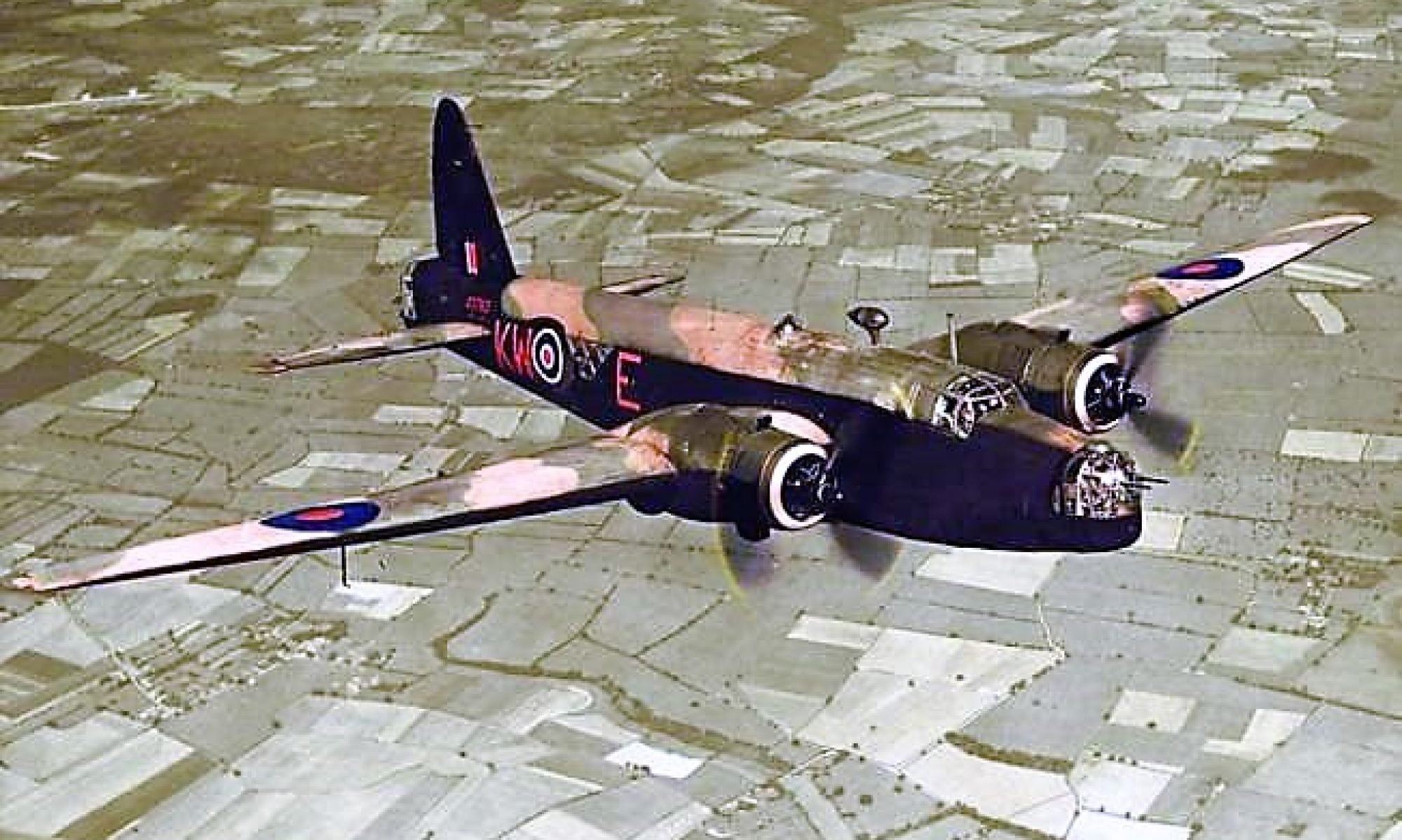


 collection de Jean-Paul Michaud via Ginette Michaud


 RCAF 425 Alouettes III