Bon matin Pierre,
J’ai son log book qui certifie que R206636 ou J89719 Flying Officer H. A. St-Yves est qualifié air gunner le 15 octobre 1943 de l’unité 3 B&G School à Macdonald au Manitoba.
Le pilote du bombardier Halifax était le sergent Lacaille et sa position était mid upper gunner à partir du 8-4-1944. Il est la base de Tholthorpe avec le 425 squadron. Il a fait 38 sorties, son premier tour d’opérations complet et signé par H. Ledoux W/C.
Après cela il été instructeur à partir de février 1945 avec le 1666 Conversion Unit à Wombleton.
C’est grâce à l’inestimable collaboration de Richard Girouard que je pourrai partager toutes les photos de l’album du Group Captain Gabriel Taschereau.
Il y en avait une qui avait piqué ma curiosité de généalogiste amateur dans mes temps libres…
Elle démontrait le sens de l’humour du Group Captain.
TASCHEREAU Gabriel À l’Hôtel-Dieu de Québec, le 22 juin 1999, est décédé le Group Captain (Colonel d’aviation) Gabriel Taschereau, LVO, DFC, CD, ADC, époux de dame Marielle Gagné. Outre son épouse, il laisse dans le deuil ses quatre enfants, issus d’un précédent mariage avec feu dame Madeleine Brunet: Pauline, Francine, Liliane et Richard. Lui survivent également son frère Pierre (Paulette Belleau), sa soeur Yolande (Gilles B. Girard), de même que ses beaux-frères et belles-soeurs: Thérèse Boivin (feu Claude Taschereau), Denis Lavoie (Lise Gagné), Fernande Savard (feu Claude Gagné), Marc Brunet (Bibiane Lachance), Jacques Brunet (Doris Hill), Lorraine Brunet (Charles E. Garneau), Marjorie Brunet (feu Raymond Sanfaçon), Robert Cloutier (feu Gabrielle Brunet) et Gabrielle Robitaille (feu Paul E. Brunet).
Gabriel Taschereau s’est enrôlé dans le Corps d’aviation royal canadien au début de la guerre de 1939-1945.
Après son entraînement comme pilote et navigateur aérien, il fut affecté à l’escadrille 425 à Dishforth, en Angleterre, d’où il participa à vingt-et-une missions de bombardement au-dessus de l’Allemagne.
En mai 1943, il fut muté en Tunisie avec son escadrille, d’où il prit part à vingt-huit autres missions au-dessus de la Sicile et de l’Italie continentale.
Rapatrié en Angleterre, il servit comme instructeur dans diverses bases d’entraînement opérationnel.
Revenu au Canada avec le grade de Squadron Leader, il suivit le cours de spécialiste en navigation aérienne à Rivers, Manitoba. Versé à la Réserve, il commanda l’escadrille 2452 à Québec, comme Wing Commander. Il fut ensuite nommé conseiller de l’Aviation de Réserve pour la région de Québec, auprès du Chef de l’État-Major de l’Air, et promu au grade de Group Captain.
De 1956 à 1980, il fut attaché aux lieutenants-gouverneurs de la province de Québec, d’abord en qualité de secrétaire général et aide de camp, puis comme chef de cabinet et aide de camp principal.
En semi-retraite depuis 1980, il continua à servir comme conseiller spécial et de camp honoraire. Nommé colonel honoraire de l’escadron tactique d’hélicoptères basé à Valcartier, il fut appelé à prononcer des conférences à diverses bases aériennes à travers le Canada, dont Goose Bay, Gander, Bagotville, Trenton, North Bay, Ottawa, Saint-Hubert, Valcartier, Saint-Jean et Edmonton.
Au cours de sa carrière dans l’aviation, il fut décoré de la Distinguished Flying Cross, et reçut l’insigne officiel (Operational Wing) pour son tour d’opérations aériennes contre l’ennemi. Il fut également créé membre honoraire des Forces aériennes françaises libres. Il fut aussi récipiendaire de l’étoile de la guerre de 1939-1945, de la « Aircrew Europe Star », de l’Étoile France-Allemagne, de l’Étoile d’Italie, de même que des médailles de Défense de Grande-Bretagne, de Bomber Command, d’Enrôlement volontaire et service outre-mer, de la Victoire, du Couronnement de la Reine, du Centenaire de la Confédération, du Jubilé de la Reine et celle de Long-service dans les Forces canadiennes. Il reçut aussi quatre distinctions françaises: la Croix de Chevalier du Mérite Combattant, la Médaille de la Victoire, la Croix du Combattant volontaire allié et la Médaille de bronze de l’École de l’Air de Salon-de-Provence. Il était également Officier de l’Ordre vénérable de Saint-Jean-de-Jérusalem. En 1989, il fut admis, à titre de lieutenant, dans l’Ordre Royal de Victoria, et reçut la décoration appropriée des mains de la Reine au Palais de Buckingham.
I have been contacted by Lloyd W McPhee’s daughter who has shared an article about her father, also a navigator like Group Captain Gabriel Taschereau, and some of her father’s log book pages.
Log books are so precious…
Now for the article.
Editor’s Note: The year 2020 marks the 75th anniversary of the end of the Second World War. We are honoured to feature a story from the Standard Freeholder of one of the many local men and women who fought courageously for our freedom in that war.
Lloyd W. McPhee was born in Cornwall in 1920 and attended Cornwall Public School and CCVS. After leaving school he was employed by Howard Smith Paper Mill until he enlisted in the R.C.A.F in January 1941. He trained at Brandon Man. and Regina Sk. graduating as an air navigator in August 1942. He arrived in England in October 1942. He had a distinguished career as an air navigator until the war’s end.
After the war his career with the Ontario Ministry of Transportation took him to Ajax Ont. where he and his first wife Monica (née Purcell) raised a family of eight. Later in life, then a widower, he returned to Cornwall to attend a CCVS school reunion. There, he rekindled a relationship with an old classmate and friend, Audrey Young (née Grant), herself a widow. In 1992 the two were married and eventually settled in a house in the Riverdale area. In their later years both Lloyd and Audrey continued to be active CTHS members working to preserve local heritage. Lloyd died in 2003, Audrey in 2009.
Ed. note: Audrey is the mother of CTHS members Gay Young and Sharon McCullough.
The following article was published in the Standard Freeholder on February 2, 1945. It is an interview with Lloyd who was home in Cornwall on a 30 day leave from the R.C.A.F.
Narrow Escape All In Day’s Work For Stocky Cornwall Navigator Home On Leave.
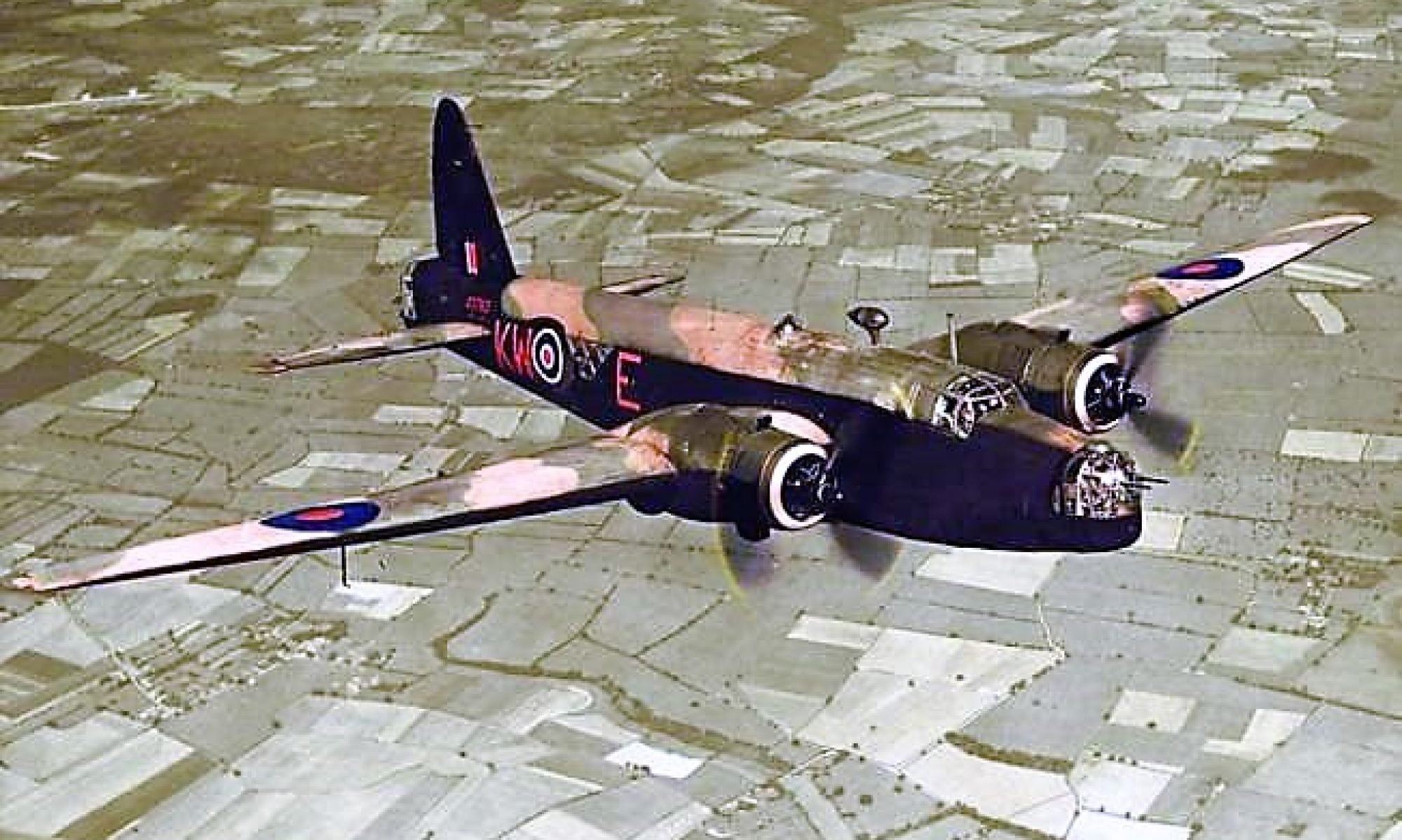
Narrow escapes were common occurrences for Flight Lieutenant Lloyd McPhee, home after two and a half years of overseas service which include 38 trips over enemy territory and one non-operational tour as a navigation instructor. The chunky clean cut airman related some of the highlights of his experiences in an interview with a Standard Freeholder shortly after his arrival in the city yesterday. Flt. Lt. McPhee was with the famous Alouette squadron in North Africa and took part in operations in aid of the invasions of Sicily and Italy. All of the tour was flown in Wellington bombers—Wimpys as he affectionately called them. “They are the workhorses of the R.A.F.” said the repatriate. “They are the oldest bomber in bomber command and one of the most reliable”
McPhee got quite a kick out of describing his plane’s distinguishing insignia. The plane was called “Y” for Yorker and the insignia painted on the side was a large ice cream cone. After each operational mission an extra drop oozed from the cone.
Slightly odd looking, perhaps although none the worse for his many experiences, the expat told of his close calls without the least sign of nerves.
He related a harrowing experience which the crew went through at Catania during the invasion of Sicily.
“As our Wellington, alone and at low level, came in over the target area, the darkness below was suddenly lit by flares. The Wehrmacht’s anti-aircraft batteries were firing at us. Nevertheless, the crew and captain kept right on in the straight bombing run. Our Wimpy went right on through the gauntlet of flack bursts and just as the bomb aimer shouted—bombs away— a great explosion damaged the bomb bay. A shell had struck us. A few seconds earlier and we and the Wellington would have disintegrated into dust in the blast of that 4,000 pounder”.
McPhee recalled with evident relish that one of the air gunners was making his first trip on that eventful night. After the flight started he also informed us that he was celebrating his birthday. “He got quite a party”, said McPhee with a wry grin. “At least he said afterwards that he was so scared he couldn’t think.”
The bomb aimer on that trip had experienced a bit of good fortune. He had remained behind in the body of the plane after giving the bombs away signal. Had he returned to the front gun turret as was his usual custom, he would have been blown to pieces since succeeding flak bursts had blown four holes from top to bottom of the turret.
“We just about had it in Naples too.” The Jerries coned us with searchlights and brought us down to 1,000 feet before we could shake them. From 5,000 feet down we were susceptible to light flak and they really poured it on. We collected 21 holes in the plane that night.” A further trip had seen them blast German concentrations at Bartia, on the island of Corsica. The Free French had driven the Germans to Napoleon’s birthplace and their aircraft had got a direct hit on a warehouse from which smoke was seen pouring.
“Rome is a beautiful sight on a bright moonlit night”, said McPhee. “The moon is much brighter than in Canada and a full moon lasts 11 nights. In one night, against a beautiful setting of white snow we saw Rome, Florence, Pisa and Leghorn”.
Climate conditions in North Africa were described as exceedingly warm with temperatures averaging around 125 degrees in the summer season. The two hottest days experienced by the airman showed temperatures of 150 degrees in the sun and very little less than that in the shade—if such could be found.
“There wasn’t a tree within miles of the station”, said the stocky navigator “and our tents were so hot you couldn’t even touch the canvas. Wet clothes dried in less than 20 minutes in a wind coming from the desert which felt as if it were coming from a furnace. The food consisted of hard tack, bully beef, grapes and dehydrated potatoes with bread and margarine as infrequent delicacies. However, I couldn’t lose weight on it.”
Flt. Lt. McPhee said people in Canada would find it hard to believe the conditions under which the Arab people exist. There is practically no sanitation in the country and the natives themselves are backward. “Believe it or not”, said McPhee, “You can smell an Arab town from 1,000 feet in an aircraft. Take it from me that Arab cities are not the beauty spots that Technicolor paints them. From my own experience the European settlement of Algiers is the most advanced and cleanest of African cities.”
The repat had high praise for his comrades in the Alouette squadron. The crew was all French Canadian with the exception of himself. Good fellowship and a high standard of maintenance with correspondingly low losses were features of the unit. The unit had maintained a high standard of bombing efficiency in spite of the fact planes went to their destinations guided by astral-navigation, their courses plotted by the stars. This is an entirely different technique from that now employed on the modern bombers which use radar to a great extent.
As evidence of the bomber-aimers of the squadron, McPhee related the story of a bombing run over the Salerno beachhead in which the squadron had to bomb within three miles of advancing American troops and had succeeded in doing so without injuring any of the advance elements.
In addition to his operational tour Flt. Lt. McPhee has to his credit 13 months of navigation instruction at a conversion unit. He is on a thirty day leave and has not made up his mind whether he will ask to be posted to the Far East or take an administrative position in Canada.
Photos of the Vickers Wellington taken from Gabriel Taschereau’s photo album courtesy Richard Girouard.
C’est grâce à l’inestimable collaboration de Richard Girouard que je pourrai partager éventuellement toutes les photos de l’album du Group Captain Gabriel Taschereau.
Voici celle de son équipage.
Album-photo (collaboration de Richard Girouard)
L’équipage de C. Blakeney
De gauche à droite : Sgt L. Roberge, Sans-filiste; F/Sgt J. Goyette, mitrailleur arrière; P/O G. Hutton, bomb aimer; F/Lt C. Blakeney, pilote; and F/O G. Taschereau, navigateur
– Award effective 23 November 1943 as per London Gazette dated 30 November 1943 and AFRO 166/44 dated 28 January 1944.
Born Victoriaville, Quebec, 26 July 1915; home in Quebec City; enlisted there 12 September 1940 and posted to No.4 Manning Depot.
To No.3 ITS, 19 April 1941; graduated and promoted LAC, 16 May 1941 when posted to No.11 EFTS; to No.8 SFTS, 3 July 1941; ceased training and posted to Trenton, 31 July 1941; to No.5 AOS, 26 September 1941; to No.7 BGS, 3 January 1942; graduated and promoted Sergeant, 14 February 1942 when posted to No.1 ANS; graduated and commissioned 19 March 1942 but not posted to No.31 GRS until 10 April 1942.
To RAF overseas, 14 June 1942.
Promoted Flying Officer, 1 October 1942.
Promoted Flight Lieutenant, 1 March 1944.
Repatriated 18 December 1944.
To No.3 Training Command, 29 December 1944.
To No.8 AOS, 15 January 1945.
To No.1 CNS, 19 February 1945.
To No.1 Radio and Navigation School, 12 March 1945.
To No.1 Air Command, 12 September 1945.
To No.2 Release Centre, 12 October 1945.
Retired 27 November 1945.
Postwar auxiliary service as 121379.
Obituary stated that he had flown 21 sorties over Germany and Western Europe plus 28 in the Mediterranean theatre. “Repatriated to England, he served as an instructor in various training bases operational. He returned to Canada with the rank of Squadron Leader. He attended the specialist in air navigation in Rivers, Manitoba.” In Reserve, he commanded No.2452 Aircraft Control and Warning Squadron Quebec, as Wing Commander. Appointed adviser to the Air Force Reserve for the Quebec City region promoted to the rank of Group Captain. From 1956-1980, he was attached to the Lieutenant Governors of the Province of Quebec, first as Secretary General and aide, then as chief of staff and aide-de camp. In semi-retirement after 1980, he continued to serve as special advisor. Also Honourary Colonel to the Tactical Helicopter Squadron based in Valcartier, he lectured at various air bases across Canada, including Goose Bay, Gander, Bagotville, Trenton, North Bay, Ottawa, Saint-Hubert, Valcartier, Saint John and Edmonton. Also an honorary member of the Free French Air Forces. DFC presented 21 May 1947. Awarded Lieutenant, Royal Victorian Order (LVO) as per Canada Gazette of 22 October 1988 while serving as private secretary and ADC to the Lieutenant-Governor of Quebec. Died at Hotel-Dieu de Quebec, 22 June 1999.
RCAF photo PL-28893 (ex UK-10382 dated 5 May 1944) is a classroom scene at an OTU; F/O Gaby Taschereau (standing) explains his experiences; seated in front row are F/O Bill Tessier (Lachute), Sergeant Gaston Dufour (Thetford), F/O Emile St. Arnaud (Big River, Saskatchewan); seated in front row are P/O Joe Baillargeon (Windsor, Ontario) and F/O Ken Renaud (Edmonton).
Album-photo (collaboration de Richard Girouard)
Photo PL-28098 (ex UK-10394 dated 5 May 1944 shows three popular instructors at an OTU. Seated at desk drawing up a report is F/O Gaby Taschereau (Quebec); behind him looking on are F/O Andre Peloquin (air gunner, Montreal) and P/O Roger Delaroche (air gunner, Montreal).
Album-photo (collaboration de Richard Girouard)
Flying Officer Taschereau has participated in a large number of operational sorties over German and Italian territory. His efforts have at all times been characterized by accuracy and reliability. On one occasion during a night bombing attack over Sicily the aircraft in which he was navigator was attacked by an enemy fighter and the wireless operator was severely wounded. Flying Officer Taschereau immediately rendered first aid, at the same time navigating the aircraft safely back to base. A most skillful navigator, this officer’s cheerful confidence and devotion to duty have always merited the highest praise.
Autres photos du mitrailleur arrière Peter Goyette dans l’album-photo
Autres photos de Gabriel Taschereau dans l’album-photo
Écrit en 2014 quand j’ai fait connaissance pour la première fois avec le Group Captain Gabriel Taschereau…
Difficile d’écrire juste une fois par semaine sur mon blogue depuis j’ai eu plein d’information sur ce pilote de l’escadrille 425 Alouette. En fait, je pourrais écrire plusieurs articles par jour seulement avec les pages du logbook de Rodolphe Lafrenière. De quoi faire un livre avec toutes ses 36 missions. Mais ça n’intéresserait probablement personne […]
J’ai reçu une demande de Benoit Valois-Nadeau, un chercheur qui travaille pour TV5. Il m’a contacté au sujet d’un documentaire qu’il veut faire sur les Américains dans l’ARC, particulièrement avec les Alouettes. Je connais un pilote Charles Lesesne et j’en cherche d’autres. TV5 a déjà plusieurs documentaires sur la guerre. https://www.tv5unis.ca/collections/guerres-et-conflits Si vous souhaitez le […]
My blog will be reuniting Flight Engineer Clarke with his crew thanks to his son-in-law’s contribution.
For now, this is all I know as on October 30, 2021.
Bonjour from England.
My late father-in-law John Clarke was one of the small number of RAF flight engineers transferred to the RCAF when the Squadrons were upgraded from twin to four engined bombers. He flew a full tour with the Alouette and finished the War as a Pilot Officer. He was very proud to have served with his French comrades and visited Canada to meet up with them, including the Saint. We have various items of his, which relate to the Squadron, including his Log Book, which we would like to share, and keep his memory and those of his comrades alive. Can anyone help with the mechanics of getting this done?
From the collection of Réal St-Amour (The Saint) via his daughter Chantal
From a reader and a contributor to the blog
About the pilot
DFC citation
PERRIER, F/L Joseph Gerard Fernand (J36485) –
Distinguished Flying Cross – No.425 Squadron – Award effective 18 October 1945 as per London Gazette dated 26 October 1945 and AFRO 133/46 dated 8 February 1946.
Born 1918 in Moose Creek, Ontario; home in Bourlamaque, Quebec or Eastview, Ontario (diamond driller). Former member of Royal Canadian Artillery; enlisted Ottawa 15 June 1942. Trained at No.3 ITS (graduated 3 April 1943), No.4 EFTS (graduated 12 June 1943), and No.9 SFTS (graduated 15 October 1943). Commissioned October 1943. Medal sent by registered mail 7 November 1949.
This officer has completed many operational sorties. In December 1944 he was detailed to participate in an attack against Osnabruck. Whilst over the target area enemy anti-aircraft [fire] was encountered. The four engines of his aircraft failed momentarily, causing a loss of 7,000 feet in height, but Flight Lieutenant Perrier with great skill kept his aircraft airborne and when an altitude of 9,000 feet had been reached his engines began to function again. On the return journey engine trouble developed again and he was forced to make an emergency landing. Flight Lieutenant Perrier’s initiative and keen judgement were mainly responsible for the safe return of the aircraft.
Transcription de l’article
La guerre change le caractère des jeunes
C’est ce qu’affirme le sous-lieutenant d’aviation Gabriel Langlais du C.A.R.C. (Sous-lieutenant d’aviation)
Avec le C.A.R.C., en Grande-Bretagne, le 19 (Dépêche retardée) – À toute école préparatoire au vol de guerre, c’est à la section que l’on rencontre officiers et sous-officiers. C’est là qu’ils se rassemblent pendant le jour, en attendant de monter en avion ou de se rendre aux cours théoriques. La section se compose de petites huttes situées à proximité du périmètre de la piste d’envol. Il y a autant de groupes de huttes qu’il y a de métiers dans le personnel: pilote, navigateur, mitrailleur, radiotélégraphiste, bombardier-pointeur, etc.
A la section, des aviateurs causent des sujets les plus variés, depuis leur impatience d’aller affronter l’ennemi jusqu’au temps où ils étaient garçonnets et allaient voler des pommes chez le voisin. D’autres jouent aux dames ou au tennis sur table; d’autres, enfin, se sont étendus dans un coin et dorment paisiblement. Il suffit de causer pendant quelques minutes avec celui-ci et celui-là pour constater que les tempéraments ont changé quelque peu, et souvent beaucoup, chez chacun d’eux, depuis le jour où ils ont quitté le Canada pour venir aider à en finir avec le nazisme. A quoi cela est-il attribuable? A la présence constante du danger? A l’impatience d’aller se mesurer avec l’ennemi? Au fait d’être éloignés de ses parents et amis de toujours? A tout cela sans doute. Mais il est évident que tous ces jeunes gens qui furent appelés, du jour au lendemain, à prendre, quelques secondes, les plus graves décisions – des décisions dont dépendent souvent leur propre vie et celles de leurs compagnons d’équipage – sont devenus des hommes, tout en gardant des figures jeunes et le goût des folies réservées à la jeunesse.
Ce sera difficile pour ces jeunes, à leur retour au Canada, de se réadapter à la vie normale, à la vie de famille. D’autre part, ce sera difficile également pour leurs parents et amis de les comprendre. Aussi importe-t-il que ceux-ci se préparent à retrouver en eux, non pas des frais émoulus de l’école ou de l’université, mais des jeunes hommes aguerris, qui ont souffert, qui ont accompli de grandes et nobles actions. On ne saurait se montrer trop bons et trop compréhensifs envers eux. Ils l’ont tellement mérité.
Comme il s’agira d’hommes aguerris, ils ne seront pas portés, à moins qu’on ne le leur demande, à parler de leurs souffrances morales et physiques. D’ailleurs, ils auront bien vite oublié cela. Mais ils se souviendront des bons moments vécus à telle ou telle station aérienne, ils seront heureux de commenter les exploits d’un tel ou tel, et quoi encore. Autrement dit, ils seront enclins à ne montrer que le beau côté de l’affaire. Et ce sera beaucoup mieux. Mais encore ne faudra-t-il pas oublier qu’il y a eu l’autre côté de l’affaire. Ces jeunes gens retourneront au Canada plus forts que jamais, ils afficheront un cran et une volonté qu’on ne leur connaissait pas, mais ils ne garderont tout cela qu’en autant qu’on saura les comprendre et les aider. Ce sont là des constatations sérieuses, nous dira-t-on peut-être, mais elles nous sont venues en causant avec de bons maris, de bons fils, de bons fiancés canadiens français, dont le seul désir est de voir la fin de la guerre au plus tôt pour rentrer dans leurs foyers respectifs. Et ici qu’il nous soit permis de mentionner quelques-uns de nos interlocuteurs! Sous-lieutenant d’aviation Gérard Poirier, pilote, 133, chemin de Montréal, Eastview (Ont.); sergent Lucien LeBlanc, bombardier-pointeur, 46, rue Merton, Ottawa; sergent Joseph Saint-Louis, radiotélégraphiste-mitrailleur, 46, quatorzième avenue, Lachine; sergent Roger Asselin, mitrailleur, 6354, rue de Châteaubriand, Montréal; sergent Euloge Bouchard, navigateur, La Tuque; sergent Charles Numainville, radiotélégraphiste, des Cèdres; sergent de section Charles d’Ambroise, radiotélégraphiste-mitrailleur, de Squatteck, près de Rivière-du Loup; sergent Roger Lerminaux, mitrailleur, de Montmartre (Sask.); sergent Paul Gendron, radiotélégraphiste, 37, rue Bérard, Drummondville; officier pilote André Nobert, navigateur, Gravelbourg (Sask.); sergent Georges-Emile Morand, bombardier-pointeur, 2322, rue Sheppard, Montréal.
Translation of the article
War changes the character of young people
So says Pilot Officer Gabriel Langlais of the RCAF. (Pilot Officer)
With the RCAF., in Great Britain, on the 19th (Delayed Dispatch) – At any preparatory school for war flying, it is in the section that one meets officers and NCOs. It is where they gather during the day, waiting to fly or to go to theory classes. The section consists of small huts located near the perimeter of the runway. There are as many groups of huts as there are occupations in the personnel: pilot, navigator, gunner, radio operator, bomb-aimer, etc.
In the section, airmen talk about various subjects, from their impatience to go and face the enemy to the time when they were boys and went to steal apples from the neighbour’s house. Others are playing checkers or table tennis; others have stretched out in a corner and are sleeping peacefully. You only have to talk to this one and that one for a few minutes to see that tempers have changed somewhat, and often a lot, in each of them since the day they left Canada to help end Nazism. To what is this attributable? The constant presence of danger? The eagerness to go and fight the enemy? To being away from his lifelong friends and family? All of these things, no doubt. But it is obvious that all these young people who were called upon, from one day to the next, to take, for a few seconds, the most serious decisions – decisions on which their own lives and those of their crewmates often depended – have become men, while retaining youthful figures and a taste for the follies reserved for youth.
It will be difficult for these young people, on their return to Canada, to readjust to normal life, to family life. On the other hand, it will also be difficult for their parents and friends to understand them. It is therefore important that they prepare themselves to find in them, not fresh out of school or university, but seasoned young men who have suffered, who have done great and noble deeds. We cannot be too kind and understanding towards them. They have so deserved it.
As they will be seasoned men, they will not be inclined, unless they are asked, to talk about their moral and physical sufferings. Besides, they will soon forget about it. But they will remember the good times at this or that air station, they will be happy to comment on the exploits of so-and-so, and what not. In other words, they will be inclined to show only the good side of the story. And that will be much better. But we must not forget that there was another side to the story. These young people will return to Canada stronger than ever, with a grit and a will that we did not know they had, but they will only keep it if we understand and help them. These are serious observations, we may be told, but they have come to us while talking to good husbands, good sons, good French-Canadian fiancés, whose only desire is to see the end of the war as soon as possible in order to return to their respective homes. And here let us mention some of our interlocutors! Pilot Officer Gérard Poirier, 133 Montreal Road, Eastview, Ont. Sergeant Lucien LeBlanc, Bomb-aimer, 46 Merton Street, Ottawa; Sergeant Joseph Saint-Louis, Wireless Operator, 46 Fourteenth Avenue, Lachine; Sergeant Roger Asselin, Machine Gunner, 6354 Chateaubriand Street, Montreal; Sergeant Euloge Bouchard, Navigator, La Tuque; Sergeant Charles Numainville, Wireless Operator, des Cèdres; Flight Sergeant Charles d’Ambroise, Wireless Operator/Air Gunner, Squatteck, near Rivière-du Loup; Sergeant Roger Lerminaux, Air Gunner, Montmartre, Sask.; Sergeant Paul Gendron, wireless operator, 37 Bérard Street, Drummondville; Pilot Officer André Nobert, navigator, Gravelbourg, Sask.; Sergeant Georges-Emile Morand, bomb-aimer, 2322 Sheppard Street, Montreal.
Transcription de l’article
En annonçant la décoration le quartier général du C.A.R.C. publie la citation suivante: « En décembre 1944 il fut choisi pour participer à un raid sur Osnabruck. Au-dessus de la ville l’avion fut touché par le feu ennemi et ses quatre moteurs stoppèrent. Le lieutenant de section Perrier ne quitta pas les commandes et laissa plonger son avion 7,000 pieds après quoi les moteurs recommencèrent de tourner. En revenant à sa base les moteurs arrêtèrent de nouveau et il fut forcé de descendre. Grâce à son sang-froid et à son initiative le lieutenant de section Perrier a ramené l’avion à sa base ».
Gérard Perrier s’enrôla en 1942 et fit son entraînement à Ottawa, Lachine, Victoriaville et Windsor. Il reçut ses ailes et le grade d’officier-pilote, le 1er octobre 1943. Il faisait partie de l’escadrille des « Alouettes ».
Translated transcript
In announcing the award the C.A.R.C. headquarters publishes the following citation: ‘In December 1944 he was chosen to take part in a raid on Osnabruck. Over the city the plane was hit by enemy fire and all four engines stopped. Flight Lieutenant Perrier remained at the controls and let his plane dive to 7,000 feet, after which the engines started to run again. On returning to base the engines stopped again and he was forced to descend. Thanks to his coolness and initiative, Flight Lieutenant Perrier brought the plane back to its base.
Gérard Perrier enlisted in 1942 and trained in Ottawa, Lachine, Victoriaville and Windsor. He received his wings and the rank of Pilot Officer on October 1, 1943. He was part of the « Alouettes » squadron.
Transcription
Un Anglais parle! Ce n’est pas que ce soit rare un Anglais qui parle mais quand vous en trouvez un pour vous parler des Alouettes, je crois qu’il vaille la peine d’être écouté. L’officier-pilote W. F. Clarke, de Bury St. Edmunds. Suffolk, Angleterre. (Muttismoor, Hollow Road) qui sert dans la RAF depuis 1943, vient de terminer son premier tour d’opérations, avec un équipage canadien-français de l’escadrille des Alouettes. Il est ingénieur de son métier d’aviateur.
« Cela me chagrine que mon tour soit terminé » a-t-il déclaré, « Si j’avais à en accomplir un second, je voudrais le faire avec le même équipage. parce que je considère que c’est le meilleur équipage qui soit. Chacun de ses membres con naissait réellement son affaire. Ils étaient sérieux et conscients de leur responsabilités.
« Je les respecte » … Faisant allusion aux Canadiens de langue française qu’il a connus aux Alouettes, Clarke ajouta: « J’aime l’escadrille. J’ai appris à y connaître les Canadiens français que j’aime, que je respecte et en compagnie desquels, je me sens heureux. »
L’officier-pilote Clarke qui était employé dans une usine de carrosserie, avant la guerre, espère bien retourner à son métier, après la guerre, et aux Etats-Unis, ou au Canada, si possible.
Translation
An Englishman speaks! Not that it is unusual for an Englishman to speak, but when you find one to tell you about the Alouettes, I think he is worth listening to. Pilot Officer W. F. Clarke, of Bury St. Edmunds. Suffolk, England. (Muttismoor, Hollow Road) who has served in the RAF since 1943, has just completed his first tour of operations, with a Canadian-French crew of the Alouette squadron. He is an engineer by trade.
« If I had to do a second tour, I would want to do it with the same crew, because I consider it the best crew ever. Each of them really knew their stuff. They were serious and aware of their responsibilities.
« I respect them » … Referring to the French Canadians he knew at the Alouettes, Clarke added: « I like the squadron. I got to know the French Canadians there, whom I love and respect and with whom I feel happy.
Pilot Officer Clarke, who was employed in a body shop before the war, hopes to return to his trade after the war, and to the United States or Canada if possible.
BUCKLEY, Flight Sergeant William Henry (RAF 755601) – Distinguished Flying Medal – No.425 Squadron – awarded as per London Gazette dated 30 November 1943. Born 1919 in Leicester; home there (leather trade); enlisted 1939. Air Ministry Bulletin 12171/AL.705 refers. This airman has completed a tour during which he has attacked many important targets in enemy territory. He has taken part in operations against objectives such as Berlin, Essen, and Kiel and has contributed materially to the successes achieved by crew. Flight Sergeant Buckley has constantly displayed the greatest keenness and devotion to duty.
NOTE: DHist file 181.009 D.1739 (RG.24 Vol.10608) has recommendation dated 16 September 1943 when he had flown 57 sorties (364 hours 50 minutes); total hours flown were 826 hours 35 minutes, of which 260 hours 25 minutes had been in previous six months.
This Non-Commissioned Officer has now completed one tour of operations over German and Italian territory. He has participated in attacks against some of the most heavily defended targets such as Berlin, Essen, Kiel, Cologne and Duisburg. He has proven himself to be an efficient Wireless Operator and has fully contributed to the successes achieved by his crew. Flight Sergeant Buckley has constantly displayed courage and devotion to duty.
RAF in 57 squadron between April 1941 and June 1942. Enlisted 2nd August 1939.


 RCAF 425 Alouettes III