One final mission card was sent last week to someone who is also preserving the past like Jean-Paul Corbeil when he was a young kid.
Guy Fournier sent me about 190 photos taken at No.9 B&G School in Mont-Joli, Quebec in 1942. This is one of those photos where four LACs earned their air observer wings. All four survived the war.
PL-8321 28 March 1942 Graduation, Ontario Group , received their Winged « O » as Air Observers in a recent ceremony at #9 Bombing and Gunnery School, Mont Joli, Quebec. Opening of this school marked the full operation of the British Commonwealth Air Training Plan L.to R. : LAC Henry Clifford Card, Newburgh; LAC Howard H.. Campbell, Vankleek Hill; LAC Ainslie H. Dowd, Ottawa; LAC Bernard Patrick Windle, Mille Roches,
Here’s another one…
PL-11093 11 August 1942 #9 Bombing & Gunnery Wing Parade Mont Joli Qc., Course 35A, L.E.J. Cote, R132351, Lampman, Sask., left, and R.E. Goldney, R118056, 141 Windsor Road, North Vancouver, B.C., right, who graduated recently from the RCAF Bombing and Gunnery School at Mont Joli, Que. They are shown in front of one of the training aircraft just after receiving their air gunner’s insignia.
Another final mission card will be sent next week to this airman’s grandson.
Wing Commander William Gerald Phelan’s grandson is contributing to my blog on RCAF 420 Squadron. More people who have been contributing will be receiving a card. Another person is Philip Plant whose father-in-law was a flight engineer with RCAF 420 Squadron. Two more people whose fathers were part of the same squadron have been chosen.
End of update
In 2015, Jean-Paul Corbeil told me he wanted to do a final mission with him. He had survived 40 operations flown over Europe from May to September 1944. Two of those operations were on D-Day.
This is a letter he wrote back in March 2015.
With this letter he had this card.
On one side there was the cover of his log book and a photo of his crew taken in May 1944.
On the other side there was an image of a page taken from his log book where we can see his two operations on D-Day.
More than 80 letters and cards were sent in the weeks leading up to Remembrance Day 2015. Some were sent in Canada, some in England, some in the United States, some in Belgium, some in France.
Later, he asked me to write again to these people and to add this to the blog…
My last mission
Dear friends,
As Remembrance Day approaches, let us remember the 42,000 young Canadians, including some 19,000 airmen, who gave their lives in the defence of freedom during the Second World War. I would like to share with you my last letter that accompanied the reproduction of a page from my logbook, along with a photo of our crew, and ask that you keep these authentic documents for posterity.
I want to suggest that you give copies of this mission card, as well as the envelope with a postage stamp created especially for this project, to people of your choice who will be able to pass it on from generation to generation.
Also, you may freely distribute copies of everything you have received to people who would be interested in promoting the duty to remember in their entourage. The next time I contact you by email, I will tell you where and when the idea for this project came to me and what happened next.
What about this project? One hundred original cards, accompanied by a letter explaining my last mission, were sent around the world to people who had expressed an interest in honouring the memory of Alouette Squadron and promoting peace. Several people wrote to me and told me to whom they would eventually send the card, letter and stamped envelope specially for this project.
On behalf of myself and all the Alouettes, we wish you and your family a serene and long lasting peace.
Jean-Paul Corbeil, Canadian veteran
… The next time I contact you by email, I will tell you where and when the idea of this project came to me and what happened next…
The follow-up never came as he asked me to wait before I could share it.
Jean-Paul Corbeil died on October 3rd, 2018.
Where did this idea come from?
Jean-Paul Corbeil remembered the nun who taught him when he was a little boy in Bonfield. She had talked about the First World War and she had asked the children to bring something that reminded them of that war.
Jean-Paul Corbeil was the only schoolboy to bring something… an old rifle from the war.
It was there that he understood the meaning of the expression the duty to remember.
Le 11 novembre 2015, voici ce que j’écrivais sur mon premier blogue dédié à l’escadrille Alouette. C’était en fait un peu cryptique je l’avoue. C’était au sujet de la dernière mission de Jean-Paul Corbeil, l’ancien combattant qui avait survécu après 40 opérations en théâtre de guerre.
Monsieur Corbeil avait eu cette idée d’une dernière mission quelques mois auparavant le Jour du Souvenir.
Revoici la lettre qu’il avait écrite.
Avec cette lettre se trouvait une carte avec au recto et au verso ceci…
Monsieur Corbeil était là lors du Jour J.
Plus de 80 lettres et cartes avaient été envoyées dans les semaines précédant le Jour du Souvenir 2015.
Plus tard, il m’avait demandé d’ajouter ceci sur le blogue…
Ma dernière mission
Chers amis et chères amies,
À l’occasion du jour du Souvenir qui approche, souvenons-nous des 42 000 jeunes Canadiens, dont quelque 19 000 aviateurs, qui donnèrent leur vie pour défendre la liberté durant la Deuxième Guerre mondiale. Je tiens à vous parler de ma dernière lettre qui accompagnait la reproduction d’une page de mon livre de bord, ainsi qu’une photo de notre équipage en vous priant de conserver pour la postérité ces documents authentiques.
Je veux vous suggérer de remettre des copies de cette carte mission, ainsi que l’enveloppe qui porte un timbre de poste créé spécialement pour ce projet, à des personnes de votre choix qui sauront la transmettre de générations en générations.
Également, vous pouvez librement distribuer des copies de tout ce que vous avez reçu aux personnes qui auraient intérêt à promouvoir dans leur entourage le devoir de mémoire. Lors de mon prochain contact par courriel, je vous dirai où et quand l’idée de ce projet m’est venu et la suite.
Qu’en est-il de ce projet? Cent cartes originales, accompagnées d’une lettre expliquant ma dernière mission, ont été expédiées à travers le monde à des gens qui avaient exprimé un intérêt à honorer la mémoire de l’escadrille Alouette et à promouvoir la paix. Plusieurs personnes m’ont écrit et m’ont indiqué à qui ils allaient transmettre éventuellement la carte, la lettre et l’enveloppe timbrée spécialement pour ce projet.
En mon nom personnel, et en celui de tous les Alouettes, nous vous souhaitons à vous et à votre famille, une paix sereine et inébranlable.
Jean-Paul Corbeil, ancien combattant canadien
…
Lors de mon prochain contact par courriel, je vous dirai où et quand l’idée de ce projet m’est venu et la suite…
La suite n’est jamais venue.
D’où venait cette idée?
Jean-Paul Corbeil se rappelait de la religieuse qui lui enseignait quand il était petit garçon à Bonfield. Elle avait parlé de la Première Guerre mondiale et elle avait demandé aux enfants d’apporter quelque chose qui rappelait cette guerre.
Jean-Paul Corbeil avait été alors le seul écolier à avoir apporté quelque chose… un vieux fusil de la guerre.
C’est là qu’il avait compris le sens de l’expression le devoir de mémoire.
J’avais souvent rencontré le nom de Joe Lecomte dans mes recherches sur l’escadrille Alouette depuis 2010, mais je n’avais jamais écrit sur lui. Mon intérêt a été à nouveau piqué par une anecdote que Lloyd Stanley Lafoy avait racontée à son petit-fils : une partie d’une histoire qu’il n’avait jamais racontée à personne auparavant. Joe […]
Félix Turcotte received his wings at No. 33 Service Flying Training School… That might seem trivial or not that important unless you are related to Félix Turcotte seen here with his crew in Tunisia.
Newspaper clipping and photo courtesy of Che Lafoy, grandson of Lloyd « Lucky Red » Lafoy.
One of six siblings, Chrissie Mills was born in a working class suburb of Birmingham in 1922. She was seventeen at the outbreak of the second world war and worked nights in a factory, along with thousands of other women, providing the necessary workforce whilst the majority of men were conscripted. Birmingham was the beating industrial heartland of England with numerous factories producing war goods, amongst the most prominent being the Spitfire factory at Castle Bromwich and the Austin factory in Longbridge producing military vehicles. This, of course, made it a target for the Luftwaffe, with nightly raids at the start of 1940 and continuing right into 1943 resulting in over 2,000 dead and 3,000 injured. Only behind London and Liverpool in the tonnage of bombs dropped.
Bob Jones and his crew were on a training exercise in the vicinity of Birmingham and in need of some serious R & R, which on one night led them to the Crown Pub in the centre of the city, in the heart of the legal and financial area. The Crown is an old traditional Victorian pub which has served the community for well over a hundred years and would have appealed to the visiting airman with its combination of tradition and, of course, dance nights at the back of the pub. This is where Chrissie and Bob met for the first time.
There were two function rooms at the Crown, a smaller more intimate one, and a much larger room, which would regularly host dance nights. This room became well known in the seventies as the venue where Black Sabbath had their first gigs. But, this was a long way in the future.
These World War II dances were packed and intense affairs, where whirlwind romances started and could end just as quickly. Chrissie was obviously enamoured and impressed with the handsome airman with his tales of a far off country, which in those days, would have been like on another planet for her. This was towards the end of 1943, and then Bob’s squadron, the 425 Alouettes, got stationed in North Africa at Tunis. The stay was not to last long, before at the start of 1944 he was re-stationed back to Tholthorpe in North Yorkshire. At this point it occurred to both of them, that the relationship was something more than casual, and that a long distance relationship between them, him in Yorkshire, her in Birmingham wouldn’t last. So, Bob proposed, and they were married in April 1945 with the reception at Chrissie parents house in Small Heath, Birmingham.
The wedding day…
The choice now was not an easy one: stay in Birmingham in a war ravaged country or head to a new continent with a bright future. It sounds an easy decision, but it wasn’t. It would mean leaving behind everything she knew; her family, friends, the city she grew up in. But finally after long deliberation, she decided to head to Canada with Bob and start a new life, with the knowledge that she probably would never see her family again.
The SS Ile de France set sail from Southampton heading for Nova Scotia on March 30th, 1946. This was one of many war bride transport ships that were organised and paid for by the Canadian government. Chrissie was one of about 45,000 so called ‘war brides’ who made their way across the Atlantic in anticipation of their new lives. All arrivals landed at Pier 21 at Halifax, Nova Scotia. This former ocean liner terminal has been compared in its importance to Canada to that of Ellis Island in New York, taking in large waves of immigrants throughout the years.
The long and arduous journey continued by train to the far distant town of Squamish on the Canadian West Coast, just outside of Vancouver. A journey of a couple of days winding its way through the large open Canadian countryside, until climbing through the Rockies to finally arrive at its destination.
Squamish in 1946 had a population of approximately 5,000, a town built for the burgeoning railway in British Columbia. This was not Birmingham, which even at that time had a population verging on one million. The thoughts going through the new arrival’s head can only be guessed: relief to have arrived, fatigue and maybe slight disappointment.
Bob, in the middle with Chrissie on his right. Bob’s brother is to her right and their father wearing glasses in the front.
Life in Squamish
They settled into married life until Bob eventually got itchy feet and started to look for new challenges, and this came in the form of an offer to move to San Jose in California with his brother to run a flying school. Of course, he jumped at the chance to continue flying. They moved to the states in 1947, into a picture book clapperboard house with apricot trees in the front garden. Chrissie fulfilling the role of the housewife, cooking and looking after the house and husband. But, something was not right. As much as she tried to suppress the growing feeling of unrest, these feelings would simply not go away. She was homesick, it was too hot there, she missed England.
Chrissie flew to England at the start of 1948, the North American adventure had come to a premature end. She wouldn’t end her days in a foreign country, but back in Birmingham after all, surrounded by the friends and family who she thought she would never see again.
She met her new husband, John, in 1950, they both shared a common love of dancing, and started a family. Which is where I come into the story.
My mother never told me that she had been married before, she felt I would think badly of her and maybe not respect her. She only told me when it was unavoidable. So, she kept the story to herself for forty years.
In the eighties, I was a design engineer at Rover cars in Longbridge, Birmingham. One day I was chatting with colleagues when the telephone rang. On the other end of the line was my very excited mother.
‘You’ll never guess who just called.’
‘Yes, that’s right, I won’t’.
‘Bob’.
‘Which Bob?’.
‘From Canada’.
Then the penny dropped. Bob had come over for a reunion with former comrades, combined with a trip to the old stomping grounds in Yorkshire. While he was in Birmingham, he had the idea to track down the woman with whom he was married all those years ago.
Where to start?
The Crown.
Was it still there?
Yes, it was, but it’s a different place now to what it was then. He told the taxi driver the story, and he had the idea to call the local radio station, BRMB, and maybe they could put out a broadcast. The station was accommodating, sensing a good story, and duly put out a message. This was heard by Chrissie’s cousin, who called her. The radio station put Chrissie and Bob in touch with each other, and they met up at a top Birmingham hotel with Champagne and strawberries. That was the reason for the phone call I received. She didn’t want to go on her own, so of course, I went along. Curious as well to see the legendary Bob.
Chrissie at the reunion
Bob turned out to be a thoroughly charming man, tall, with a delightful Canadian accent, and during the course of the next few days, he wined and dined my mother, and she had the best time she had had for a long time. She had suffered serious illness, and caused by this, my parents had been separated for a long time. Chrissie lived alone in the old family home.
Bob asked her to return with him to Canada. Whether this was meant seriously is hard to say, but that is not important, he provided her with the will to carry on and see her through the last years of her life.
Bob went to his reunion and the two never saw each other again, she died in 1989 and he in 1993.
Updated with this colourised version done by Denis Thievin.
From the daughter of Antoine (Tony) Brassard DFC
From left to right (as described by my father in a letter sent to my mother)
Jean (Jonny) Bourque de Montréal, navigator. « Serious, thoughtful, calm and reasonable young man ».
R. Fuller of England, engineer. « Exceptionally my engineer was English, there was a shortage of French-Canadian engineers ».
Gérard (Jerry) Lalonde of Valleyfield, mid-upper gunner. « Very spiritual. He’s the one who makes us laugh ».
Georges (Blondy) Alarie de St-Jérome, Terrebonne, rear gunner. « Very young and very sensitive » ».
Antoine (Tony) Brassard of Strickland, Ontario, pilot and crew captain.
Philippe (Berny) Bernatchez from Baie-Comeau, bomb aimer. « He’s a very smart guy. He likes to tease a lot but gets caught up at his own game ».
Aimé Thievin from Saskatchewan, wireless. « He’s our handyman, he’s very handy. He works for five minutes on your bike and the next five minutes on your watch ».
Mise à jour avec cette photo colorisée par Denis Thievin.
De la fille d’Antoine (Tony) Brassard DFC
De gauche à droite (tel que décrit par mon père dans une lettre envoyée à ma mère)
Jean (Jonny) Bourque de Montréal, navigateur. «Jeune homme sérieux avec beaucoup de plomb dans la tête».
R. Fuller d’Angleterre, ingénieur. «Exceptionnellement mon ingénieur était anglais, on manquait d’ingénieurs canadiens-français».
Gérard (Jerry) Lalonde, de Valleyfield, mitrailleur dorsal. «Très spirituel. C’est lui qui nous fait rigoler».
Georges (Blondy) Alarie de St-Jérome, Terrebonne, mitrailleur arrière. »Très jeune et très sensible«».
Antoine (Tony) Brassard de Strickland (Ontario), pilote et capitaine de l’équipage.
Philippe (Berny) Bernatchez de Baie-Comeau, bombardier (bomb aimer ou viseur de lance bombe). «C’est un type très intelligent. Il aime beaucoup taquiner mais se fait prendre dans son propre jeu».
Aimé Thievin de Saskatchewan, sans filiste. «C’est notre gars à tout faire, il est très adroit. Il travaille cinq minutes dans ta bicyclette et les cinq minutes suivantes dans ta montre».
Lloyd « Lucky Red » Stanley Lafoy, my Grandfather, enlisted in the RCAF in 1941 and like his sister, Violet Lafoy, hoped to work in the Mess Hall. Red only had a Grade 10 education and at that time one needed more to become an Airman. Losses were high however in the beginning of the war and Bomber Command lowered the entry standards allowing Red to enroll in Air Gunnery School in Paulson, Manitoba. An event that would change his life.
He would earn his Air Gunner Wing and by 1943 found himself in England assigned to 426 Thunderbird Squadron « On Wings of Fire ». His first pilot, Richard Talman, was a fellow Saskatchewan farm boy and would be Killed In Action flying as a « 2nd Dickey » (second pilot) with another crew training to take Red’s crew out. His bomber went down in Belgium and Talman’s grave is there now.
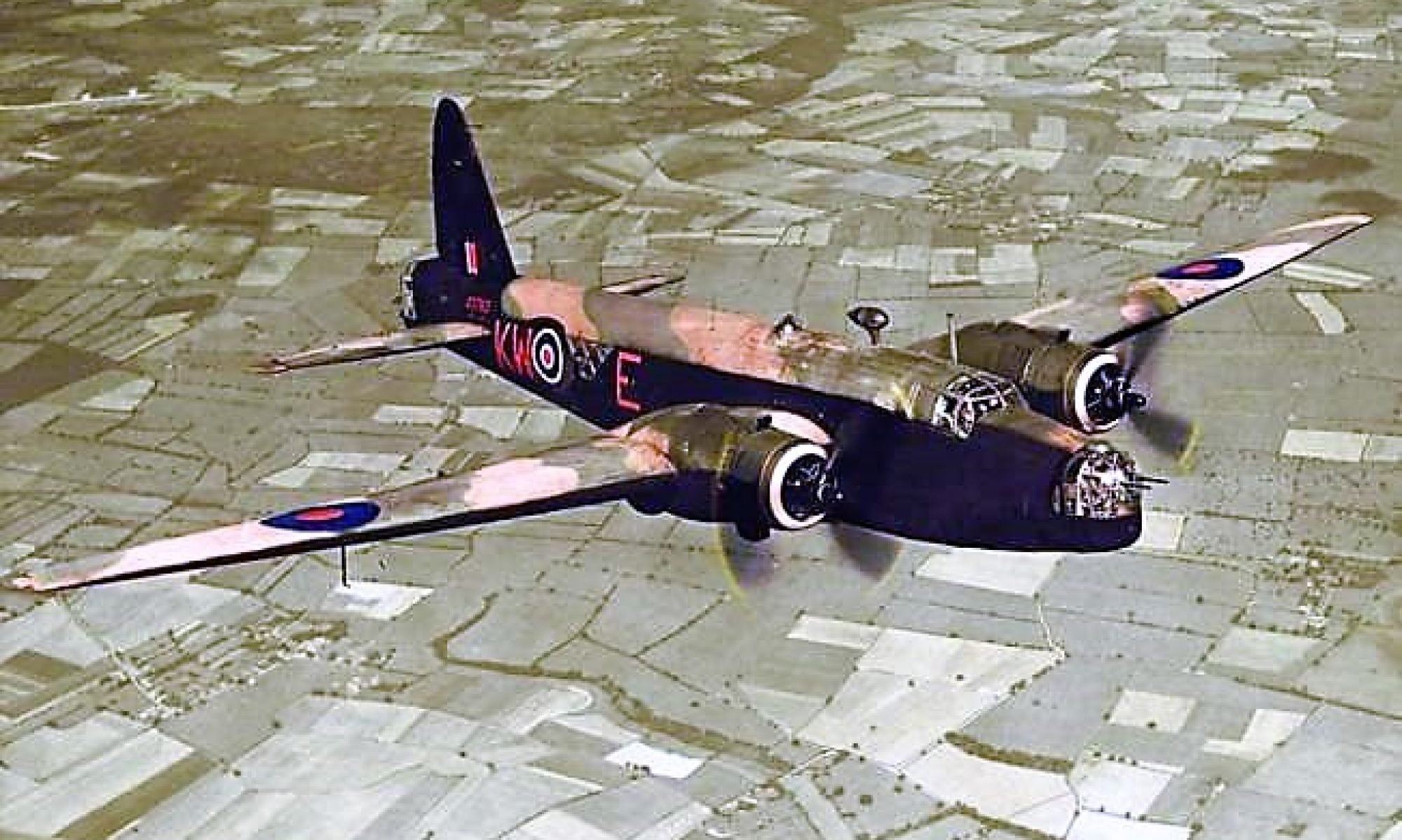
Red »s crew were now orphaned, without a pilot, and would be assigned to a new pilot, Felix-Henri « Turk » Turcotte, flying Wellington bombers over Europe and spend some time in North Africa bombing Italy.
They returned to England by ship and Red remembered that Air Gunners were always assigned to Submarine watch duty.
Back in the UK Red’s crew switched to flying Halifax MK III bombers with 425 Alouette Squadron « Je te plumerai » or « I shall pluck you » of No. 6 Group of Bomber Command.
Turcotte was not comfortable flying the Halifax however and the crew would disband for reassignment to new crews. Red would spend many months flying with Wing Commander Lucien « Joe the C.O. » Lecomte as his pilot.
They would bomb France, Belgium, and Germany for the duration of the war as Red completed his tour (30 missions).
Red would finish the war with 35 missions completed and was awaiting placement in the Pacific Theatre when the US would drop the atomic bombs ending the war.
To put things in perspective, Bomber Command lost a total of 8,325 aircraft. The crews also suffered a high casualty rate: 55,573 were killed out of a total of 125,000 aircrew, a 44.4% death rate. A further 8,403 men were wounded in action, and 9,838 became prisoners of war. During the RCAF’s Halifax operations between March 1943 and February 1944, the average loss rate was 6.05%, producing a mere 16% survival rate for a tour of 30 operations.
Red indeed was « Lucky » but always attributed his survival to the skill of his pilots. Talman was the only Airmen of his crews not to survive and Red never forgot him despite their brief history. He can be seen pointing to Spud’s name on the Bomber Command Memorial in Alberta.
Sargeant Richard « Spud » Elwood Talman – 20 years old, KIA, buried in Brussels Town Cemetery, Belgium. Son of Marion Hobart Talman and Annie Marguerite Talman, of Fertile, Saskatchewan, Canada.
Sadly « Red » passed away February 18, 2019 after a life well lived … and earned.


 RCAF 425 Alouettes III